Adelaide Advertiser
Thursday 8/1/2009 Page: 31
THE solar energy industry is gearing up for a brighter future under proposed changes to the Federal Government's rebate scheme from July, Solar Shop Australia says. Business prospects are also bright with small businesses being eligible for a grid connection rebate for the first time since the scheme was introduced in 2000 and no means testing for householders.
The St Peters-based national company has put in place new strategies to capitalise on the changes and hopes to increase its market share to 50% in two years, managing director Adrian Ferraretto said. "The alternative was zero rebate. We were seriously considering a future without rebates, which would have been disastrous for the industry," Mr Ferraretto said.
Friday, 9 January 2009


ETS to cost coal exporters $5bn
Australian
Thursday 8/1/2009 Page: 1
THE export coal sector believes it will face a $5 billion carbon burden in the first five years of the Rudd Government's proposed emissions trading scheme. The Minerals Council of Australia has stepped up its attack on the proposed plan to reduce carbon emissions as the Government revealed it was unaware which 1000 high carbon emitters would be forced to buy permits to cover their emissions. The council's deputy chief executive Brendan Pearson writes in The Australian today there is a misconception there will be "wheelbarrow loads" of free permits to protect the competitiveness of the export sector.
He argues that Australia is being put at a disadvantage in its coal production at a time when Britain is looking to expand coal production. "These policy developments are contributing to some perverse outcomes," Mr Pearson writes. "The Guardian reported last month on proposals to open 58 new coal mines in the United Kingdom. Meanwhile, in Australia - the world's largest coal exporter - production in the coal sector is being scaled back."
Thursday 8/1/2009 Page: 1
THE export coal sector believes it will face a $5 billion carbon burden in the first five years of the Rudd Government's proposed emissions trading scheme. The Minerals Council of Australia has stepped up its attack on the proposed plan to reduce carbon emissions as the Government revealed it was unaware which 1000 high carbon emitters would be forced to buy permits to cover their emissions. The council's deputy chief executive Brendan Pearson writes in The Australian today there is a misconception there will be "wheelbarrow loads" of free permits to protect the competitiveness of the export sector.
He argues that Australia is being put at a disadvantage in its coal production at a time when Britain is looking to expand coal production. "These policy developments are contributing to some perverse outcomes," Mr Pearson writes. "The Guardian reported last month on proposals to open 58 new coal mines in the United Kingdom. Meanwhile, in Australia - the world's largest coal exporter - production in the coal sector is being scaled back."
Thursday, 8 January 2009
Defence warns of climate conflict
Sydney Morning Herald
Wednesday 7/1/2009 Page: 1
RISING sea levels could lead to failed states across the Pacific and require extra naval deployments to deal with increases in illegal migration and fishing, a Defence Force analysis says. "Environmental stress" has increased the risk of conflicts over resources and food and may demand greater involvement by the military in stabilisation, reconstruction and disaster relief, the analysis, prepared by Defence's strategic policy division, says. It warns there is a risk of a serious global conflict over the Arctic as melting ice caps allow easier access to undersea oil and gas deposits.
In Australia's northern waters, climate change is expected to change the location of south-east Asian fishing grounds, causing an increase in illegal fishing," says a summary of the analysis. This may raise demand for ADF patrols in these regions." The warnings emerged as a leading NASA scientist, James Hanson, used an open letter to the US president-elect, Barack Obama, to single out Australia's coal exports as a significant cause of climate change.
"Australia exports coal and sets atmospheric carbon dioxide goals so large as to guarantee destruction of much of the life on the planet," Dr Hanson said. The Defence analysis, titled Climate Change, The Environment, Resources And Conflict, was completed in November 2007 for the head of strategy, Michael Pezzullo, a deputy secretary who has since been appointed to oversee the preparation of the Defence White Paper. "Environmental changes will reinforce existing concerns regarding land availability, economic development and control over resources," it says. "Rising sea levels will affect states and islands with low-lying coastlines around the world ...
Food sources are also vulnerable to environmental changes." A summary, obtained by the Herald under freedom of information laws, says: "Environmental stress, caused by both climate change and a range of other factors, will act as a threat multiplier in fragile states around the world, increasing the chances of state failure. This is likely to increase demands for the ADF to be deployed on additional stabilisation, post-conflict reconstruction and disaster relief operations in the future." Defence refused to release the full 12-page analysis, saying its publication could damage Australia's defence capability and international relations.
The paper says climate change may lead to increases in refugees from Pacific Islands, but says few are likely to be able to reach Australia. From a defence planning perspective, we don't know how quickly these changes will occur, exactly what their impact will be, or how states and societies will react," it says. "Nevertheless, climate change may affect security by increasing stress on fragile states, state and societal competition for resources, environmental threats to ADF infrastructure and increasing the frequency and severity of extreme weather events.
"Climate change is unlikely to increase the risk of major conflict, although there is one exception. The Arctic is melting, potentially making the extraction of undersea energy deposits commercially viable. ... Conflict is a remote possibility if these disputes are not resolved peacefully." The Prime Minister, Kevin Rudd, described climate change as a "fundamental" challenge last month when he released his national security statement.
Dr Hanson, head of NASA's Goddard Institute for Space Studies, said Australia was making "honest efforts" to tackle climate change but failing. Carbon trading schemes such as that proposed by the Federal Government would slow the rate of greenhouse emissions too slowly, Dr Hanson said. "This approach is ineffectual and not commensurate with the climate threat," he said. "It could waste another decade, locking in disastrous consequences for our planet and humanity."
Australia is the world's largest exporter of black coal, shipping about 230 million tonnes a year to supply just over a quarter of world export demand, according to the Australian Coal Association. It is the nation's biggest export earner, but when burned overseas Australian coal generates more than half a billion tonnes of greenhouse emissions each year, or more than all emissions generated within Australia.
Wednesday 7/1/2009 Page: 1
RISING sea levels could lead to failed states across the Pacific and require extra naval deployments to deal with increases in illegal migration and fishing, a Defence Force analysis says. "Environmental stress" has increased the risk of conflicts over resources and food and may demand greater involvement by the military in stabilisation, reconstruction and disaster relief, the analysis, prepared by Defence's strategic policy division, says. It warns there is a risk of a serious global conflict over the Arctic as melting ice caps allow easier access to undersea oil and gas deposits.
In Australia's northern waters, climate change is expected to change the location of south-east Asian fishing grounds, causing an increase in illegal fishing," says a summary of the analysis. This may raise demand for ADF patrols in these regions." The warnings emerged as a leading NASA scientist, James Hanson, used an open letter to the US president-elect, Barack Obama, to single out Australia's coal exports as a significant cause of climate change.
"Australia exports coal and sets atmospheric carbon dioxide goals so large as to guarantee destruction of much of the life on the planet," Dr Hanson said. The Defence analysis, titled Climate Change, The Environment, Resources And Conflict, was completed in November 2007 for the head of strategy, Michael Pezzullo, a deputy secretary who has since been appointed to oversee the preparation of the Defence White Paper. "Environmental changes will reinforce existing concerns regarding land availability, economic development and control over resources," it says. "Rising sea levels will affect states and islands with low-lying coastlines around the world ...
Food sources are also vulnerable to environmental changes." A summary, obtained by the Herald under freedom of information laws, says: "Environmental stress, caused by both climate change and a range of other factors, will act as a threat multiplier in fragile states around the world, increasing the chances of state failure. This is likely to increase demands for the ADF to be deployed on additional stabilisation, post-conflict reconstruction and disaster relief operations in the future." Defence refused to release the full 12-page analysis, saying its publication could damage Australia's defence capability and international relations.
The paper says climate change may lead to increases in refugees from Pacific Islands, but says few are likely to be able to reach Australia. From a defence planning perspective, we don't know how quickly these changes will occur, exactly what their impact will be, or how states and societies will react," it says. "Nevertheless, climate change may affect security by increasing stress on fragile states, state and societal competition for resources, environmental threats to ADF infrastructure and increasing the frequency and severity of extreme weather events.
"Climate change is unlikely to increase the risk of major conflict, although there is one exception. The Arctic is melting, potentially making the extraction of undersea energy deposits commercially viable. ... Conflict is a remote possibility if these disputes are not resolved peacefully." The Prime Minister, Kevin Rudd, described climate change as a "fundamental" challenge last month when he released his national security statement.
Dr Hanson, head of NASA's Goddard Institute for Space Studies, said Australia was making "honest efforts" to tackle climate change but failing. Carbon trading schemes such as that proposed by the Federal Government would slow the rate of greenhouse emissions too slowly, Dr Hanson said. "This approach is ineffectual and not commensurate with the climate threat," he said. "It could waste another decade, locking in disastrous consequences for our planet and humanity."
Australia is the world's largest exporter of black coal, shipping about 230 million tonnes a year to supply just over a quarter of world export demand, according to the Australian Coal Association. It is the nation's biggest export earner, but when burned overseas Australian coal generates more than half a billion tonnes of greenhouse emissions each year, or more than all emissions generated within Australia.
20pc say nuclear will carry the load
Australian
Wednesday 7/1/2009 Page: 4
ONE in five Australians believes nuclear energy will provide most of the nation's electricity in 20 years, according to the Labor Party's pollster. The findings from UMR Research, obtained by The Australian, will rekindle the nuclear energy debate as the Government aims to tackle climate change. Kevin Rudd has ruled out going down the nuclear road, yet the Prime Minister's climate change adviser, Ross Garnaut, declared last year that nuclear energy was an important part of the global response to a low emissions economy".
The UMR survey shows that 26% of Australians believe solar energy will supply most of Australia's power and electricity in 2028, while 23% believe it will still come from coal. 10% said most of it would come from wind, 9% favoured gas and 1% chose other sources. Australian Nuclear and Science Technology Organisation chair Ziggy Switkowski who headed up an inquiry into the viability of a domestic nuclear energy industry for the Howard government in 2006 described the 20% finding for nuclear energy as "strikingly strong". "The acceptance of nuclear continues to lift," he said.
Dr Switkowski said growing constraints on fossil fuels as the world sought to cut greenhouse gas emissions meant Australia would be "pushed inexorably to introduce nuclear energy, especially for baseload electricity". He said the case for nuclear energy was being progressively understood. "Our goal at this stage is to have an informed public conversation on nuclear energy," he said. "Every result like this, which shows people thinking about the role of nuclear energy and community interest growing, is a positive.
Dr Switkowski said Australia was "between two and four years" away from a major change of attitudes towards nuclear energy. "I think the political tide will turn when two things happen," he said. "The first will be that reality of the emissions targets, particularly post-2020, reveals that we do not have the means to get the sort of reductions that are required without the introduction of nuclear energy.
The second key development will be that community interest in nuclear energy reflects a better understanding of the technology and will move to well beyond 50% in terms of overall support." Leslie Kemeny from the International Nuclear Energy Academy said climate change concerns were boosting support for nuclear energy. He described Australian uranium exports used in power generation as "a huge carbon offset".
Professor Kemeny said that nuclear energy was becoming more attractive for more than just environmental reasons. "The only baseload energy intensive power load source that will go down in price as the resources for gas and oil and even coal deplete all over the world is the nuclear fuel cycle," he said. "The capital costs may still be high, but if you take the US as an example, the capital costs are amortised and there is no competition.
"They produce energy at about 1.68 US cents per kW hours. There's nothing that can compete with that in the US." Opposition energy and resources spokesman Ian Macfarlane agreed that acceptance of nuclear energy was growing. "In the absence of a 24/7 renewable energy source and the presence of a carbon price, nuclear is really going to be the only answer in the medium term," he said. "The question is not if, but when, the ALP recognises nuclear is part of the solution. "In the inner sanctums they know renewables cannot make the advances in the next decade needed to provide 24/7 energy. "If the Prime Minister claims to be a national leader, he should acknowledge what he already knows."
Wednesday 7/1/2009 Page: 4
ONE in five Australians believes nuclear energy will provide most of the nation's electricity in 20 years, according to the Labor Party's pollster. The findings from UMR Research, obtained by The Australian, will rekindle the nuclear energy debate as the Government aims to tackle climate change. Kevin Rudd has ruled out going down the nuclear road, yet the Prime Minister's climate change adviser, Ross Garnaut, declared last year that nuclear energy was an important part of the global response to a low emissions economy".
The UMR survey shows that 26% of Australians believe solar energy will supply most of Australia's power and electricity in 2028, while 23% believe it will still come from coal. 10% said most of it would come from wind, 9% favoured gas and 1% chose other sources. Australian Nuclear and Science Technology Organisation chair Ziggy Switkowski who headed up an inquiry into the viability of a domestic nuclear energy industry for the Howard government in 2006 described the 20% finding for nuclear energy as "strikingly strong". "The acceptance of nuclear continues to lift," he said.
Dr Switkowski said growing constraints on fossil fuels as the world sought to cut greenhouse gas emissions meant Australia would be "pushed inexorably to introduce nuclear energy, especially for baseload electricity". He said the case for nuclear energy was being progressively understood. "Our goal at this stage is to have an informed public conversation on nuclear energy," he said. "Every result like this, which shows people thinking about the role of nuclear energy and community interest growing, is a positive.
Dr Switkowski said Australia was "between two and four years" away from a major change of attitudes towards nuclear energy. "I think the political tide will turn when two things happen," he said. "The first will be that reality of the emissions targets, particularly post-2020, reveals that we do not have the means to get the sort of reductions that are required without the introduction of nuclear energy.
The second key development will be that community interest in nuclear energy reflects a better understanding of the technology and will move to well beyond 50% in terms of overall support." Leslie Kemeny from the International Nuclear Energy Academy said climate change concerns were boosting support for nuclear energy. He described Australian uranium exports used in power generation as "a huge carbon offset".
Professor Kemeny said that nuclear energy was becoming more attractive for more than just environmental reasons. "The only baseload energy intensive power load source that will go down in price as the resources for gas and oil and even coal deplete all over the world is the nuclear fuel cycle," he said. "The capital costs may still be high, but if you take the US as an example, the capital costs are amortised and there is no competition.
"They produce energy at about 1.68 US cents per kW hours. There's nothing that can compete with that in the US." Opposition energy and resources spokesman Ian Macfarlane agreed that acceptance of nuclear energy was growing. "In the absence of a 24/7 renewable energy source and the presence of a carbon price, nuclear is really going to be the only answer in the medium term," he said. "The question is not if, but when, the ALP recognises nuclear is part of the solution. "In the inner sanctums they know renewables cannot make the advances in the next decade needed to provide 24/7 energy. "If the Prime Minister claims to be a national leader, he should acknowledge what he already knows."
EPA green light for $800m Devil Creek gas project
West Australian
Tuesday 6/1/2009 Page: 11
Apache Energy's $800 million Devil Creek gas project, which is tipped to become the State's next major source of domestic gas, has received conditional approval from the Environmental Protection Authority. The EPA released its evaluation yesterday, listing conditions on rehabilitation, fauna management, lighting design, lost habitat and greenhouse gas emissions. Perth-based Apache Energy government and public affairs manager David Parker welcomed the EPAs recommendations and recognised its timely response "in assessing the Devil Creek gas development project as an important WA energy project".
"Apache Energy is pleased to learn that the EPA report recommends approval for the Devil Creek project," he said. "The conditions recommended are acceptable. Today's report and recommendations by the EPA are an important milestone towards the project's approval." The project will see gas piped from the Reindeer field 110km off the coast to the onshore gas plant, where it will be pumped into the Dampier-to-Bunbury gas pipeline.
Tuesday 6/1/2009 Page: 11
Apache Energy's $800 million Devil Creek gas project, which is tipped to become the State's next major source of domestic gas, has received conditional approval from the Environmental Protection Authority. The EPA released its evaluation yesterday, listing conditions on rehabilitation, fauna management, lighting design, lost habitat and greenhouse gas emissions. Perth-based Apache Energy government and public affairs manager David Parker welcomed the EPAs recommendations and recognised its timely response "in assessing the Devil Creek gas development project as an important WA energy project".
"Apache Energy is pleased to learn that the EPA report recommends approval for the Devil Creek project," he said. "The conditions recommended are acceptable. Today's report and recommendations by the EPA are an important milestone towards the project's approval." The project will see gas piped from the Reindeer field 110km off the coast to the onshore gas plant, where it will be pumped into the Dampier-to-Bunbury gas pipeline.
Wednesday, 7 January 2009
Cheap oil douses enthusiasm for renewables
Canberra Times
Saturday 3/1/2009 Page: 17
 Low oil prices and the credit crunch are threatening to stall the green revolution. The value of crude has dropped from a summer high of nearly $US150 a barrel to below $US40, taking the wind out of the sails of turbine manufacturers and others trying to build low-carbon alternatives.
Founder and executive chairman of Solarcentury, Jeremy Leggett, said, "Talk of the death of renewables is premature but clearly big solar farms and wind projects are being cancelled. Everything is suffering in the current climate but it's my contention that the low oil price is a temporary thing and the growth of renewables will resume." The chief executive of information provider New Energy Finance, Michael Liebreich, said his leading index of clean-technology companies had fallen from a high of 450 points 12 months ago to 175 points, hit by a triple whammy of lower oil prices, higher costs of capital and fear of more speculative start-tip businesses.
But he, too, was confident that the sector could bounce back. "There was no doubt that there was a certain amount of irrational exuberance over the low-carbon economy. No industry in history has kept tip the kind of 40% compound growth rates being ascribed to clean tech so share prices had run tip too far and it was time for a correction."
Clean-tech and renewables stocks have been struggling with more than just sentiment. Indian-based wind turbine manufacturer Suzlon Energy, which has seen its share price plunge by 90% this year, has also been hit by malfunctions and the kind of teething problems it says is are inevitable with new types of technology. Wind developers in the US have been cutting back in the face of tough new conditions. FPL Group, the US's largest wind-power operator, is cutting its spending this year by nearly a quarter to $US5.3 billion ($A7.6 billion) and new wind-power generation from 1500 to 1100MW.
Confidence in the sector has also been rattled by T. Boone Pickens, a veteran oil man who delighted environmentalists with a very public conversion when he promised to build the world's largest wind farts in Texas. He slammed on the brakes in November on the basis that lower oil prices had changed the economics of a scheme that would have powered 1.3 million homes.
However, the US wind sector has generally been faring better than the British one, thanks to tax breaks. Shell and BP have made it clear they are no longer interested in pursuing British farms when the investment numbers stack tip match better across the Atlantic. The decision by Shell to pull out of the London Array wind farm was a particular blow to British confidence. The project has been billed as the biggest offshore scheme of its kind in the world but the oil company said the margins were too thin, leaving E.ON of Germany and DONG Energy of Denmark to go it alone.
The chief executive of Q-Cells, the world's largest manufacturer of solar cells, Anton Milner, cut earnings forecasts recently after being hit by what he described as a "flood" of cancellations from developers of solar energy projects struggling to raise finance. The US manufacturer Evergreen Solar has since delayed a $A1.15 billion new factory in Asia that would have manufactured enough solar cells to power a city of 500,000 people.
But most industry figures are convinced that though the threat of global recession is slowing down the industry, the future remains bright enough, especially with a new figure taking over the White House. Mr Liebreich said his clean-tech index had seen an "Obama bounce", rising from a low of 130 to 175 on the back of optimists about the incoming President's policies. A raft of radical political appointments such as Nobel physics laureate Steven Chu as energy secretary has convinced environmentalists that Mr Obama is serious about his stated aim of hastening progress towards a lowcarbon economy with a green New Deal that will reduce his country's dependence on imported oil.
A quarterly review of climate change-related business opportunities just published by analysts at HSBC said governments were increasingly active. "The engagement of governments has grown globally," it said. "Across the political spectrum there is now more recognition that climate change is a genuine long-term global issue with real growth potential." The managing director of Marine Current Turbines, Martin Wright, said no one should expect oil and gas prices to stay low. "Vladimir Putin has already said the era of cheap gas is over and no one knows when peak oil really will come about."
Saturday 3/1/2009 Page: 17
 Low oil prices and the credit crunch are threatening to stall the green revolution. The value of crude has dropped from a summer high of nearly $US150 a barrel to below $US40, taking the wind out of the sails of turbine manufacturers and others trying to build low-carbon alternatives.
Founder and executive chairman of Solarcentury, Jeremy Leggett, said, "Talk of the death of renewables is premature but clearly big solar farms and wind projects are being cancelled. Everything is suffering in the current climate but it's my contention that the low oil price is a temporary thing and the growth of renewables will resume." The chief executive of information provider New Energy Finance, Michael Liebreich, said his leading index of clean-technology companies had fallen from a high of 450 points 12 months ago to 175 points, hit by a triple whammy of lower oil prices, higher costs of capital and fear of more speculative start-tip businesses.
But he, too, was confident that the sector could bounce back. "There was no doubt that there was a certain amount of irrational exuberance over the low-carbon economy. No industry in history has kept tip the kind of 40% compound growth rates being ascribed to clean tech so share prices had run tip too far and it was time for a correction."
Clean-tech and renewables stocks have been struggling with more than just sentiment. Indian-based wind turbine manufacturer Suzlon Energy, which has seen its share price plunge by 90% this year, has also been hit by malfunctions and the kind of teething problems it says is are inevitable with new types of technology. Wind developers in the US have been cutting back in the face of tough new conditions. FPL Group, the US's largest wind-power operator, is cutting its spending this year by nearly a quarter to $US5.3 billion ($A7.6 billion) and new wind-power generation from 1500 to 1100MW.
Confidence in the sector has also been rattled by T. Boone Pickens, a veteran oil man who delighted environmentalists with a very public conversion when he promised to build the world's largest wind farts in Texas. He slammed on the brakes in November on the basis that lower oil prices had changed the economics of a scheme that would have powered 1.3 million homes.
However, the US wind sector has generally been faring better than the British one, thanks to tax breaks. Shell and BP have made it clear they are no longer interested in pursuing British farms when the investment numbers stack tip match better across the Atlantic. The decision by Shell to pull out of the London Array wind farm was a particular blow to British confidence. The project has been billed as the biggest offshore scheme of its kind in the world but the oil company said the margins were too thin, leaving E.ON of Germany and DONG Energy of Denmark to go it alone.
The chief executive of Q-Cells, the world's largest manufacturer of solar cells, Anton Milner, cut earnings forecasts recently after being hit by what he described as a "flood" of cancellations from developers of solar energy projects struggling to raise finance. The US manufacturer Evergreen Solar has since delayed a $A1.15 billion new factory in Asia that would have manufactured enough solar cells to power a city of 500,000 people.
But most industry figures are convinced that though the threat of global recession is slowing down the industry, the future remains bright enough, especially with a new figure taking over the White House. Mr Liebreich said his clean-tech index had seen an "Obama bounce", rising from a low of 130 to 175 on the back of optimists about the incoming President's policies. A raft of radical political appointments such as Nobel physics laureate Steven Chu as energy secretary has convinced environmentalists that Mr Obama is serious about his stated aim of hastening progress towards a lowcarbon economy with a green New Deal that will reduce his country's dependence on imported oil.
A quarterly review of climate change-related business opportunities just published by analysts at HSBC said governments were increasingly active. "The engagement of governments has grown globally," it said. "Across the political spectrum there is now more recognition that climate change is a genuine long-term global issue with real growth potential." The managing director of Marine Current Turbines, Martin Wright, said no one should expect oil and gas prices to stay low. "Vladimir Putin has already said the era of cheap gas is over and no one knows when peak oil really will come about."
King Island seeks wave power
Hobart Mercury
Monday 5/1/2009 Page: 16
TWO ocean-wave sensors have been deployed off King Island to collect climate information over the next three months. King Island Mayor Charles Arnold said Sydney-based wave energy development company Oceanlinx deployed the sensors off the west coast of the Bass Strait island in mid-December. The sensor placement is another step in the island's push for alternative energy sources. "This development has been driven by King Island residents, local industries and the council, with financial support in place for the project," Cr Arnold said.
Oceanlinx has been developing its wave energy converter over 10 years with the first prototype launched at Port Kembla in 2003. The Hydro has recently completed a grid interconnection study. Earlier this year it was announced that BioPower Systems, also from Sydney, had secured a deal with the Hydro to harness the ocean's energy to generate enough electricity to supply about 500 homes on King and Flinders Islands. It is at the trial stage. Cr Arnold hoped that ocean power could be supplied at a cheaper rate than the 22.5c a kW residents currently pay for diesel power. He said the island wanted to reduce reliance on diesel generators from 50% to 10%.
Monday 5/1/2009 Page: 16
TWO ocean-wave sensors have been deployed off King Island to collect climate information over the next three months. King Island Mayor Charles Arnold said Sydney-based wave energy development company Oceanlinx deployed the sensors off the west coast of the Bass Strait island in mid-December. The sensor placement is another step in the island's push for alternative energy sources. "This development has been driven by King Island residents, local industries and the council, with financial support in place for the project," Cr Arnold said.
Oceanlinx has been developing its wave energy converter over 10 years with the first prototype launched at Port Kembla in 2003. The Hydro has recently completed a grid interconnection study. Earlier this year it was announced that BioPower Systems, also from Sydney, had secured a deal with the Hydro to harness the ocean's energy to generate enough electricity to supply about 500 homes on King and Flinders Islands. It is at the trial stage. Cr Arnold hoped that ocean power could be supplied at a cheaper rate than the 22.5c a kW residents currently pay for diesel power. He said the island wanted to reduce reliance on diesel generators from 50% to 10%.
Wind farm approved
Age
Thursday 1/1/2009 Page: 21
CHINA. Datang Corp, the nation's second-biggest power producer, has received state permission to build a 4.5 billion yuan ($A956 million) wind farm and power plant in the north-eastern province of Jilin as the Government speeds project approvals to spur economic growth. The Government is accelerating project approvals in the energy sector to stimulate the economy, which expanded at the weakest pace in five years in the third quarter. China is also turning to alternative energy such as wind, solar and hydro power to reduce its reliance on polluting coal, which currently generates almost 80% of its electricity.
Thursday 1/1/2009 Page: 21
CHINA. Datang Corp, the nation's second-biggest power producer, has received state permission to build a 4.5 billion yuan ($A956 million) wind farm and power plant in the north-eastern province of Jilin as the Government speeds project approvals to spur economic growth. The Government is accelerating project approvals in the energy sector to stimulate the economy, which expanded at the weakest pace in five years in the third quarter. China is also turning to alternative energy such as wind, solar and hydro power to reduce its reliance on polluting coal, which currently generates almost 80% of its electricity.
Solar car plan
Adelaide Advertiser
Friday 2/1/2009 Page: 2
Toyota is secretly developing a solar energyed vehicle in an effort to turn around its struggling business, a top economic daily reported yesterday. The Nikkei newspaper, however, said it would be years before the planned vehicle was available on the market. According to The Nikkei, the Toyota electric vehicle will get some of its power from solar cells on the vehicle but could also be recharged from solar panels on the roofs of homes. Toyota later hopes to develop a model totally powered by solar cells on the vehicle.
Friday 2/1/2009 Page: 2
Toyota is secretly developing a solar energyed vehicle in an effort to turn around its struggling business, a top economic daily reported yesterday. The Nikkei newspaper, however, said it would be years before the planned vehicle was available on the market. According to The Nikkei, the Toyota electric vehicle will get some of its power from solar cells on the vehicle but could also be recharged from solar panels on the roofs of homes. Toyota later hopes to develop a model totally powered by solar cells on the vehicle.
Tuesday, 6 January 2009
Clean future starts now Australia has a choice: join the energy revolution or risk an environmental disaster.
Age
Wednesday 31/12/2008 Page: 11
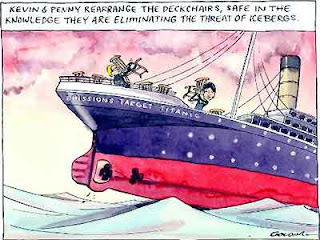 Current global trends in energy supply and consumption are patently unsustainable - environmentally, economically, socially ... What is needed is nothing short of an energy revolution." I have said similar things myself, but this quote is from a new "World Energy Outlook" by the International Energy Agency.
The change is as amazing as if the Pope were to support contraception or the Business Council to call for stabilising the population. Until last year, the energy agency was still deep in denial about the problems of climate change and peak oil, and was talking about world energy use doubling and an increasing use of coal. The agency's conversion is only the latest and most dramatic example of a new global attitude. The changes leave the Federal Government suddenly looking out of touch, its recent climate change announcements more like a white flag than a white paper.
The Government's weak emissions trading scheme design is not just a surrender to the big polluters, but appears to give up on saving precious national icons such as the Great Barrier Reef, Kakadu National Park and the Murray-Darling river system. It is also bad news for the economy, as Professor Ross Garnaut wrote in these pages recently.
It is dishonest to claim that our per capita pollution reductions are comparable with those of Europe. Increasing population is not being forced on its by Martians, it results from 20th century policies to boost immigration and encourage larger families. The Earth's natural systems don't understand how many Australians there are, only our total impact. As global citizens, we should curb the growth in our numbers and set serious targets to cut pollution. The UN's 2007 Bali conference noted that countries such as Australia need to reduce greenhouse pollution by 25 to 40% to give the Earth a fighting chance of avoiding dangerous climate change.
The latest science is more alarming. Until recently, methane levels in the air had been stable for a decade, but there has been a surge. Unpublished research shows the methane is coming from the Arctic. This is the sign climate scientists have been warning about, a possible tipping point. Temperatures have increased more at the poles than in the tropics. Warming is releasing methane from tundra, increasing warming and causing further methane releases, possibly setting in train an unstoppable surge in temperature. We need an urgent and concerted approach to cut greenhouse pollution.
Global changes have been striking. The World Economic Forum's Dubai summit on the global agenda concluded that responses to the financial crisis need to be integrated with policies that take into account climate change, energy security, food and water. Global think tank the Club of Rome has been warning for 35 years about the inevitable consequences of uncontrolled growth. It convened a conference last month that concluded the climate and financial problems interlock and demand an integrated approach. The IEA recognised the science when it called for an energy revolution.
Now US President-elect Barack Obama has named as his energy secretary a scientist who has called for a super-grid to harness solar and wind energy. This move to "green infrastructure" is at the heart of Obama's plan to repair the US economy. Diplomats are working on talks between Obama and Chinese leaders before the UN's 2009 Copenhagen conference, which must produce a framework to slow climate change. China has shown it is serious by closing 2300 small coalmines, improving energy efficiency by 7% and planning to expand solar and wind energy massively.
What should we be doing? We should join the energy revolution, rather than try to prop up old technologies. Kevin Rudd has set an inadequate target to cut emissions just 5% by 2020, offered billions in subsidies to overseas-owned big polluters and done little to encourage growth of local clean-energy technologies to power our future.
The plan has to go to the Senate, where it faces a rocky road. I expect the Greens to oppose it because it doesn't do enough. The Coalition is hopelessly divided between climate change deniers, Howard-era dinosaurs who don't get it, and a minority who understand the scale of the problem. They may also oppose the scheme. That would force the Government back to the drawing board.
If enough of us make clear to our MPs we want serious action, the Prime Minister could develop a stronger scheme. Next year will be critical. I am not exaggerating in saying the survival of civilisation is at stake. As a scientifically and technologically literate country, we must recognise that a green economy is vital. That makes economic sense as well as being environmentally responsible. We have to go green if we want to get out of the red.
Professor Ian Lowe is president of the Australian Conservation Foundation.
Wednesday 31/12/2008 Page: 11
 Current global trends in energy supply and consumption are patently unsustainable - environmentally, economically, socially ... What is needed is nothing short of an energy revolution." I have said similar things myself, but this quote is from a new "World Energy Outlook" by the International Energy Agency.
The change is as amazing as if the Pope were to support contraception or the Business Council to call for stabilising the population. Until last year, the energy agency was still deep in denial about the problems of climate change and peak oil, and was talking about world energy use doubling and an increasing use of coal. The agency's conversion is only the latest and most dramatic example of a new global attitude. The changes leave the Federal Government suddenly looking out of touch, its recent climate change announcements more like a white flag than a white paper.
The Government's weak emissions trading scheme design is not just a surrender to the big polluters, but appears to give up on saving precious national icons such as the Great Barrier Reef, Kakadu National Park and the Murray-Darling river system. It is also bad news for the economy, as Professor Ross Garnaut wrote in these pages recently.
It is dishonest to claim that our per capita pollution reductions are comparable with those of Europe. Increasing population is not being forced on its by Martians, it results from 20th century policies to boost immigration and encourage larger families. The Earth's natural systems don't understand how many Australians there are, only our total impact. As global citizens, we should curb the growth in our numbers and set serious targets to cut pollution. The UN's 2007 Bali conference noted that countries such as Australia need to reduce greenhouse pollution by 25 to 40% to give the Earth a fighting chance of avoiding dangerous climate change.
The latest science is more alarming. Until recently, methane levels in the air had been stable for a decade, but there has been a surge. Unpublished research shows the methane is coming from the Arctic. This is the sign climate scientists have been warning about, a possible tipping point. Temperatures have increased more at the poles than in the tropics. Warming is releasing methane from tundra, increasing warming and causing further methane releases, possibly setting in train an unstoppable surge in temperature. We need an urgent and concerted approach to cut greenhouse pollution.
Global changes have been striking. The World Economic Forum's Dubai summit on the global agenda concluded that responses to the financial crisis need to be integrated with policies that take into account climate change, energy security, food and water. Global think tank the Club of Rome has been warning for 35 years about the inevitable consequences of uncontrolled growth. It convened a conference last month that concluded the climate and financial problems interlock and demand an integrated approach. The IEA recognised the science when it called for an energy revolution.
Now US President-elect Barack Obama has named as his energy secretary a scientist who has called for a super-grid to harness solar and wind energy. This move to "green infrastructure" is at the heart of Obama's plan to repair the US economy. Diplomats are working on talks between Obama and Chinese leaders before the UN's 2009 Copenhagen conference, which must produce a framework to slow climate change. China has shown it is serious by closing 2300 small coalmines, improving energy efficiency by 7% and planning to expand solar and wind energy massively.
What should we be doing? We should join the energy revolution, rather than try to prop up old technologies. Kevin Rudd has set an inadequate target to cut emissions just 5% by 2020, offered billions in subsidies to overseas-owned big polluters and done little to encourage growth of local clean-energy technologies to power our future.
The plan has to go to the Senate, where it faces a rocky road. I expect the Greens to oppose it because it doesn't do enough. The Coalition is hopelessly divided between climate change deniers, Howard-era dinosaurs who don't get it, and a minority who understand the scale of the problem. They may also oppose the scheme. That would force the Government back to the drawing board.
If enough of us make clear to our MPs we want serious action, the Prime Minister could develop a stronger scheme. Next year will be critical. I am not exaggerating in saying the survival of civilisation is at stake. As a scientifically and technologically literate country, we must recognise that a green economy is vital. That makes economic sense as well as being environmentally responsible. We have to go green if we want to get out of the red.
Professor Ian Lowe is president of the Australian Conservation Foundation.
Keep to emission cuts, say economists
Age
Saturday 3/1/2009 Page: 11
ECONOMISTS have given a lukewarm response to Kevin Rudd's carbon emission reduction targets, but have urged the Federal Government not to be spooked by the global economic downturn. Last month, the Government revealed it would be seeking to reduce carbon emissions by 5% on 2000 levels by 2020 unless an international agreement on carbon trading could be reached. In that case, the reduction target rises to 15%. The 2050 target is a 60% reduction.
"There's never going to be a good time to introduce this, so the current crisis should not be used as an excuse to delay," said Chris Caton from BT Financial Group. So far, the timing of the carbon pollution reduction scheme (CPRS) does not appear to have been affected, with the Government committed to a 2010 start date. University of Queensland academic John Quiggin argued that the pursuit of environmental policies could in fact bolster the economic recovery. "Use green jobs programs as a focus of expansionary policy," he said.
ANZ's Saul Eslake said he would have preferred less compensation for heavy emitters because it would result in clearer "price signals for households and businesses to modify their behaviour. Heather Ridout from the Australian Industry Group called for protection for trade exposed industries. "There should be strong measures for businesses that are exposed to competition from countries that do not impose additional costs similar to those imposed under the Australian CPRS," she said.
Monash University academic Jakob Madsen, said steep price increases on carbon were needed to encourage the development of alternative fuel sources. In Denmark, 40% of the energy will come from renewable resources by 2020. Australia should easily be able to meet that target." The Scandinavian social democracy will be in the spotlight in December when world leaders gather in Copenhagen in an attempt to nut out a global agreement on emission reductions beyond 2012. "The world is watching Australia and we can use this opportunity to help broker an international agreement," said Austrade's Tim Harcourt.
Some economists backed the Government's plan to make deeper emission cuts conditional on agreement at Copenhagen, including former government consultant John Edwards from HSBC, Paul Brennan from Citi and Brad Crofts from the Australian Workers Union. 'Australia should calibrate its response in line with what happens in other countries and in a manner that does not put at risk Australia's ongoing competitiveness and economic prosperity," Scott Thompson from the Business Council of Australia said.
Bill Evans, at Westpac, cautioned against ploughing ahead with pre-slowdown emission reduction plans, saying "disruption will be particularly risky at this stage of the cycle". Siwei Goo, from the Australian Chamber of Commerce and Industry, urged the Government to go one step further. "The possibility of delaying the CPRS should be on the table and thorough cost-benefit analysis should be conducted to examine the effect of delaying CPRS for another 12 months."
Saturday 3/1/2009 Page: 11
ECONOMISTS have given a lukewarm response to Kevin Rudd's carbon emission reduction targets, but have urged the Federal Government not to be spooked by the global economic downturn. Last month, the Government revealed it would be seeking to reduce carbon emissions by 5% on 2000 levels by 2020 unless an international agreement on carbon trading could be reached. In that case, the reduction target rises to 15%. The 2050 target is a 60% reduction.
"There's never going to be a good time to introduce this, so the current crisis should not be used as an excuse to delay," said Chris Caton from BT Financial Group. So far, the timing of the carbon pollution reduction scheme (CPRS) does not appear to have been affected, with the Government committed to a 2010 start date. University of Queensland academic John Quiggin argued that the pursuit of environmental policies could in fact bolster the economic recovery. "Use green jobs programs as a focus of expansionary policy," he said.
ANZ's Saul Eslake said he would have preferred less compensation for heavy emitters because it would result in clearer "price signals for households and businesses to modify their behaviour. Heather Ridout from the Australian Industry Group called for protection for trade exposed industries. "There should be strong measures for businesses that are exposed to competition from countries that do not impose additional costs similar to those imposed under the Australian CPRS," she said.
Monash University academic Jakob Madsen, said steep price increases on carbon were needed to encourage the development of alternative fuel sources. In Denmark, 40% of the energy will come from renewable resources by 2020. Australia should easily be able to meet that target." The Scandinavian social democracy will be in the spotlight in December when world leaders gather in Copenhagen in an attempt to nut out a global agreement on emission reductions beyond 2012. "The world is watching Australia and we can use this opportunity to help broker an international agreement," said Austrade's Tim Harcourt.
Some economists backed the Government's plan to make deeper emission cuts conditional on agreement at Copenhagen, including former government consultant John Edwards from HSBC, Paul Brennan from Citi and Brad Crofts from the Australian Workers Union. 'Australia should calibrate its response in line with what happens in other countries and in a manner that does not put at risk Australia's ongoing competitiveness and economic prosperity," Scott Thompson from the Business Council of Australia said.
Bill Evans, at Westpac, cautioned against ploughing ahead with pre-slowdown emission reduction plans, saying "disruption will be particularly risky at this stage of the cycle". Siwei Goo, from the Australian Chamber of Commerce and Industry, urged the Government to go one step further. "The possibility of delaying the CPRS should be on the table and thorough cost-benefit analysis should be conducted to examine the effect of delaying CPRS for another 12 months."
Growing reasons for green optimism
Canberra Times
Wednesday 31/12/2008 Page: 17
What do you think about 2009? I asked a friend with whom I often share views on the environment and the meaning of life. "I am hopeful and optimistic," I replied. "Really? In the face of Kevin Rudd's abject failure on climate change?" she said. My friend and I agree that nothing short of a large change in human values and actions will preserve the planet as a home for Homo sapiens.
So why am I optimistic? Although he cannot possibly meet all our expectations, the election of Barack Obama as the next president of the United States is the most hopeful geopolitical event in many years. Obama has won office, arguing for genuine change, including a serious approach to climate change, and he seems to mean it. Once the US really tackles carbon emissions, the rest of the world will take the issue seriously.
So 2009 is shaping as the pivotal year for climate change, and by the time of the Copenhagen meeting in December we will know whether the countries of the world can get their act together before it is too late. The accelerated melting of Arctic sea ice now has many climate scientists believing that we are observing a phenomenon that could rapidly result in a catastrophic and irreversible flip in the climate system.
I am heartened by what is happening in the ACT as well as what could happen globally with the right leadership from Obama. The new ACT Environment Minister, Simon Corbell, is taking a different stance to his federal counterparts and has publicly repudiated their weak approach. I have read the agreement that Chief Minister Jon Stanhope has signed with the Greens and they have extracted some firm commitments on development of greenhouse gas targets and renewable energy.
Furthermore, our watchdog Commissioner for the Environment, Maxine Cooper, has the power to call the Government to account on agreements such as this, and she is flexing her muscles. Another reason for my optimism is the evidence that people in the ACT are awake to the carbon footprint challenge and are beginning to act on it. People movements are springing up all over the world.
In Canberra, we have been both surprised and delighted at the rapid success of the SEE-Change movement, and similar movements are taking off elsewhere under different names - ranging from Transition Towns to Sustainability Street. SEE-Change groups in four areas of Canberra are bringing people from the neighbourhood together to discuss a reduction in their footprint, through bulk purchases of solar panels, energy retrofits of their homes, modification of their food-purchasing behaviour and altered approaches to car use, car purchase and use of public transport.
A group of 22 Jamison SEE-Change members have been involved in a door-knocking approach - each to 10 randomly identified addresses - to seek from the residents, representative information on what people think and what they are doing about their ecological footprint. The evidence from this random sampling of householders is that 75% of people are convinced of the seriousness of the problem and that many are already taking action on issues, including solar panels, changes in their dietary practices and changing their light bulbs.
I also feel optimistic when I see and hear what is happening in our school system and as the new generation, which includes my own grandchildren, picks tip the sustainability challenge. Young people are becoming both literate about sustainability and ready to act.
Of course everything must come together and the Federal Government will have to change its white paper to enable the contributions of ordinary householders to do more than make up for the licences to pollute that the Federal Government is planning to issue to the coal and aluminium industries. That will happen if real movement comes from both outside and inside Australia.
So, I dare to hope that we are approaching a good tipping point, the point where a critical mass of people accept the need for a radical new approach and adopt it. Their new approach becomes the new received wisdom and a majority of the world follows. Climate change is the biggest challenge we have ever faced as a species. The problem is probably still soluble but the solution depends on a remarkable new political consensus. The good news is that when the people lead with vision, governments will follow.
Wednesday 31/12/2008 Page: 17
What do you think about 2009? I asked a friend with whom I often share views on the environment and the meaning of life. "I am hopeful and optimistic," I replied. "Really? In the face of Kevin Rudd's abject failure on climate change?" she said. My friend and I agree that nothing short of a large change in human values and actions will preserve the planet as a home for Homo sapiens.
So why am I optimistic? Although he cannot possibly meet all our expectations, the election of Barack Obama as the next president of the United States is the most hopeful geopolitical event in many years. Obama has won office, arguing for genuine change, including a serious approach to climate change, and he seems to mean it. Once the US really tackles carbon emissions, the rest of the world will take the issue seriously.
So 2009 is shaping as the pivotal year for climate change, and by the time of the Copenhagen meeting in December we will know whether the countries of the world can get their act together before it is too late. The accelerated melting of Arctic sea ice now has many climate scientists believing that we are observing a phenomenon that could rapidly result in a catastrophic and irreversible flip in the climate system.
I am heartened by what is happening in the ACT as well as what could happen globally with the right leadership from Obama. The new ACT Environment Minister, Simon Corbell, is taking a different stance to his federal counterparts and has publicly repudiated their weak approach. I have read the agreement that Chief Minister Jon Stanhope has signed with the Greens and they have extracted some firm commitments on development of greenhouse gas targets and renewable energy.
Furthermore, our watchdog Commissioner for the Environment, Maxine Cooper, has the power to call the Government to account on agreements such as this, and she is flexing her muscles. Another reason for my optimism is the evidence that people in the ACT are awake to the carbon footprint challenge and are beginning to act on it. People movements are springing up all over the world.
In Canberra, we have been both surprised and delighted at the rapid success of the SEE-Change movement, and similar movements are taking off elsewhere under different names - ranging from Transition Towns to Sustainability Street. SEE-Change groups in four areas of Canberra are bringing people from the neighbourhood together to discuss a reduction in their footprint, through bulk purchases of solar panels, energy retrofits of their homes, modification of their food-purchasing behaviour and altered approaches to car use, car purchase and use of public transport.
A group of 22 Jamison SEE-Change members have been involved in a door-knocking approach - each to 10 randomly identified addresses - to seek from the residents, representative information on what people think and what they are doing about their ecological footprint. The evidence from this random sampling of householders is that 75% of people are convinced of the seriousness of the problem and that many are already taking action on issues, including solar panels, changes in their dietary practices and changing their light bulbs.
I also feel optimistic when I see and hear what is happening in our school system and as the new generation, which includes my own grandchildren, picks tip the sustainability challenge. Young people are becoming both literate about sustainability and ready to act.
Of course everything must come together and the Federal Government will have to change its white paper to enable the contributions of ordinary householders to do more than make up for the licences to pollute that the Federal Government is planning to issue to the coal and aluminium industries. That will happen if real movement comes from both outside and inside Australia.
So, I dare to hope that we are approaching a good tipping point, the point where a critical mass of people accept the need for a radical new approach and adopt it. Their new approach becomes the new received wisdom and a majority of the world follows. Climate change is the biggest challenge we have ever faced as a species. The problem is probably still soluble but the solution depends on a remarkable new political consensus. The good news is that when the people lead with vision, governments will follow.
Nuclear power has key role in fight against climate change
Age
Wednesday 31/12/2008 Page: 11
THE Rudd Government's white paper on the final design of it's emissions trading scheme has triggered a vigorous debate that will certainly continue into the new year. In defending the 2020 emission reduction target range of 5-15%, Climate Minister Penny Wong said she was "acting in the national interest" and protecting jobs and reducing energy costs on behalf of Australian industry and all energy consumers.
It would appear that the recent Poznan negotiations have achieved very little to further the United Nations' climate change agenda, which is aimed at having developed countries cut their emissions by 25-40% below 1990 levels by 2020. Without a sensible energy policy in place, Australia will continue to be challenged by this. By contrast, the nuclear energyed European Union is laughing all the way to the global carbon bank. It is in Australia's national interest to follow the EU's example.
Professor Ross Garnaut's final report - released at the end of September - concedes that nuclear energy could supply more than a quarter of Australia's electricity by 2050 if a proposed policy based on "clean coal" and "renewables" fails. But he questions the technology on economic grounds and restates his earlier convictions that Australia is "not the logical first home of a new nuclear capacity".
In this, he and the Rudd Government are completely at odds with expert world opinion. Of all countries, Australia has the most to gain from domestic nuclear energy and a nuclear industry to serve the world. Last week in Canberra, Australian business leaders met Poland's new ambassador, Andrzej Jaroszynski, to discuss the former communist country's efforts to reduce carbon emissions. Unlike the Australian Government, which at times acts almost like the mouthpiece of the fossil fuel industry, Poland's Government proposes an energy policy revolution that will gradually reduce chemical combustion by introducing nuclear fission.
The Polish ambassador indicated that Poland would be following the example of the European Union and anticipated a significant nuclear energy component in the national energy program by 2025. This has been the strategy followed by many polluting nations - with the exception of Australia - over the past few decades. Indeed, nuclear energy has the pivotal role in any battle against climate change. The Poznan delegates have already had some reassurance from the United States, the world's No. 2 polluter.
President-elect Barack Obama has set a target of reducing US greenhouse gas emissions to 1990 levels by 2020 and by a further 80% by 2050, with nuclear energy playing the major role. In the US there are now 25 applications for new nuclear energy stations to add to the existing 104 that have been brought on line over the past 50 years. And many of these are licensed for another 30 years of operation and produce electricity at half the cost of fossil fuel generators.
In November, the chairman of the Australian Nuclear Science and Technology Organisation, Ziggy Switkowski, gave the annual Essington Lewis Memorial Lecture in Adelaide and endorsed domestic nuclear energy for Australia. He said: "I and concerned that the exclusion of nuclear energy from our national conversation and energy debate represents a triumph of political pragmatism over good policy." The Rudd Government should heed the opinions of ambassador Jaroszynski and Dr Switkowski and incorporate them into Australian energy policy without delay.
At the December 2007 Bali climate conference, Yvo De Boer, executive secretary of the United Nations Intergovernmental Panel on Climate Change, said: "I have never seen a credible scenario for reducing emissions which did not include nuclear energy." Including nuclear energy into an Australian energy policy would transform the token political gesture of ratifying the Kyoto Protocol to the practical and ethical high ground of a real contribution to the global climate change problem.
Leslie Kemeny is the Australian foundation member of the International Nuclear Energy Academy.
Wednesday 31/12/2008 Page: 11
THE Rudd Government's white paper on the final design of it's emissions trading scheme has triggered a vigorous debate that will certainly continue into the new year. In defending the 2020 emission reduction target range of 5-15%, Climate Minister Penny Wong said she was "acting in the national interest" and protecting jobs and reducing energy costs on behalf of Australian industry and all energy consumers.
It would appear that the recent Poznan negotiations have achieved very little to further the United Nations' climate change agenda, which is aimed at having developed countries cut their emissions by 25-40% below 1990 levels by 2020. Without a sensible energy policy in place, Australia will continue to be challenged by this. By contrast, the nuclear energyed European Union is laughing all the way to the global carbon bank. It is in Australia's national interest to follow the EU's example.
Professor Ross Garnaut's final report - released at the end of September - concedes that nuclear energy could supply more than a quarter of Australia's electricity by 2050 if a proposed policy based on "clean coal" and "renewables" fails. But he questions the technology on economic grounds and restates his earlier convictions that Australia is "not the logical first home of a new nuclear capacity".
In this, he and the Rudd Government are completely at odds with expert world opinion. Of all countries, Australia has the most to gain from domestic nuclear energy and a nuclear industry to serve the world. Last week in Canberra, Australian business leaders met Poland's new ambassador, Andrzej Jaroszynski, to discuss the former communist country's efforts to reduce carbon emissions. Unlike the Australian Government, which at times acts almost like the mouthpiece of the fossil fuel industry, Poland's Government proposes an energy policy revolution that will gradually reduce chemical combustion by introducing nuclear fission.
The Polish ambassador indicated that Poland would be following the example of the European Union and anticipated a significant nuclear energy component in the national energy program by 2025. This has been the strategy followed by many polluting nations - with the exception of Australia - over the past few decades. Indeed, nuclear energy has the pivotal role in any battle against climate change. The Poznan delegates have already had some reassurance from the United States, the world's No. 2 polluter.
President-elect Barack Obama has set a target of reducing US greenhouse gas emissions to 1990 levels by 2020 and by a further 80% by 2050, with nuclear energy playing the major role. In the US there are now 25 applications for new nuclear energy stations to add to the existing 104 that have been brought on line over the past 50 years. And many of these are licensed for another 30 years of operation and produce electricity at half the cost of fossil fuel generators.
In November, the chairman of the Australian Nuclear Science and Technology Organisation, Ziggy Switkowski, gave the annual Essington Lewis Memorial Lecture in Adelaide and endorsed domestic nuclear energy for Australia. He said: "I and concerned that the exclusion of nuclear energy from our national conversation and energy debate represents a triumph of political pragmatism over good policy." The Rudd Government should heed the opinions of ambassador Jaroszynski and Dr Switkowski and incorporate them into Australian energy policy without delay.
At the December 2007 Bali climate conference, Yvo De Boer, executive secretary of the United Nations Intergovernmental Panel on Climate Change, said: "I have never seen a credible scenario for reducing emissions which did not include nuclear energy." Including nuclear energy into an Australian energy policy would transform the token political gesture of ratifying the Kyoto Protocol to the practical and ethical high ground of a real contribution to the global climate change problem.
Leslie Kemeny is the Australian foundation member of the International Nuclear Energy Academy.
Monday, 5 January 2009
Science's star turn to fix energy shortage for all
West Australian
Monday 29/12/2008 Page: 14
 Scientists believe that they are on brink of cracking one of the biggest problems in physics by harnessing the power of nuclear fusion, the reaction that burns at the heart of the Sun. Next year, a team will begin attempts to ignite a tiny artificial star inside a laboratory and trigger a thermonuclear reaction. Its goal is to generate temperatures of more than 100 million degrees Celsius and pressures billions of times higher than those found anywhere else on earth, from a speck of fuel little bigger than a pinhead. If successful, the experiment will mark the first step towards building a practical nuclear fusion power station and a source of almost limitless energy.
At a time when fossil fuel supplies are dwindling and fears about global warming are forcing governments to seek clean energy sources, fusion could provide the answer. Hydrogen, the fuel needed for fusion reactions, is among the most abundant in the universe. Building work on the £1.2 billion ($2.6 billion) experiment is due to be completed next year.
Scientists at the National Ignition Facility at Lawrence Livermore National Laboratory, nestled among the wine-producing vineyards of central California, will use a laser that concentrates 1000 times the electric generating power of the US into a billionth of a second. The result should be an explosion in the 10m-wide reaction chamber which produces at least 10 times the amount of energy used to create it.
"We are creating the conditions that exist inside the Sun," Ed Moses, director of the facility, said. "It is like tapping into the real solar energy as fusion is the source of all energy in the world. It is really exciting physics, but beyond that there are huge social, economic and global problems that it can help to solve. " Inside a structure covering an area the size of three football fields, a single infrared laser will be sent through almost 1.6km of lenses, mirrors and amplifiers to create a beam more than 10 billion times more powerful than a household light bulb.
Housed within a hangar-sized room that has to be pumped clear of dust to prevent impurities getting into the beam, the laser will then be split into 192 separate beams, converted into ultraviolet light and focused into a capsule at the centre of an aluminium-and-concrete-coated target chamber. When the laser beams hit the inside of the capsule, they should generate high-energy X-rays that, within a few billionths of a second, compress the fuel pellet inside until its outer shell blows off. This explosion of the fuel pellet shell produces an equal and opposite reaction that compresses the fuel itself together until nuclear fusion begins, releasing vast energy.
Scientists have been attempting to harness nuclear fusion since Albert Einstein's equation E=Mc2, which he derived in 1905, raised the possibility that fusing atoms could release huge amounts of energy. Under Einstein's theory, the amount of energy locked up in one gram of matter is enough to power 28,500 100-watt lightbulbs for a year. Until now, such fusion has only been possible inside nuclear weapons and highly unstable plasmas created in incredibly strong magnetic fields. The work at Livermore could change all this.
Until now Livermore has had only the dubious honour of being home to the US Government's nuclear weapons research laboratories which are on the same site as the NIF Inside the facility, the scientists are impatient. After 11 years of development work, they want the last of the lenses and mirrors for the laser to be put in place and the tedious task of adjusting and aiming the laser to be over, a process they fear could take up to a year before they can successfully achieve fusion.
Jeff Wisoff, a former astronaut who is deputy principal associate director of science at the NIF, said: "Everyone is keen to get started, but we have to get the targeting right, otherwise it won't work. "We will be firing laser pulses that last just a few billionths of a second but we will be creating conditions that are found in the interior of stars or exploding nuclear weapons.
"I worked on the building of the International Space Station, but this is a far bigger challenge and the implications are huge. When we started the project, a lot of the technology we needed did not exist, so we have had to develop it ourselves," he said. "The next step is looking at how ignition can be used to deliver something of value to the world. It has the potential to be one of the biggest achievements mankind has made. " Although other experiments have attempted to create the conditions needed for nuclear fusion, lasers are seen as the most likely to be able to provide a viable electricity supply.
If all goes well, the NIF will be able to fire its laser and ignite a fusion reaction every five hours, but to create a reliable fusion power plant the laser will need to ignite fusion about 10 times a second. The scientists are already working with British counterparts on the next step towards a fusion power station. A project known as the High Powered Laser Research facility aims to create a laser-powered fusion reactor that can fire once every couple of minutes.
"The National Ignition Facility is going to finally prove fusion can be achieved with a laser," Professor Mike Dunne, director of the central laser facility at the Rutherford Appleton Laboratory, near Oxford, said. "It will start an exciting new period in physics as it will prove what we are trying to achieve is actually be possible."
Monday 29/12/2008 Page: 14
 Scientists believe that they are on brink of cracking one of the biggest problems in physics by harnessing the power of nuclear fusion, the reaction that burns at the heart of the Sun. Next year, a team will begin attempts to ignite a tiny artificial star inside a laboratory and trigger a thermonuclear reaction. Its goal is to generate temperatures of more than 100 million degrees Celsius and pressures billions of times higher than those found anywhere else on earth, from a speck of fuel little bigger than a pinhead. If successful, the experiment will mark the first step towards building a practical nuclear fusion power station and a source of almost limitless energy.
At a time when fossil fuel supplies are dwindling and fears about global warming are forcing governments to seek clean energy sources, fusion could provide the answer. Hydrogen, the fuel needed for fusion reactions, is among the most abundant in the universe. Building work on the £1.2 billion ($2.6 billion) experiment is due to be completed next year.
Scientists at the National Ignition Facility at Lawrence Livermore National Laboratory, nestled among the wine-producing vineyards of central California, will use a laser that concentrates 1000 times the electric generating power of the US into a billionth of a second. The result should be an explosion in the 10m-wide reaction chamber which produces at least 10 times the amount of energy used to create it.
"We are creating the conditions that exist inside the Sun," Ed Moses, director of the facility, said. "It is like tapping into the real solar energy as fusion is the source of all energy in the world. It is really exciting physics, but beyond that there are huge social, economic and global problems that it can help to solve. " Inside a structure covering an area the size of three football fields, a single infrared laser will be sent through almost 1.6km of lenses, mirrors and amplifiers to create a beam more than 10 billion times more powerful than a household light bulb.
Housed within a hangar-sized room that has to be pumped clear of dust to prevent impurities getting into the beam, the laser will then be split into 192 separate beams, converted into ultraviolet light and focused into a capsule at the centre of an aluminium-and-concrete-coated target chamber. When the laser beams hit the inside of the capsule, they should generate high-energy X-rays that, within a few billionths of a second, compress the fuel pellet inside until its outer shell blows off. This explosion of the fuel pellet shell produces an equal and opposite reaction that compresses the fuel itself together until nuclear fusion begins, releasing vast energy.
Scientists have been attempting to harness nuclear fusion since Albert Einstein's equation E=Mc2, which he derived in 1905, raised the possibility that fusing atoms could release huge amounts of energy. Under Einstein's theory, the amount of energy locked up in one gram of matter is enough to power 28,500 100-watt lightbulbs for a year. Until now, such fusion has only been possible inside nuclear weapons and highly unstable plasmas created in incredibly strong magnetic fields. The work at Livermore could change all this.
Until now Livermore has had only the dubious honour of being home to the US Government's nuclear weapons research laboratories which are on the same site as the NIF Inside the facility, the scientists are impatient. After 11 years of development work, they want the last of the lenses and mirrors for the laser to be put in place and the tedious task of adjusting and aiming the laser to be over, a process they fear could take up to a year before they can successfully achieve fusion.
Jeff Wisoff, a former astronaut who is deputy principal associate director of science at the NIF, said: "Everyone is keen to get started, but we have to get the targeting right, otherwise it won't work. "We will be firing laser pulses that last just a few billionths of a second but we will be creating conditions that are found in the interior of stars or exploding nuclear weapons.
"I worked on the building of the International Space Station, but this is a far bigger challenge and the implications are huge. When we started the project, a lot of the technology we needed did not exist, so we have had to develop it ourselves," he said. "The next step is looking at how ignition can be used to deliver something of value to the world. It has the potential to be one of the biggest achievements mankind has made. " Although other experiments have attempted to create the conditions needed for nuclear fusion, lasers are seen as the most likely to be able to provide a viable electricity supply.
If all goes well, the NIF will be able to fire its laser and ignite a fusion reaction every five hours, but to create a reliable fusion power plant the laser will need to ignite fusion about 10 times a second. The scientists are already working with British counterparts on the next step towards a fusion power station. A project known as the High Powered Laser Research facility aims to create a laser-powered fusion reactor that can fire once every couple of minutes.
"The National Ignition Facility is going to finally prove fusion can be achieved with a laser," Professor Mike Dunne, director of the central laser facility at the Rutherford Appleton Laboratory, near Oxford, said. "It will start an exciting new period in physics as it will prove what we are trying to achieve is actually be possible."
Carbon policy pierces haze of bad news
Summaries - Australian Financial Review
Tuesday 30/12/2008 Page: 64
The Federal Government's moves to implement an emissions trading scheme is a necessary change of direction from the previous Government given the threat climate change poses not only to icons such as the Great Barrier Reef and Kakadu National Park, but to food production and water supplies.
Although the announced reduction targets have been criticised by environmental groups, and Citigroup has said the scheme will merely keep Australia on track to meet the targets Australia agreed to under the Kyoto Protocol, it is at least a start, and in keeping with an expected change of direction in the US under president Barack Obama. The trading of permits will occur through the Australian Securities Exchange as well as banks and other institutions and will be regulated by the Australian Securities and Investments Commission, providing new opportunities for the finance industry.
Elsewhere, campaigners in the US are urging the incoming US president to adopt Al Gore's proposal for a global carbon, which, according to the Intergovernmental Panel on Climate Change, would impose a tax of around $72 per tonne of carbon dioxide equivalent, compared to the expected starting price of $23 to $32 a tonne under the Australian Government's scheme.
Tuesday 30/12/2008 Page: 64
The Federal Government's moves to implement an emissions trading scheme is a necessary change of direction from the previous Government given the threat climate change poses not only to icons such as the Great Barrier Reef and Kakadu National Park, but to food production and water supplies.
Although the announced reduction targets have been criticised by environmental groups, and Citigroup has said the scheme will merely keep Australia on track to meet the targets Australia agreed to under the Kyoto Protocol, it is at least a start, and in keeping with an expected change of direction in the US under president Barack Obama. The trading of permits will occur through the Australian Securities Exchange as well as banks and other institutions and will be regulated by the Australian Securities and Investments Commission, providing new opportunities for the finance industry.
Elsewhere, campaigners in the US are urging the incoming US president to adopt Al Gore's proposal for a global carbon, which, according to the Intergovernmental Panel on Climate Change, would impose a tax of around $72 per tonne of carbon dioxide equivalent, compared to the expected starting price of $23 to $32 a tonne under the Australian Government's scheme.
Natural Technology Systems is one company leading the way towards a greener South Australia
Sunday Mail Adelaide
Sunday 28/12/2008 Page: 8
 The highly sought after solar energy energiser kits not only provide pollution free electricity from the sun, but can help slash your power bills. Kim Atkinson of Natural Technology Systems recommends homeowners looking to install an energiser kit take advantage of the $8000 Federal Government rebate to install solar modules on your roof and connect to the grid.
And by designing a system that makes the process much faster, Natural Technology Systems are at the forefront in converting more homes to much-needed green power. "We are so busy installing systems that we really needed a rapid way of deploying systems to meet demand," Mr Atkinson says. "This is a great example of an Australian designed solution for Australian conditions." A solar energiser converts sunlight into standard household electricity. It uses BP Solar's newest, high-efficiency solar panels to collect the sunlight and specialised electronic devices to convert and control the flow of electricity.
When your solar energiser generates more power than your household uses, any excess electricity flows into the grid. The rate at which you are paid for electricity going back into the grid is at more than double of what you pay now. Recent reports released by a Senate Committee indicate that the way electricity is fed back through the meters may change so that all generated power will go directly into the grid.
This would result in an increase in the economic viability of a grid system resulting in further savings. A solar energiser helps the environment by producing pollution free electricity, quietly and efficiently on your very own roof top, year in year out. The most important aspect of a solar energiser is that it reduces electricity bills and protects homeowners against future electricity price increases, offering homeowners piece of mind and valuable savings.
Natural Technology Systems, 8344 7298.
Sunday 28/12/2008 Page: 8
 The highly sought after solar energy energiser kits not only provide pollution free electricity from the sun, but can help slash your power bills. Kim Atkinson of Natural Technology Systems recommends homeowners looking to install an energiser kit take advantage of the $8000 Federal Government rebate to install solar modules on your roof and connect to the grid.
And by designing a system that makes the process much faster, Natural Technology Systems are at the forefront in converting more homes to much-needed green power. "We are so busy installing systems that we really needed a rapid way of deploying systems to meet demand," Mr Atkinson says. "This is a great example of an Australian designed solution for Australian conditions." A solar energiser converts sunlight into standard household electricity. It uses BP Solar's newest, high-efficiency solar panels to collect the sunlight and specialised electronic devices to convert and control the flow of electricity.
When your solar energiser generates more power than your household uses, any excess electricity flows into the grid. The rate at which you are paid for electricity going back into the grid is at more than double of what you pay now. Recent reports released by a Senate Committee indicate that the way electricity is fed back through the meters may change so that all generated power will go directly into the grid.
This would result in an increase in the economic viability of a grid system resulting in further savings. A solar energiser helps the environment by producing pollution free electricity, quietly and efficiently on your very own roof top, year in year out. The most important aspect of a solar energiser is that it reduces electricity bills and protects homeowners against future electricity price increases, offering homeowners piece of mind and valuable savings.
Natural Technology Systems, 8344 7298.
It's power to the people as self help groups fight climate change
Sunday Age
Sunday 28/12/2008 Page: 8
 THE cracked bed of Ballarat's Lake Wendouree is a sorry place for the birth of one of Victoria's leading climate change groups. Tired boat ramps lead down to dusty dirt, weeds and straggly scrub sprouting through a few stagnant puddles. Years of drought and water restrictions have reduced this site of the Melbourne Olympics rowing and canoeing to a dried mud pit.
On these dry banks in late 2006, the climate change group Ballarat Renewable Energy and Zero Emissions, or BREAZE, was formed with 40 members. Two years later, its membership has passed 1100. It has been given $152,000 by the State Government, to show Victoria's many budding climate change groups how to grow and prosper. Community action has been crucial to combating climate change along this stretch of central Victoria.
BREAZE's strength is in its numbers, which help it buy renewable energy systems in bulk at significant discounts. Members have already received solar hot water systems at no cost, plus $200 for the price of installation. Now, the group has installed more than 100 solar roof panel systems under a bulk discount.
Meredith Alexander had solar roof panels installed on her Ballarat house this month, saving more than $1000 on the estimated cost of about $12,500. Ms Alexander, who hopes to have solar hot water installed next year, said her one-kW system powered about one-third of her electricity needs. "I want my children to have a world to live in, and they wont if we keep squandering resources at this rate," she said.
"If you do it on your own, it can be difficult to afford, but when you've got this collective buying power, it is possible." A similar bulk-buy model in Castlemaine, run by the Mount Alexander Sustainability Group, has helped install more than 70 discounted solar roof panel systems. In Bendigo - where the office of Federal Labor MP Steve Gibbons was this month plastered with posters protesting against the size of the Government's 5% carbon emissions reduction target - the Stratlnfieldsaye & Districts Community Enterprise group has orders for about 200 systems.
BREAZE's acting executive officer, Lisa Kendal, said there was a wave of local interest in helping combat global climate change. "People are desperate to do something, and this is a very tangible thing they can do," she said. The group is already coaching other climate change groups in projects such as installing bulk buy solar roof panels at local schools. BREAZE is also developing a project for buying locally produced food in bulk, to help reduce prices and packaging, as well as carbon emissions created by shipping food long distances.
Ms Kendal criticised the Federal Government's recent decision to scrap the $8000 solar roof panel rebate, saying it penalised low and middle- income earners. Under the new "solar credits" scheme, householders installing solar panels will receive five renewable energy certificates, instead of one, for each MW hour of electricity they create. But in Victoria, where solar roof panels produce less energy than in northern Australia, the rebate on a 1.5-kW system could drop to about $5500.
"The Government's sending a message that it's not prepared to make that leap into the future of renewable energy in a big way. It's penalising people who are most committed to making a difference," Ms Kendal said. "We have quite a big untapped market in Ballarat, but this will hugely slow what we're doing. "We're going to straggle to promote the benefits financially to people."
Sunday 28/12/2008 Page: 8
 THE cracked bed of Ballarat's Lake Wendouree is a sorry place for the birth of one of Victoria's leading climate change groups. Tired boat ramps lead down to dusty dirt, weeds and straggly scrub sprouting through a few stagnant puddles. Years of drought and water restrictions have reduced this site of the Melbourne Olympics rowing and canoeing to a dried mud pit.
On these dry banks in late 2006, the climate change group Ballarat Renewable Energy and Zero Emissions, or BREAZE, was formed with 40 members. Two years later, its membership has passed 1100. It has been given $152,000 by the State Government, to show Victoria's many budding climate change groups how to grow and prosper. Community action has been crucial to combating climate change along this stretch of central Victoria.
BREAZE's strength is in its numbers, which help it buy renewable energy systems in bulk at significant discounts. Members have already received solar hot water systems at no cost, plus $200 for the price of installation. Now, the group has installed more than 100 solar roof panel systems under a bulk discount.
Meredith Alexander had solar roof panels installed on her Ballarat house this month, saving more than $1000 on the estimated cost of about $12,500. Ms Alexander, who hopes to have solar hot water installed next year, said her one-kW system powered about one-third of her electricity needs. "I want my children to have a world to live in, and they wont if we keep squandering resources at this rate," she said.
"If you do it on your own, it can be difficult to afford, but when you've got this collective buying power, it is possible." A similar bulk-buy model in Castlemaine, run by the Mount Alexander Sustainability Group, has helped install more than 70 discounted solar roof panel systems. In Bendigo - where the office of Federal Labor MP Steve Gibbons was this month plastered with posters protesting against the size of the Government's 5% carbon emissions reduction target - the Stratlnfieldsaye & Districts Community Enterprise group has orders for about 200 systems.
BREAZE's acting executive officer, Lisa Kendal, said there was a wave of local interest in helping combat global climate change. "People are desperate to do something, and this is a very tangible thing they can do," she said. The group is already coaching other climate change groups in projects such as installing bulk buy solar roof panels at local schools. BREAZE is also developing a project for buying locally produced food in bulk, to help reduce prices and packaging, as well as carbon emissions created by shipping food long distances.
Ms Kendal criticised the Federal Government's recent decision to scrap the $8000 solar roof panel rebate, saying it penalised low and middle- income earners. Under the new "solar credits" scheme, householders installing solar panels will receive five renewable energy certificates, instead of one, for each MW hour of electricity they create. But in Victoria, where solar roof panels produce less energy than in northern Australia, the rebate on a 1.5-kW system could drop to about $5500.
"The Government's sending a message that it's not prepared to make that leap into the future of renewable energy in a big way. It's penalising people who are most committed to making a difference," Ms Kendal said. "We have quite a big untapped market in Ballarat, but this will hugely slow what we're doing. "We're going to straggle to promote the benefits financially to people."
Wednesday, 31 December 2008
Green groups take on clean coal claim with new website
Sydney Morning Herald
Friday 26/12/2008 Page: 8
 THE war of words over "clean coal" technology has escalated with the launch of a new website by US environmentalists proclaiming: In reality, there is no such thing as clean coal." The site, www.thisisreality.org, is sponsored by prominent US conservation organisations, including the National Wildlife Federation, the Sierra Club and the Natural Resources Defense Council.
The website links to a spoof video on clean coal showing an engineer walking through a door to a "clean coal facility". It opens onto a windswept empty landscape as he says: "Take a good long look. This is today's clean coal technology."
The Rudd Government is heavily promoting clean coal technology as the answer to the industry's problems with high greenhouse gas emissions. It launched it biggest clean coal initiative last month, setting up a new research institute in Australia at a cost of $100 million a year for the next four years. It is also strongly lobbying the UN to allow countries such as Australia and Japan to offset their greenhouse gas emissions with investments in "clean coal" technology.
The launch of the environmentalists' website is a response to lobbying by US coal and power companies to promote clean coal technology and argue against laws to cut greenhouse gas emissions. The American industry has launched a $US45 million ($66 million) television advertising campaign tagged "I Believe" which promotes the technology as the answer to the greenhouse crisis with the slug line: "Clean Coal. America's Power." The campaign is sponsored by 48 coal and power companies that make up the American Coalition for Clean Coal Electricity.
Last month the Australian Coal Association launched an interactive website, www.newgencoal.com.au, promoting its campaign to develop technology to clean up emissions from coal-fired power. Significantly, the Australian industry dropped the phrase "clean coal". Market research found the public were confused about the idea of "clean coal" so it decided to use the expression "new generation coal" instead.
We believe it is important that there is a strong focus on, and understanding of, the new generation of coal technologies rather than a phrase that creates confusion," the head of the Australian Coal Association, Ralph Hillman, said at the launch of the website.
Coal-fired power stations in Australia are the greatest single source of the country's greenhouse gas emissions but the black coal industry is also concerned that its vital export markets in countries such Japan could be jeopardised in the future if greenhouse emissions front coal cannot be contained.
The Australian industry website, however, promotes the same "carbon capture and storage" technology as the US industry which is designed to capture about 85% of greenhouse gas emissions from coal-fired power stations and then bury them.
Critics, such as the US environment groups, say there are no commercial clean coal plants in the world and, on best estimates, it is unlikely the technology will be commercially viable until after 2020. The International Energy Agency recently estimated that at least $US20 billion would need to be invested in clean coal technology in order to get viable demonstration plants operating in the near future.
Friday 26/12/2008 Page: 8
 THE war of words over "clean coal" technology has escalated with the launch of a new website by US environmentalists proclaiming: In reality, there is no such thing as clean coal." The site, www.thisisreality.org, is sponsored by prominent US conservation organisations, including the National Wildlife Federation, the Sierra Club and the Natural Resources Defense Council.
The website links to a spoof video on clean coal showing an engineer walking through a door to a "clean coal facility". It opens onto a windswept empty landscape as he says: "Take a good long look. This is today's clean coal technology."
The Rudd Government is heavily promoting clean coal technology as the answer to the industry's problems with high greenhouse gas emissions. It launched it biggest clean coal initiative last month, setting up a new research institute in Australia at a cost of $100 million a year for the next four years. It is also strongly lobbying the UN to allow countries such as Australia and Japan to offset their greenhouse gas emissions with investments in "clean coal" technology.
The launch of the environmentalists' website is a response to lobbying by US coal and power companies to promote clean coal technology and argue against laws to cut greenhouse gas emissions. The American industry has launched a $US45 million ($66 million) television advertising campaign tagged "I Believe" which promotes the technology as the answer to the greenhouse crisis with the slug line: "Clean Coal. America's Power." The campaign is sponsored by 48 coal and power companies that make up the American Coalition for Clean Coal Electricity.
Last month the Australian Coal Association launched an interactive website, www.newgencoal.com.au, promoting its campaign to develop technology to clean up emissions from coal-fired power. Significantly, the Australian industry dropped the phrase "clean coal". Market research found the public were confused about the idea of "clean coal" so it decided to use the expression "new generation coal" instead.
We believe it is important that there is a strong focus on, and understanding of, the new generation of coal technologies rather than a phrase that creates confusion," the head of the Australian Coal Association, Ralph Hillman, said at the launch of the website.
Coal-fired power stations in Australia are the greatest single source of the country's greenhouse gas emissions but the black coal industry is also concerned that its vital export markets in countries such Japan could be jeopardised in the future if greenhouse emissions front coal cannot be contained.
The Australian industry website, however, promotes the same "carbon capture and storage" technology as the US industry which is designed to capture about 85% of greenhouse gas emissions from coal-fired power stations and then bury them.
Critics, such as the US environment groups, say there are no commercial clean coal plants in the world and, on best estimates, it is unlikely the technology will be commercially viable until after 2020. The International Energy Agency recently estimated that at least $US20 billion would need to be invested in clean coal technology in order to get viable demonstration plants operating in the near future.
Every roof a solar power house
Hobart Mercury
Saturday 27/12/2008 Page: 4
Glamorgan-Spring Bay Council plans to become an exemplar of environmental sustainability by installing solar panels on every building in the municipality. The East Coast council has applied for $8.5 million in Federal Government funding to make the grand plan possible. Councillor Noel Stanley, from the council's Natural Resource Management Committee, said the council would seek funds from Aurora and the State Government to make up the $23 million required for the project.
"If we can make this happen we will be a net producer, we will produce far more energy than we consume, because there are a lot of shacks and summer homes in our area," he said. "Around 42% of our houses are unoccupied for large parts of the year. which means they will not be consuming any energy and for much of the year they will be generating power and feeding it straight back into the grid earning credit for the owners." Cr Stanley said if every one of the 2500 homes in the municipality was fitted with a solar array, the area would become a model for other rural regions.
He said the sunny East Coast was perfectly positioned for large-scale solar energy generation. Public buildings, such as community halls, were ideal locations for solar arrays, as their comparatively low occupancy meant they would generate more energy than they consumed.
"Our latitude is ideally suited to solar generation over the entire year and we have more sun in a year than either Sydney or Brisbane," Cr Stanley said. "And so far not a single resident has said no to the idea." Glamorgan-Spring Bay mayor Bertrand Cadart said the entire council was enthusiastic about the idea.
Saturday 27/12/2008 Page: 4
Glamorgan-Spring Bay Council plans to become an exemplar of environmental sustainability by installing solar panels on every building in the municipality. The East Coast council has applied for $8.5 million in Federal Government funding to make the grand plan possible. Councillor Noel Stanley, from the council's Natural Resource Management Committee, said the council would seek funds from Aurora and the State Government to make up the $23 million required for the project.
"If we can make this happen we will be a net producer, we will produce far more energy than we consume, because there are a lot of shacks and summer homes in our area," he said. "Around 42% of our houses are unoccupied for large parts of the year. which means they will not be consuming any energy and for much of the year they will be generating power and feeding it straight back into the grid earning credit for the owners." Cr Stanley said if every one of the 2500 homes in the municipality was fitted with a solar array, the area would become a model for other rural regions.
He said the sunny East Coast was perfectly positioned for large-scale solar energy generation. Public buildings, such as community halls, were ideal locations for solar arrays, as their comparatively low occupancy meant they would generate more energy than they consumed.
"Our latitude is ideally suited to solar generation over the entire year and we have more sun in a year than either Sydney or Brisbane," Cr Stanley said. "And so far not a single resident has said no to the idea." Glamorgan-Spring Bay mayor Bertrand Cadart said the entire council was enthusiastic about the idea.
AGL set to burst at the seams
Sydney Morning Herald
Wednesday 24/12/2008 Page: 23
THE wave of consolidation sweeping through the NSW coal seam gas industry has rolled into AGL Energy, which is crouched to pounce on the troubled explorer Sydney Gas. Shares in AGL, Sydney Gas and its 20% shareholder AJ Lucas were locked in trading halts yesterday, pending the announcement of a takeover play before the market opened this morning.
It is understood AGL will offer Sydney Gas shareholders close to 40¢ a share - a premium of 45% on the target's pre-trading halt price of 27.5c-valuing Sydney Gas at about $160 million. It is unclear if the offer is cash, shares or a combination. Companies in the deal were tight-lipped, but an informed source said they were within a whisker of agreement, pending late negotiations involving Babcock and Brown, which has a 6.5% stake in Sydney Gas.
Given its debt woes, the cash strapped investment group is expected to welcome the offer. The deal follows a string of buy-outs in the coal seam gas sector- the energy market darling of the year. Foreign oil companies poured billions into the sector, but investment ran mostly to Queensland reserves that had been earmarked for liquified natural gas export.
Recent activity- including AGL's $370 million purchase last week of reserves in the Gloucester Basin from Molopo Australia and AJ Lucas - shows energy giants are watching NSW. Sydney Gas would protect AGL from expected rises in the gas price flowing from green energy demand by giving it additional reserves.
AGL is a 50% exploration partner with Sydney Gas in the Hunter, where the target last month said it had defined 25,000 petajoules, a large potential resource, from coal seams. The offer may also signal the final chapter on the chequered history of Sydney Gas, which has churned through 26 directors since 2002, and in 2006 made a colossal blunder by rebuffing a takeover bid offering one Queensland Gas share for every two Sydney Gas shares.
The AGL deal is expected to offer shareholders about one seventh of what they would have received if Sydney Gas had sold to QGC, which was bought by BG Group of Britain for $5.75 a share in October. In the past week Sydney Gas shares have risen 49%, including a 20% rise on Monday. An ASX spokesman said the exchange had noticed the movements and would investigate pre-halt share trading once details of the takeover were available.
Wednesday 24/12/2008 Page: 23
THE wave of consolidation sweeping through the NSW coal seam gas industry has rolled into AGL Energy, which is crouched to pounce on the troubled explorer Sydney Gas. Shares in AGL, Sydney Gas and its 20% shareholder AJ Lucas were locked in trading halts yesterday, pending the announcement of a takeover play before the market opened this morning.
It is understood AGL will offer Sydney Gas shareholders close to 40¢ a share - a premium of 45% on the target's pre-trading halt price of 27.5c-valuing Sydney Gas at about $160 million. It is unclear if the offer is cash, shares or a combination. Companies in the deal were tight-lipped, but an informed source said they were within a whisker of agreement, pending late negotiations involving Babcock and Brown, which has a 6.5% stake in Sydney Gas.
Given its debt woes, the cash strapped investment group is expected to welcome the offer. The deal follows a string of buy-outs in the coal seam gas sector- the energy market darling of the year. Foreign oil companies poured billions into the sector, but investment ran mostly to Queensland reserves that had been earmarked for liquified natural gas export.
Recent activity- including AGL's $370 million purchase last week of reserves in the Gloucester Basin from Molopo Australia and AJ Lucas - shows energy giants are watching NSW. Sydney Gas would protect AGL from expected rises in the gas price flowing from green energy demand by giving it additional reserves.
AGL is a 50% exploration partner with Sydney Gas in the Hunter, where the target last month said it had defined 25,000 petajoules, a large potential resource, from coal seams. The offer may also signal the final chapter on the chequered history of Sydney Gas, which has churned through 26 directors since 2002, and in 2006 made a colossal blunder by rebuffing a takeover bid offering one Queensland Gas share for every two Sydney Gas shares.
The AGL deal is expected to offer shareholders about one seventh of what they would have received if Sydney Gas had sold to QGC, which was bought by BG Group of Britain for $5.75 a share in October. In the past week Sydney Gas shares have risen 49%, including a 20% rise on Monday. An ASX spokesman said the exchange had noticed the movements and would investigate pre-halt share trading once details of the takeover were available.
Rees review for climate change programs
Sydney Morning Herald
Wednesday 24/12/2008 Page: 2
THE Premier has asked for a review by the independent pricing tribunal of every major NSW climate change program. Among programs to be reviewed will be residential rebates for solar hot water systems and insulation, the schools energy efficiency program, and the building sustainability or BASLX program that requires every new home or renovation to meet set environmental standards.
The review by the Independent Pricing and Regulatory Tribunal will examine the efficiency and effectiveness of 12 state programs designed to cut greenhouse gases and whether they are compatible with the federal scheme announced by the Prime Minister, Kevin Rudd, last week. The review will examine, in particular, the operation of the NSW Climate Change Fund created by former premier Morris Iemma, which includes $340 million for residential rebates and to promote renewable energy in schools, businesses and homes, and $137.5 million for energy efficiency programs.
Nathan Rees requested the review after Mr Rudd unveiled his scheme, which includes a modest national target to cut greenhouse gas emissions between 5 and 15% below 2000 emissions by 2020. The NSW programs, some dating back to premier Bob Carr's era, were designed to put NSW ahead in cutting emissions. Mr Rees's instruction to the tribunal notes that the Government regards Mr Rudd's scheme as the ''principal'' national policy measure to cut greenhouse gases.
The NSW Minister for Climate Change and acting premier, Carmel Tebbutt, said yesterday the Government remained "strongly committed to measures to support the community and businesses to use energy more efficiently and reduce emissions". Ms Tebbutt said the review of the state climate change programs by the tribunal was part of an agreement by all state governments to examine their climate change programs in light of the federal scheme to ensure they were complementary.
Public submissions to the review can be made until mid- February. The review will go to Mr Rees by May before he and Ms Tebbutt announce the state's climate change plan. Mr Rudd's scheme has been criticised by environmental groups and the Government's own climate change adviser, Professor Ross Garnaut, as being too weak and handing over too many free permits to pollute to the most greenhouse intensive industries, including coal-fired power generators.
Figures released yesterday by the Australian Bureau of Agricultural Resource Economics show the mining industry in particular has become less energy efficient over the past 15 years, wiping out improvements from other sections of the economy. Energy consumption by industry accounted for more than half of the country's total use, with residential households making up just 12% and transport 37%.
Wednesday 24/12/2008 Page: 2
THE Premier has asked for a review by the independent pricing tribunal of every major NSW climate change program. Among programs to be reviewed will be residential rebates for solar hot water systems and insulation, the schools energy efficiency program, and the building sustainability or BASLX program that requires every new home or renovation to meet set environmental standards.
The review by the Independent Pricing and Regulatory Tribunal will examine the efficiency and effectiveness of 12 state programs designed to cut greenhouse gases and whether they are compatible with the federal scheme announced by the Prime Minister, Kevin Rudd, last week. The review will examine, in particular, the operation of the NSW Climate Change Fund created by former premier Morris Iemma, which includes $340 million for residential rebates and to promote renewable energy in schools, businesses and homes, and $137.5 million for energy efficiency programs.
Nathan Rees requested the review after Mr Rudd unveiled his scheme, which includes a modest national target to cut greenhouse gas emissions between 5 and 15% below 2000 emissions by 2020. The NSW programs, some dating back to premier Bob Carr's era, were designed to put NSW ahead in cutting emissions. Mr Rees's instruction to the tribunal notes that the Government regards Mr Rudd's scheme as the ''principal'' national policy measure to cut greenhouse gases.
The NSW Minister for Climate Change and acting premier, Carmel Tebbutt, said yesterday the Government remained "strongly committed to measures to support the community and businesses to use energy more efficiently and reduce emissions". Ms Tebbutt said the review of the state climate change programs by the tribunal was part of an agreement by all state governments to examine their climate change programs in light of the federal scheme to ensure they were complementary.
Public submissions to the review can be made until mid- February. The review will go to Mr Rees by May before he and Ms Tebbutt announce the state's climate change plan. Mr Rudd's scheme has been criticised by environmental groups and the Government's own climate change adviser, Professor Ross Garnaut, as being too weak and handing over too many free permits to pollute to the most greenhouse intensive industries, including coal-fired power generators.
Figures released yesterday by the Australian Bureau of Agricultural Resource Economics show the mining industry in particular has become less energy efficient over the past 15 years, wiping out improvements from other sections of the economy. Energy consumption by industry accounted for more than half of the country's total use, with residential households making up just 12% and transport 37%.
Surge in power cut time, Aurora pays the bill
Hobart Mercury
Wednesday 24/12/2008 Page: 8
TASMANIANS were left in the dark longer because of power failures, costing Aurora more than $1m in fees, the latest performance report into the state's electricity supply has revealed. Aurora was penalised $1.22 million in the 2007-08 financial year for its failure to meet reliability targets set under the 2003 Price Determination. But these financial penalties were scrapped on July 1. under the 2007 Price Determination.
The annual review by the Independent Energy Regulator has shown the Aurora and Transend networks both maintained consistent levels of supply to the previous financial year. But while, on average Tasmanians experienced slightly less than three power failures over the year, the average time it took to get the power back on was longer.
In the 2006-07 financial year customers experienced an average of just over four hours without power. But in the 2007-08 period that jumped to more than five hours. Energy Regulator Glenn Appleyard said this had a lot to do with the bad weather experienced in the first half of 2008. "Weather continues to have a significant impact on the performance of Aurora's distribution network, with the April 2008 storms affecting around 70.000 customers." Mr Appleyard said.
Last financial year customers experienced an average of 1.76 network interruptions - excluding interruptions associated with significant weather events - the best performance recorded by Aurora for this reliability measure. "Aurora has completed upgrade work on the network to lessen the impact of storm s and wind damage," Appleyard said.
Wednesday 24/12/2008 Page: 8
TASMANIANS were left in the dark longer because of power failures, costing Aurora more than $1m in fees, the latest performance report into the state's electricity supply has revealed. Aurora was penalised $1.22 million in the 2007-08 financial year for its failure to meet reliability targets set under the 2003 Price Determination. But these financial penalties were scrapped on July 1. under the 2007 Price Determination.
The annual review by the Independent Energy Regulator has shown the Aurora and Transend networks both maintained consistent levels of supply to the previous financial year. But while, on average Tasmanians experienced slightly less than three power failures over the year, the average time it took to get the power back on was longer.
In the 2006-07 financial year customers experienced an average of just over four hours without power. But in the 2007-08 period that jumped to more than five hours. Energy Regulator Glenn Appleyard said this had a lot to do with the bad weather experienced in the first half of 2008. "Weather continues to have a significant impact on the performance of Aurora's distribution network, with the April 2008 storms affecting around 70.000 customers." Mr Appleyard said.
Last financial year customers experienced an average of 1.76 network interruptions - excluding interruptions associated with significant weather events - the best performance recorded by Aurora for this reliability measure. "Aurora has completed upgrade work on the network to lessen the impact of storm s and wind damage," Appleyard said.
Mining industry doubles energy use in 15 years
Canberra Times
Wednesday 24/12/2008 Page: 7
The mining industry might have secured significant concessions in the Government's plan for emissions trading, but fresh data shows it is becoming a worse greenhouse gas polluter with each passing year. Mining companies are heading in the wrong direction on climate change, using more energy and becoming less energy efficient. The industry more than doubled its energy use over the 15 years to 2006. And the amount of energy used per unit of output - called energy intensity - has been increasing by 3.7% a year.
The fight against climate change is generally held to involve using less energy and becoming more energy efficient. The findings are in a report by the Federal Government's Australian Bureau of Agricultural Resource Economics. The Government's white paper on emissions trading, issued last week, offered a significant number of free permits to mining companies to shield them from the full costs of emissions trading. Conservationists have strongly opposed the move, while the Government's own climate adviser, Ross Garnaut, said assistance to business was "over the top".
According to analysis commissioned by the Australian Conservation Foundation, mining giants will reap billions of dollars worth of free permits under emissions trading. In the first year of emissions trading in 2010, Rio Tinto will get $462 million in free permits, BlueScope Steel $174 million, and Alcoa $170 million. The Australian Bureau of Agricultural Resource Economics report found mining companies' energy efficiency was getting worse because the industry was going after lower grade ores, and ores which were deeper in the ground. The industry was using more energy in exploration.
The report also found agriculture was heading in the wrong direction on climate, with energy efficiency in decline. But this was because of the drought cutting production. Other industries were headed in the right direction. The construction industry had significantly improved its energy efficiency, while the manufacturing and services sectors had modestly improved their efficiency.
Wednesday 24/12/2008 Page: 7
The mining industry might have secured significant concessions in the Government's plan for emissions trading, but fresh data shows it is becoming a worse greenhouse gas polluter with each passing year. Mining companies are heading in the wrong direction on climate change, using more energy and becoming less energy efficient. The industry more than doubled its energy use over the 15 years to 2006. And the amount of energy used per unit of output - called energy intensity - has been increasing by 3.7% a year.
The fight against climate change is generally held to involve using less energy and becoming more energy efficient. The findings are in a report by the Federal Government's Australian Bureau of Agricultural Resource Economics. The Government's white paper on emissions trading, issued last week, offered a significant number of free permits to mining companies to shield them from the full costs of emissions trading. Conservationists have strongly opposed the move, while the Government's own climate adviser, Ross Garnaut, said assistance to business was "over the top".
According to analysis commissioned by the Australian Conservation Foundation, mining giants will reap billions of dollars worth of free permits under emissions trading. In the first year of emissions trading in 2010, Rio Tinto will get $462 million in free permits, BlueScope Steel $174 million, and Alcoa $170 million. The Australian Bureau of Agricultural Resource Economics report found mining companies' energy efficiency was getting worse because the industry was going after lower grade ores, and ores which were deeper in the ground. The industry was using more energy in exploration.
The report also found agriculture was heading in the wrong direction on climate, with energy efficiency in decline. But this was because of the drought cutting production. Other industries were headed in the right direction. The construction industry had significantly improved its energy efficiency, while the manufacturing and services sectors had modestly improved their efficiency.
Tuesday, 30 December 2008
In hydrogen he trusts
Courier Mail
Tuesday 23/12/2008 Page: 28
 "I LIKE coal it's a fascinating material," says Evan Gray. "I just don't like burning it." The affable Associate Professor has occupied the same box-like claustrophobic office at Griffith University for the past 20 years or more. For more than three decades, he has been working with hydrogen, the most universal of all the elements in the universe, to learn how to harness its potential.
But after years of scratching around for funding to continue his work, it appears his epoch may be fast approaching. And where environmentalists see Queensland's abundant coal resources as a liability, Gray and others in his field are seeing it as an asset.
The world's populous growing ever larger by the day needs power and coal provides about a quarter of our energy. But the world is searching for ways to produce energy that doesn't pump out gases that are changing the planet's climate. In hydrogen, Gray firmly believes he has the answer.
"Hydrogen is so universal you get it from water and it turns to water. It's a beautiful solution," he says. "We are working not towards the ultimate solution, but the most sustainable solution for the world." In the US last week, President-elect Barack Obama named his environmental and energy team, giving it a mandate to wean the super-power of its addiction to oil and coal.
At the same time the Rudd Government launched a White Paper for its carbon pollution reduction scheme Australia's first card drawn from the climate change mitigation deck. With the trading scheme the Government is pinning its hopes on an economic ideology which, when a price is put on carbon dioxide and other greenhouse gases, forces markets to create less of it.
"There's enough coal at the moment for at least 300 years," says Gray, "Australia has about 9% of the known reserves of coal. What I see when I look at coal... well, it's several things... but I see the reality that we can get hydrogen from it. And if you burn hydrogen carefully, you get nothing but water. "I do believe hydrogen is the logical end point in fuels that started with wood and went to, peat, then oil, coal and natural gas. I believe that's where we can go. The missing key is a government that says we can go there.
"Kennedy said we would go to the moon by the end of the '60s and because he said that America went there in July 1969 when I was a sixth-form school student sitting watching it on my TV." Last week, the Australian Research Council announced it had given Griffith University $350,000 to establish a facility to "underpin the nation's research into hydrogen energy technology" with Gray leading the project. Those funds will be added to more than $400,000 from Griffith together with cash from the universities of Monash, UQ, Curtin and QUT.
Gray is hoping that next year a similar amount will come forward to enhance the facility's goal of driving Australia towards a "hydrogen economy". "From a technological point of view there are barriers," explains Gray. "The technology of using hydrogen to power vehicles is still fairly new, but it's reasonably well established. fuel-cell buses have already nun reliably in pilot projects. "Storage is what is judged to be the technical barrier storing it so that it's neither too big or too heavy.
"At the moment these techniques are very expensive, but the most important barrier of all is political will. A step in this direction is the carbon trading scheme where you put a price on carbon and allow the free market to trade in credits. But it has to be strong enough." The announcement of Gray's new National Hydrogen Materials Reference Facility puts southeast Queensland at the heart of Australia's research into hydrogen.
The region is already home to the National Hydrogen Materials Alliance, a collaboration of 12 universities, the CSIRO and the Australian Nuclear Science and Technology Organisation. Dr Andrew Dicks, at The University of Queensland, heads the alliance and he has similar hopes for the future of coal.
"Ultimately it would be best if we could make hydrogen from renewable energy use solar energy to basically split water," says Dicks. "But before we advance to that, there are other methods and one is to use coal gasification." Dicks explains that coal gasification still generates the greenhouse gas carbon dioxide but in a way that is much easier to capture.
He says such a demonstration plant could be 10 years away, which is about the same time-frame that experts have put on so-called "clean coal" technology. This research, focused primarily on ways to capture and then store carbon dioxide underground, has attracted more than $100 million in funding from the Queensland Government alone.
"In Australia, we rely on coal for most of our power more than 80% and clearly it's been great for the economy," says Dicks. 'But if you are going to (capture and store) CO2, then the hydrogen route is the better way." Dicks has spent a similar number of years in hydrogen research as his counterpart Gray.
"When you work with hydrogen, you're either accused of being a dreamer and maybe sometimes I am or people say that it's that far away that we shouldn't worry about it too much. But neither of these views are right," says Dicks. Dicks argues that instead, Australia needs to take some eggs out of its "clean coal" basket and spread them around in its search for the right energy mix. "It's a bloody hard problem," adds Gray. "But because it's difficult, that doesn't mean it isn't worthwhile."
Tuesday 23/12/2008 Page: 28
 "I LIKE coal it's a fascinating material," says Evan Gray. "I just don't like burning it." The affable Associate Professor has occupied the same box-like claustrophobic office at Griffith University for the past 20 years or more. For more than three decades, he has been working with hydrogen, the most universal of all the elements in the universe, to learn how to harness its potential.
But after years of scratching around for funding to continue his work, it appears his epoch may be fast approaching. And where environmentalists see Queensland's abundant coal resources as a liability, Gray and others in his field are seeing it as an asset.
The world's populous growing ever larger by the day needs power and coal provides about a quarter of our energy. But the world is searching for ways to produce energy that doesn't pump out gases that are changing the planet's climate. In hydrogen, Gray firmly believes he has the answer.
"Hydrogen is so universal you get it from water and it turns to water. It's a beautiful solution," he says. "We are working not towards the ultimate solution, but the most sustainable solution for the world." In the US last week, President-elect Barack Obama named his environmental and energy team, giving it a mandate to wean the super-power of its addiction to oil and coal.
At the same time the Rudd Government launched a White Paper for its carbon pollution reduction scheme Australia's first card drawn from the climate change mitigation deck. With the trading scheme the Government is pinning its hopes on an economic ideology which, when a price is put on carbon dioxide and other greenhouse gases, forces markets to create less of it.
"There's enough coal at the moment for at least 300 years," says Gray, "Australia has about 9% of the known reserves of coal. What I see when I look at coal... well, it's several things... but I see the reality that we can get hydrogen from it. And if you burn hydrogen carefully, you get nothing but water. "I do believe hydrogen is the logical end point in fuels that started with wood and went to, peat, then oil, coal and natural gas. I believe that's where we can go. The missing key is a government that says we can go there.
"Kennedy said we would go to the moon by the end of the '60s and because he said that America went there in July 1969 when I was a sixth-form school student sitting watching it on my TV." Last week, the Australian Research Council announced it had given Griffith University $350,000 to establish a facility to "underpin the nation's research into hydrogen energy technology" with Gray leading the project. Those funds will be added to more than $400,000 from Griffith together with cash from the universities of Monash, UQ, Curtin and QUT.
Gray is hoping that next year a similar amount will come forward to enhance the facility's goal of driving Australia towards a "hydrogen economy". "From a technological point of view there are barriers," explains Gray. "The technology of using hydrogen to power vehicles is still fairly new, but it's reasonably well established. fuel-cell buses have already nun reliably in pilot projects. "Storage is what is judged to be the technical barrier storing it so that it's neither too big or too heavy.
"At the moment these techniques are very expensive, but the most important barrier of all is political will. A step in this direction is the carbon trading scheme where you put a price on carbon and allow the free market to trade in credits. But it has to be strong enough." The announcement of Gray's new National Hydrogen Materials Reference Facility puts southeast Queensland at the heart of Australia's research into hydrogen.
The region is already home to the National Hydrogen Materials Alliance, a collaboration of 12 universities, the CSIRO and the Australian Nuclear Science and Technology Organisation. Dr Andrew Dicks, at The University of Queensland, heads the alliance and he has similar hopes for the future of coal.
"Ultimately it would be best if we could make hydrogen from renewable energy use solar energy to basically split water," says Dicks. "But before we advance to that, there are other methods and one is to use coal gasification." Dicks explains that coal gasification still generates the greenhouse gas carbon dioxide but in a way that is much easier to capture.
He says such a demonstration plant could be 10 years away, which is about the same time-frame that experts have put on so-called "clean coal" technology. This research, focused primarily on ways to capture and then store carbon dioxide underground, has attracted more than $100 million in funding from the Queensland Government alone.
"In Australia, we rely on coal for most of our power more than 80% and clearly it's been great for the economy," says Dicks. 'But if you are going to (capture and store) CO2, then the hydrogen route is the better way." Dicks has spent a similar number of years in hydrogen research as his counterpart Gray.
"When you work with hydrogen, you're either accused of being a dreamer and maybe sometimes I am or people say that it's that far away that we shouldn't worry about it too much. But neither of these views are right," says Dicks. Dicks argues that instead, Australia needs to take some eggs out of its "clean coal" basket and spread them around in its search for the right energy mix. "It's a bloody hard problem," adds Gray. "But because it's difficult, that doesn't mean it isn't worthwhile."
Man Group closes ‘eco’ business
www.environmental-finance.com/onlinews
London, 18 December:
Hedge fund giant Man Group is winding down its Man Eco operation in a move that a source close to the company describes as a reorganisation - but which will raise concerns about how environmental investment is set to weather the financial crisis. The approximately 10 staff in the unit will be redeployed within the firm, if possible, the source said, and some $600 million of assets held by funds within the Man Eco operation will be retained by the company, and transferred to another part of the business.
The move is part of a restructuring at the London-listed firm, which had $61 billion under management as of November, to remove a layer of management between the Man Investment holding company and the underlying investments. Its five "core investment managers" - of which Man Eco was one - are being reduced to three.
The $600 million comprises a 25% stake in Nephila Capital, a catastrophe and weather risk specialist investment manager, for which Man paid $50 million in June, and a majority stake in MTM Capital Partners, which manages a $600 million carbon fund specialising in methane capture.
The assets will be transferred to RMF's New Alternatives group, another Man Group investment manager, which specialises in environmental investing, and which manages an environmental fund-of-funds. The source stressed that the Man Group was still interested in the environmental investment sector, but the move was in the context "of people generally reassessing risk" and costs in the hedge fund sector.
Stanley Fink, the former head of the Man Group and an advocate of environmental finance, recently backed a new sustainable investment venture, Earth Capital Partners. That company, launched earlier this month, includes at least one Man Eco alumnus, Coen Weddepohl, the former head of Man Group's environmental finance business. The Man Group declined to comment.
London, 18 December:
Hedge fund giant Man Group is winding down its Man Eco operation in a move that a source close to the company describes as a reorganisation - but which will raise concerns about how environmental investment is set to weather the financial crisis. The approximately 10 staff in the unit will be redeployed within the firm, if possible, the source said, and some $600 million of assets held by funds within the Man Eco operation will be retained by the company, and transferred to another part of the business.
The move is part of a restructuring at the London-listed firm, which had $61 billion under management as of November, to remove a layer of management between the Man Investment holding company and the underlying investments. Its five "core investment managers" - of which Man Eco was one - are being reduced to three.
The $600 million comprises a 25% stake in Nephila Capital, a catastrophe and weather risk specialist investment manager, for which Man paid $50 million in June, and a majority stake in MTM Capital Partners, which manages a $600 million carbon fund specialising in methane capture.
The assets will be transferred to RMF's New Alternatives group, another Man Group investment manager, which specialises in environmental investing, and which manages an environmental fund-of-funds. The source stressed that the Man Group was still interested in the environmental investment sector, but the move was in the context "of people generally reassessing risk" and costs in the hedge fund sector.
Stanley Fink, the former head of the Man Group and an advocate of environmental finance, recently backed a new sustainable investment venture, Earth Capital Partners. That company, launched earlier this month, includes at least one Man Eco alumnus, Coen Weddepohl, the former head of Man Group's environmental finance business. The Man Group declined to comment.
Subscribe to:
Posts (Atom)