The Great Southern Star, Page: 14
Tuesday, 9 May 2006
AN environmental journal has labelled Senator Ian Campbell's blockage of the Bald Hills Wind Farm as"short sighted" and smacking of a political stunt. An article in the March/April issue of EV News, the journal of Environment Victoria, said, "Environment groups have labelled a decision by the Federal Government to block a proposed windfarm under the guise of saving the orange bellied parrot as short sighted and illogical. The article continued, "Federal Environment Minister lan Campbell, has decided to block the development, citing a new report which found the wind farm could pose a risk to the endangered parrot. "On closer inspection, the report did not find that the Bald Hills wind farm posed a danger to the parrot at all. "Instead, it looked at the collective risk from numerous wind farms across the state-some existing and some proposed-and found up to one parrot a year could be killed."
The report even concluded banning wind farms would have extremely limited beneficial value to the conservation of the parrot. "Putting that aside, it's troubling that Minister Campbell seems eager to save this one species while blindly ignoring thousands of other species. "Scientists have predicted up to a million, species will be extinct bv 2050, due to the effects of climate change. "Climate change threatens to change or destroy crucial habitats, from alpine zones and mountain rainforests, to eucalyptus and gum forests, coastal and inland wetlands, as well as the Great Barrier Reef," the article continued.
With Australia being "one of the worst greenhouse polluters per person in the developed world, the Federal Government must start taking climate change seriously and make deep cuts in the amount of greenhouse pollution we produce. "Otherwise their support for the orange bellied parrot is nothing more than a political stunt." The EV News report suggested that wind farms are one way we can reduce the impacts of climate change.
Saturday, 13 May 2006


Friday, 12 May 2006
BBW raises $120m
Bendigo Advertiser, Page: 33
Thursday, 11 May 2006
MELBOURNE - Babcock & Brown Wind Partners (BBW) is raising $120 million to fund a fresh round of wind farm acquisitions in the US. The investment firm went into a trading halt yesterday as it started the bookbuild on a placement to institutional investors it says will be equal in size to about 15 per cent of its existing share capital. In February this year BBW said the majority of its $227 million cash balance had been reserved for identified projects and acquisitions.
However, since then new opportunities to take up stakes in wind farms in the US have appeared on the company's investment horizon, prompting the new share placement. Of the money raised, $50 million will go towards an unnamed potential acquisition in the United States, which it says has operating capacity of up to 54 megawatts. Another $22 million will be spent on buying up the remaining 20 per cent of the company's existing investments in what it calls its "03-04" assets in the US, boosting its stake to 100 per cent. These projects include stages one and two of the Sweetwater wind farm project in Texas, the Caprock business in New Mexico, Blue Canyon in Oklahomaand Combine Hills in Oregon.
A further $45 million will go towards buying up 37.5 per cent of what BBW calls its "05" assets in the US, again boosting BBW's stake to 100 per cent. These assets include stage three of the Sweetwater project, the Kumeyaay wind farm in California, Bear Creek in Pennsylvania and Jersey Atlantic in New Jersey. The new acquisitions will add to the series of purchases BBW has made in Europe and the US since listing in October last year.
"In the short time sincelisting we have improved the portfolio with a number of excellent acquisitions," BBW chief executive Peter O'Connell said yesterday. BBW says the latest round of purchases will see it exceed earnings forecasts and should contribute about $22 million to net operating cash flows in the 2006-07 financial year. The investment firm has confirmed its distribution guidance of 10.2 cents per security for 2005-06 and says distributions for 2006-07 will be at least 11.2 cents per security.
The bookbuild is expected to be completed by tomorrow with securities issued at between $1.50 and $1.60.BBW remains on a trading halt, having last traded on Tuesday night at $1.55.
Thursday, 11 May 2006
MELBOURNE - Babcock & Brown Wind Partners (BBW) is raising $120 million to fund a fresh round of wind farm acquisitions in the US. The investment firm went into a trading halt yesterday as it started the bookbuild on a placement to institutional investors it says will be equal in size to about 15 per cent of its existing share capital. In February this year BBW said the majority of its $227 million cash balance had been reserved for identified projects and acquisitions.
However, since then new opportunities to take up stakes in wind farms in the US have appeared on the company's investment horizon, prompting the new share placement. Of the money raised, $50 million will go towards an unnamed potential acquisition in the United States, which it says has operating capacity of up to 54 megawatts. Another $22 million will be spent on buying up the remaining 20 per cent of the company's existing investments in what it calls its "03-04" assets in the US, boosting its stake to 100 per cent. These projects include stages one and two of the Sweetwater wind farm project in Texas, the Caprock business in New Mexico, Blue Canyon in Oklahomaand Combine Hills in Oregon.
A further $45 million will go towards buying up 37.5 per cent of what BBW calls its "05" assets in the US, again boosting BBW's stake to 100 per cent. These assets include stage three of the Sweetwater project, the Kumeyaay wind farm in California, Bear Creek in Pennsylvania and Jersey Atlantic in New Jersey. The new acquisitions will add to the series of purchases BBW has made in Europe and the US since listing in October last year.
"In the short time sincelisting we have improved the portfolio with a number of excellent acquisitions," BBW chief executive Peter O'Connell said yesterday. BBW says the latest round of purchases will see it exceed earnings forecasts and should contribute about $22 million to net operating cash flows in the 2006-07 financial year. The investment firm has confirmed its distribution guidance of 10.2 cents per security for 2005-06 and says distributions for 2006-07 will be at least 11.2 cents per security.
The bookbuild is expected to be completed by tomorrow with securities issued at between $1.50 and $1.60.BBW remains on a trading halt, having last traded on Tuesday night at $1.55.
$300m wind farm in West shelved
The Examiner, Page: 20
Friday, 12 May 2006
Renewable energy company Roaring 40s has pulled the pin on a $300 million wind farm in Tasmania's North-West because it says it is not commercially viable. The company withdrew its application approval for the Heemskirk wind farm from the West Coast Council yesterday and managing director Mark Kelleher said the Musselroe farm in the North-East is also in doubt. Last month the project looked shaky with a surprise ruling by Federal Environment Minister lan Campbell to quash a $220 million wind farm in Victoria after a report found it could threaten the survival of the endangered orange-bellied parrot. It cast doubt over the likelihood of the West Coast project gettingcrucial environmental approval, given the prevalence of the species in the area, and despite reassurances from Senator Campbell that each project would be considered on its merits.
But Mr Kelleher said it was not just the ruling that will led the company to back away from Heemskirk and Waterloo wind farm in South Australia and wind back all wind farm proposals in Australia. Mr Kelleher said the Federal Government's decision not to increasethe Mandatory Renewable Energy Target is to blame. MEET required 9500GHW or about 2 per cent of energy to be renewable by 2010. It means electricity retailers buy renewable energy certificates to meet these targets.
However, it is estimated that the targets will be met before the cut-off date - leavingcompanies like Roaring 40s without the financial incentive that enables them to sell their RECs and underpins the viability of projects. "It's just not going to be commercially viable because of the lack of offtake arrangements for RECs. And in view of the challenging set of approvals processes as well, we've decided it's in everybody's interest to not put any further effort into this at this stage," he said. He said the announcement comes after months of lobbying the Federal Government to increase the target level to at least 5 per cent.
Tasmanian Senator and Parliamentary Secretary Richard Colbeck expressed his disappointment that Heemskirk would not go ahead yesterday. However he said he stood by the Government's decision to maintain the current level of MRETs. He said increasing the target, which has cost $1 billion to date, would force the Government to pass on the cost to consumers through higher power bills. State Energy Minister David Llewellyn said the Federal Government's refusal to extend the scheme appeared to be favouring coal over renewable energy sources.
He is seeking an urgent meeting with Federal Industry Minister lan Macfarlane.
Friday, 12 May 2006
Renewable energy company Roaring 40s has pulled the pin on a $300 million wind farm in Tasmania's North-West because it says it is not commercially viable. The company withdrew its application approval for the Heemskirk wind farm from the West Coast Council yesterday and managing director Mark Kelleher said the Musselroe farm in the North-East is also in doubt. Last month the project looked shaky with a surprise ruling by Federal Environment Minister lan Campbell to quash a $220 million wind farm in Victoria after a report found it could threaten the survival of the endangered orange-bellied parrot. It cast doubt over the likelihood of the West Coast project gettingcrucial environmental approval, given the prevalence of the species in the area, and despite reassurances from Senator Campbell that each project would be considered on its merits.
But Mr Kelleher said it was not just the ruling that will led the company to back away from Heemskirk and Waterloo wind farm in South Australia and wind back all wind farm proposals in Australia. Mr Kelleher said the Federal Government's decision not to increasethe Mandatory Renewable Energy Target is to blame. MEET required 9500GHW or about 2 per cent of energy to be renewable by 2010. It means electricity retailers buy renewable energy certificates to meet these targets.
However, it is estimated that the targets will be met before the cut-off date - leavingcompanies like Roaring 40s without the financial incentive that enables them to sell their RECs and underpins the viability of projects. "It's just not going to be commercially viable because of the lack of offtake arrangements for RECs. And in view of the challenging set of approvals processes as well, we've decided it's in everybody's interest to not put any further effort into this at this stage," he said. He said the announcement comes after months of lobbying the Federal Government to increase the target level to at least 5 per cent.
Tasmanian Senator and Parliamentary Secretary Richard Colbeck expressed his disappointment that Heemskirk would not go ahead yesterday. However he said he stood by the Government's decision to maintain the current level of MRETs. He said increasing the target, which has cost $1 billion to date, would force the Government to pass on the cost to consumers through higher power bills. State Energy Minister David Llewellyn said the Federal Government's refusal to extend the scheme appeared to be favouring coal over renewable energy sources.
He is seeking an urgent meeting with Federal Industry Minister lan Macfarlane.
Farming the wind getting bad press
The Canberra Times, Page: 13
Friday, 12 May 2006
Disinformation crowds out legitimate debate about wind energy,
say CLIVE HAMILTON and ANDREW MACINTOSH
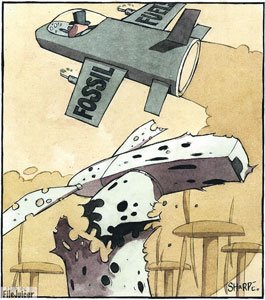 COMMUNITY opposition to wind farms is heavily influenced by a network of anti-environmental activists, some with links to the fossil fuel and nuclear industries. This helps to explain why apparently independent local opposition groups reproduce the same misinformation and distortions about windpower. As recent events surrounding the proposed windfarms at Bungendore and Bald Hills in Victoria have shown, this wave of disinformation aimed at bamboozling affected communities crowds out legitimate debate about the pros and cons of wind energy. Most opponents of wind farms seem to have no understanding of the threat posed to their local areas — let alone the entire globe — by climate change caused by burning fossil fuels.
The Canberra region, including Bungendore, will not be spared from these changes. Projections by the CSIRO suggest that the number of days when the temperature exceeds 35 degrees could rise from five now to as many as 42 by 2070. Imagine what it would be like living with eight times as many scorchers each year than we experience now. Droughts in NSW could be 70 per cent more frequent in 2030 and water availability in the Murray Darling Basin — the lifeblood of Australia’s agriculture sector — could fall by up to 25 per cent by 2050 and 50 per cent by the year 2100. The caution displayed by climate scientists in the past is giving way to a growing sense of alarm and urgency.
There is only one way to avoid the worst effects of climate change, and that is to sharply reduce our greenhouse emissions, which in Australia have been skyrocketing, mainly from burning coal in power plants and petrol and diesel in vehicles. This will require both a reduction in energy use and a shift to non-carbon-intensive energy sources. Renewable sources of energy, including hydro, biomass, solar, geothermal, wave and wind, offer the most sustainable solution. However, they suffer from disadvantages associated with the availability of suitable sites and intermittent supply.
For this reason, energy strategists have suggested the use of a range of different renewable energy sources that are complemented by less carbon-intensive fossil fuels, such as natural gas. To date however, Australian governments have failed to encourage any marked shift in this direction. Given this failure, the last thing needed is for additional hurdles based on fallacious arguments. This is precisely what has occurred at Bungendore in relation to the proposed Capital Wind Farm near Lake George. Opponents of this development have argued that wind power is not competitive, and that the wind farm would not displace energy generation from fossil fuels. They also claim that the turbines would be noisy, a fire risk and kill large numbers of birds. Apparently, these problems are so insurmountable that European countries like Germany and Denmark are backing away from wind energy and pursuing other options.
All these arguments are either false or grossly exaggerated. Wind energy is competitive with all other sources of electricity other than coal, which enjoys a huge subsidy because those who burn it to make electricity are not required to pay for the environmental damage it causes. In Europe there is more of a level playing field, and investors have turned wind energy into the fastest growing source of electricity in the world. The claim that the Bungendore wind farm will not displace fossil fuel generation is also wrong. It is based on the argument that because wind energy is an intermittent source, it requires fossil fuel back-up. This is a distortion of the facts.
The Bungendore wind farm will be linked to the National Electricity Grid, meaning that existing power sources will take up the slack when the turbines are not generating electricity. At other times, every unit of electricity they generate is a unit that does not have to come from another source — and 90 per cent of other energy comes from burning fossil fuels. As for fire risk, there have been only two fires in wind turbines in Australia. One involved obsolete technology in the 1990s, the other occurred recently in South Australia.
The causes of the latest incident are still being investigated, but it was quickly contained. Fires on wind farms are virtually unheard of. Noise problems have also been overblown. Modern wind turbines are very quiet; from 1km away, they are barely audible. Overseas studies show that the overwhelming majority of people who live near wind farms aren’t perturbed by the noise they make. We have held normal conversations while standing under the world’s biggest turbines spinning at maximum speed. The only one of the above arguments that has any credibility is that wind farms pose a risk to birds but, in the words of renowned Australian scientist Barrie Pittock, ‘‘the danger to birds has been grossly exaggerated’’.
When inappropriately located, wind turbines can kill a significant number of birds — some studies have suggested mortality rates of around three birds a turbine a year. This sounds dramatic before it is compared to other sources of mortality like road kill, habitat loss and predation by feral animals. Land clearing in Queensland alone is estimated to kill around 8.5 million birds each year. While opponents shout about the threat to birds, the Royal Society for the Protection of Birds in Britain supports wind power and has quite rightly identified climate change as ‘‘the most serious threat to wildlife’’.
The final argument put up by opponents of the Bungendore wind farm is that European countries are backing away from wind energy. In fact, wind energy continues to grow across Europe. Germany and Denmark have the highest and fifth highest amount of installed wind capacity in the world respectively. Germany even had the second highest increase in wind capacity in 2005 — hardly the signs of retreat. The truth is that most wind farm opponents don’t like the look of them and don’t want them in their backyards. Fair enough (although you have to wonder whether they will like looking at a landscape devastated by climate change). But it would be better if these NIMBY concerns weren’t overlaid with layers of distortion and factual error.
■Clive Hamilton is the executive director of The Australia Institute.
■Andrew Macintosh is its deputy director.
Friday, 12 May 2006
Disinformation crowds out legitimate debate about wind energy,
say CLIVE HAMILTON and ANDREW MACINTOSH
 COMMUNITY opposition to wind farms is heavily influenced by a network of anti-environmental activists, some with links to the fossil fuel and nuclear industries. This helps to explain why apparently independent local opposition groups reproduce the same misinformation and distortions about windpower. As recent events surrounding the proposed windfarms at Bungendore and Bald Hills in Victoria have shown, this wave of disinformation aimed at bamboozling affected communities crowds out legitimate debate about the pros and cons of wind energy. Most opponents of wind farms seem to have no understanding of the threat posed to their local areas — let alone the entire globe — by climate change caused by burning fossil fuels.
 The Canberra region, including Bungendore, will not be spared from these changes. Projections by the CSIRO suggest that the number of days when the temperature exceeds 35 degrees could rise from five now to as many as 42 by 2070. Imagine what it would be like living with eight times as many scorchers each year than we experience now. Droughts in NSW could be 70 per cent more frequent in 2030 and water availability in the Murray Darling Basin — the lifeblood of Australia’s agriculture sector — could fall by up to 25 per cent by 2050 and 50 per cent by the year 2100. The caution displayed by climate scientists in the past is giving way to a growing sense of alarm and urgency.
There is only one way to avoid the worst effects of climate change, and that is to sharply reduce our greenhouse emissions, which in Australia have been skyrocketing, mainly from burning coal in power plants and petrol and diesel in vehicles. This will require both a reduction in energy use and a shift to non-carbon-intensive energy sources. Renewable sources of energy, including hydro, biomass, solar, geothermal, wave and wind, offer the most sustainable solution. However, they suffer from disadvantages associated with the availability of suitable sites and intermittent supply.
For this reason, energy strategists have suggested the use of a range of different renewable energy sources that are complemented by less carbon-intensive fossil fuels, such as natural gas. To date however, Australian governments have failed to encourage any marked shift in this direction. Given this failure, the last thing needed is for additional hurdles based on fallacious arguments. This is precisely what has occurred at Bungendore in relation to the proposed Capital Wind Farm near Lake George. Opponents of this development have argued that wind power is not competitive, and that the wind farm would not displace energy generation from fossil fuels. They also claim that the turbines would be noisy, a fire risk and kill large numbers of birds. Apparently, these problems are so insurmountable that European countries like Germany and Denmark are backing away from wind energy and pursuing other options.
All these arguments are either false or grossly exaggerated. Wind energy is competitive with all other sources of electricity other than coal, which enjoys a huge subsidy because those who burn it to make electricity are not required to pay for the environmental damage it causes. In Europe there is more of a level playing field, and investors have turned wind energy into the fastest growing source of electricity in the world. The claim that the Bungendore wind farm will not displace fossil fuel generation is also wrong. It is based on the argument that because wind energy is an intermittent source, it requires fossil fuel back-up. This is a distortion of the facts.
The Bungendore wind farm will be linked to the National Electricity Grid, meaning that existing power sources will take up the slack when the turbines are not generating electricity. At other times, every unit of electricity they generate is a unit that does not have to come from another source — and 90 per cent of other energy comes from burning fossil fuels. As for fire risk, there have been only two fires in wind turbines in Australia. One involved obsolete technology in the 1990s, the other occurred recently in South Australia.
The causes of the latest incident are still being investigated, but it was quickly contained. Fires on wind farms are virtually unheard of. Noise problems have also been overblown. Modern wind turbines are very quiet; from 1km away, they are barely audible. Overseas studies show that the overwhelming majority of people who live near wind farms aren’t perturbed by the noise they make. We have held normal conversations while standing under the world’s biggest turbines spinning at maximum speed. The only one of the above arguments that has any credibility is that wind farms pose a risk to birds but, in the words of renowned Australian scientist Barrie Pittock, ‘‘the danger to birds has been grossly exaggerated’’.
When inappropriately located, wind turbines can kill a significant number of birds — some studies have suggested mortality rates of around three birds a turbine a year. This sounds dramatic before it is compared to other sources of mortality like road kill, habitat loss and predation by feral animals. Land clearing in Queensland alone is estimated to kill around 8.5 million birds each year. While opponents shout about the threat to birds, the Royal Society for the Protection of Birds in Britain supports wind power and has quite rightly identified climate change as ‘‘the most serious threat to wildlife’’.
The final argument put up by opponents of the Bungendore wind farm is that European countries are backing away from wind energy. In fact, wind energy continues to grow across Europe. Germany and Denmark have the highest and fifth highest amount of installed wind capacity in the world respectively. Germany even had the second highest increase in wind capacity in 2005 — hardly the signs of retreat. The truth is that most wind farm opponents don’t like the look of them and don’t want them in their backyards. Fair enough (although you have to wonder whether they will like looking at a landscape devastated by climate change). But it would be better if these NIMBY concerns weren’t overlaid with layers of distortion and factual error.
■Clive Hamilton is the executive director of The Australia Institute.
■Andrew Macintosh is its deputy director.
Thursday, 11 May 2006
Pacific Hydro aids the community
The Ballarat Courier, Page: 42
Wednesday, 10 May 2006
Pacific Hydro is Australia's leading renewable energy developer, with several wind farms across western Victoria. The company aims to have a minimal impact on the environment and has demonstrated their commitment to the community through its Sustainable Communities Fund. This provides community grants to areas in which they operate. So far, it has provided more than $40, 000 in grants to community groups in and around Ararat in its first round of payments.
This includes funds for primary schools, sporting clubs and environmental and social activities. In the Philippines, Pacific Hydro supports Rotary's yearly medical missions. The company also provides scholarships for children in the region around its Bakun hydro electric plant and has brought clean electricity to schools and towns.
Wednesday, 10 May 2006
Pacific Hydro is Australia's leading renewable energy developer, with several wind farms across western Victoria. The company aims to have a minimal impact on the environment and has demonstrated their commitment to the community through its Sustainable Communities Fund. This provides community grants to areas in which they operate. So far, it has provided more than $40, 000 in grants to community groups in and around Ararat in its first round of payments.
This includes funds for primary schools, sporting clubs and environmental and social activities. In the Philippines, Pacific Hydro supports Rotary's yearly medical missions. The company also provides scholarships for children in the region around its Bakun hydro electric plant and has brought clean electricity to schools and towns.
Pioneer push is greener
Sydney MX, Page: 17
Wednesday, 10 May 2006
VENTURE capitalist John Doerr made his name and fortune with early investments in Netscape, Amazon. com, Google and other pioneering tech firms that went from scrappy startups to household names. Now Doerr and his firm, Kleiner Perkins Caulfield & Byers, are placing big bets on an emerging sector he calls green technology, one he believes could become as lucrative as information technology and biotechnology. Kleiner Perkins plans to set aside $137 million of its latest $823 million fund for technologies that help provide cleaner energy, transportation, air and water.
That's on top of the more than $68 million Kleiner Perkins has already invested in seven ''greentech'' ventures. ''This field of greentech could be the largest economic opportunity of the 21st century, '' Doerr said. ''There's never been a better time than now to start or accelerate a greentech venture. ''As one of Silicon Valley's most respected investors, Doerr's decision to champion green technology as the next big thing is generating buzz.
Also known as clean technology, the field includes technologies related to water purification, air quality, nanotechnology, alternative fuels, manufacturing, recycling and renewable energy. As the prices of more traditional energy sources continue to rise, the global market for clean energy sources such as biofuels, hydrogen fuel cells and solar and wind energy rose to $54.9 billion last year, according to a report released by Clean Edge, a US marketing firm. The figure is expected to more than quadruple to $229 billion by 2015, the report said.
Besides investing in greentech ventures, Doerr said he and Kleiner Perkins plan to ''advocate for policies that reduce the climate crisis and increase energy innovation''. Venture capitalists point to the global forces driving greentech investment: the rising cost of fuel; the economic expansion of China, India and other Asian nations; and worry over global warming.
Wednesday, 10 May 2006
VENTURE capitalist John Doerr made his name and fortune with early investments in Netscape, Amazon. com, Google and other pioneering tech firms that went from scrappy startups to household names. Now Doerr and his firm, Kleiner Perkins Caulfield & Byers, are placing big bets on an emerging sector he calls green technology, one he believes could become as lucrative as information technology and biotechnology. Kleiner Perkins plans to set aside $137 million of its latest $823 million fund for technologies that help provide cleaner energy, transportation, air and water.
That's on top of the more than $68 million Kleiner Perkins has already invested in seven ''greentech'' ventures. ''This field of greentech could be the largest economic opportunity of the 21st century, '' Doerr said. ''There's never been a better time than now to start or accelerate a greentech venture. ''As one of Silicon Valley's most respected investors, Doerr's decision to champion green technology as the next big thing is generating buzz.
Also known as clean technology, the field includes technologies related to water purification, air quality, nanotechnology, alternative fuels, manufacturing, recycling and renewable energy. As the prices of more traditional energy sources continue to rise, the global market for clean energy sources such as biofuels, hydrogen fuel cells and solar and wind energy rose to $54.9 billion last year, according to a report released by Clean Edge, a US marketing firm. The figure is expected to more than quadruple to $229 billion by 2015, the report said.
Besides investing in greentech ventures, Doerr said he and Kleiner Perkins plan to ''advocate for policies that reduce the climate crisis and increase energy innovation''. Venture capitalists point to the global forces driving greentech investment: the rising cost of fuel; the economic expansion of China, India and other Asian nations; and worry over global warming.
Green power turns to vitriol
The West Australian, Page: 9
Wednesday, 10 May 2006
Plans for a windfarm in an A - class reserve at Denmark have driven a wedge between all three tiers of government.
Deep in WA’s south in the greenest of green towns, it’s hard to comprehend why a not-for-profit wind farm generating enough energy to meet local consumption and putting money back into the community would not win support. But standing atop Monkey Rock overlooking Denmark’s Wilson Head and surrounding rugged coastline, it’s equally hard to believe that any project would be worthy of jeopardising such a stunning landscape.
Hence the debate that has embroiled the town of Denmark, 400km south of Perth, divided the local green movement and dragged in all three tiers of government since it was mooted in 2003 as a way of the local community doing its bit to cut greenhouse gas emissions. The debate has been given new life by supporter State Planning Minister Alannah MacTiernan’s tiff with Federal Environment Minister Senator Ian Campbell, who wants the ability to veto any such projects facing public opposition.
Senator Campbell has attacked the WA Government over the proposal,saying its support for the Denmark project is an attempt to cover up its dismal record on alternative energy. Ms MacTiernan said the plan had many merits. “If there has to be virtually unanimous community support then you won’t ever have any wind farms because you can’t get unanimity on this issue,” she said.
The debate will intensify this month when the proponents — local business people, professionals,farmers and retirees with strong green credentials — table their long-awaited final feasibility study. Denmark Community Windfarm (DCW) chairman Craig Chappelle said if shown to be viable, the project would only proceed if it had solid community support — something both camps have claimed so far.
Denmark Shire president Kim Barrow said it was hard to gauge the majority view towards the project,which his council rejected last year in opposing a rezoning application for Wilson Head. Ms MacTiernan overturned that decision. Cr Barrow said while most residents supported the concept of a community wind farm, the sticking point remained the site.
It was also a generational debate. “The young are very opposed to it, the old can’t understand what all the fuss is about,” Cr Barrow said. “But the interest groups are the ones that bombard you.” The two politicians who live in the town are also divided. Nationals member for Stirling Terry Redman said the project did not have the support of the community, local council or State Planning Commission and likened it to putting a wind farm in Kings Park.
But project initiator and WA Greens MLC Paul Llewellyn said the debate was bigger than Wilson Head. “Do we want to make a positive contribution to greenhouse gas emissions and that’s where the debate starts and finishes,” he said. Mr Llewellyn said siting of windfarms was an issue worldwide and research showed 9 per cent of people did not like wind farms in any location. He believed it was that minority driving opposition.
Vocal opponent Pete Mortimer disagreed, saying the worth of the project was not in question, just the site — an A-class reserve in the Ocean Beach area, which was widely regarded as “the jewel in the crown of the Denmark environment”. “You couldn’t get a bigger impact probably if you tried anywhere in the Shire of Denmark,” said Mr Mortimer, a surveyor, passionate environmentalist and a keen surfer who frequented Ocean Beach. “We’re not opposed to renewable energy but what we don’t want is to build wind farms on places like Wilson Head which is so important culturally, socially, visually and environmentally.
If you keep building wind farms in those types of landscapes we’ll have wind farms and we’ll have renewable energy but we won’t have these landscapes left anymore.” Mr Mortimer believed there were suitable alternative sites on cleared farmland in the west of the Denmark Shire. Other opponents said the Denmark community could build a wind farm anywhere in WA.
But Mr Chappelle said Denmark should house its own turbines — with up to three needed to generate 2.4MW — and Wilson Head was the only viable site. It was 30 per cent windier than the next best local location, close to power infrastructure and had the necessary clearance from vegetation and buildings. It was also within an area already home to a surf club,angling club, roads, power lines and a lime quarry.
Mr Chappelle said DCW would welcome any moves by Senator Campbell, whose department had already provided $250,000, to fund another site selection process and subsidise a less efficient location. He said the project had proved more complex and generated more vitriol than he thought possible. “It started as an idea to help the community, planet and environment and it’s ended up a political football,”he said. “But we’re not giving up. We believe in this community, this project, sustainable economies and doing something for the planet, and we believe Denmark is the right place to do it.”
Wednesday, 10 May 2006
Plans for a windfarm in an A - class reserve at Denmark have driven a wedge between all three tiers of government.
Deep in WA’s south in the greenest of green towns, it’s hard to comprehend why a not-for-profit wind farm generating enough energy to meet local consumption and putting money back into the community would not win support. But standing atop Monkey Rock overlooking Denmark’s Wilson Head and surrounding rugged coastline, it’s equally hard to believe that any project would be worthy of jeopardising such a stunning landscape.
Hence the debate that has embroiled the town of Denmark, 400km south of Perth, divided the local green movement and dragged in all three tiers of government since it was mooted in 2003 as a way of the local community doing its bit to cut greenhouse gas emissions. The debate has been given new life by supporter State Planning Minister Alannah MacTiernan’s tiff with Federal Environment Minister Senator Ian Campbell, who wants the ability to veto any such projects facing public opposition.
Senator Campbell has attacked the WA Government over the proposal,saying its support for the Denmark project is an attempt to cover up its dismal record on alternative energy. Ms MacTiernan said the plan had many merits. “If there has to be virtually unanimous community support then you won’t ever have any wind farms because you can’t get unanimity on this issue,” she said.
The debate will intensify this month when the proponents — local business people, professionals,farmers and retirees with strong green credentials — table their long-awaited final feasibility study. Denmark Community Windfarm (DCW) chairman Craig Chappelle said if shown to be viable, the project would only proceed if it had solid community support — something both camps have claimed so far.
Denmark Shire president Kim Barrow said it was hard to gauge the majority view towards the project,which his council rejected last year in opposing a rezoning application for Wilson Head. Ms MacTiernan overturned that decision. Cr Barrow said while most residents supported the concept of a community wind farm, the sticking point remained the site.
It was also a generational debate. “The young are very opposed to it, the old can’t understand what all the fuss is about,” Cr Barrow said. “But the interest groups are the ones that bombard you.” The two politicians who live in the town are also divided. Nationals member for Stirling Terry Redman said the project did not have the support of the community, local council or State Planning Commission and likened it to putting a wind farm in Kings Park.
But project initiator and WA Greens MLC Paul Llewellyn said the debate was bigger than Wilson Head. “Do we want to make a positive contribution to greenhouse gas emissions and that’s where the debate starts and finishes,” he said. Mr Llewellyn said siting of windfarms was an issue worldwide and research showed 9 per cent of people did not like wind farms in any location. He believed it was that minority driving opposition.
Vocal opponent Pete Mortimer disagreed, saying the worth of the project was not in question, just the site — an A-class reserve in the Ocean Beach area, which was widely regarded as “the jewel in the crown of the Denmark environment”. “You couldn’t get a bigger impact probably if you tried anywhere in the Shire of Denmark,” said Mr Mortimer, a surveyor, passionate environmentalist and a keen surfer who frequented Ocean Beach. “We’re not opposed to renewable energy but what we don’t want is to build wind farms on places like Wilson Head which is so important culturally, socially, visually and environmentally.
If you keep building wind farms in those types of landscapes we’ll have wind farms and we’ll have renewable energy but we won’t have these landscapes left anymore.” Mr Mortimer believed there were suitable alternative sites on cleared farmland in the west of the Denmark Shire. Other opponents said the Denmark community could build a wind farm anywhere in WA.
But Mr Chappelle said Denmark should house its own turbines — with up to three needed to generate 2.4MW — and Wilson Head was the only viable site. It was 30 per cent windier than the next best local location, close to power infrastructure and had the necessary clearance from vegetation and buildings. It was also within an area already home to a surf club,angling club, roads, power lines and a lime quarry.
Mr Chappelle said DCW would welcome any moves by Senator Campbell, whose department had already provided $250,000, to fund another site selection process and subsidise a less efficient location. He said the project had proved more complex and generated more vitriol than he thought possible. “It started as an idea to help the community, planet and environment and it’s ended up a political football,”he said. “But we’re not giving up. We believe in this community, this project, sustainable economies and doing something for the planet, and we believe Denmark is the right place to do it.”
Renewables needed for security
Electrical World, Page: 3
Tuesday, 9 May 2006
"Renewable energy technologies are a crucial element in achieving a balanced global energy future; renewables can make major contributions to the diversity and security of energy supply and to economic development", Claude Mandil, executive director of the International Energy Agency (IEA) said. Speaking at the launch of "Renewable Energy: R&D Priorities, Insights from IEA Technology Programmes," he said "furthermore, considerable attention has been drawn to their potential for mitigating climate change". The publication recommends priorities, drawing on studies, analyses and technology programmes carried out by the IEA technology network. It also reviews the trends in government R&D spending and lists R&D policies in IEA member countries.
Government energy R&D budgets in IEA member countries increased sharply after the oil price shocks of the 1970s. By 1987 however, they had declined to about two-thirds of their peak level and thereafter stagnated until 2003. The share to renewable energy technologies in total energy R&D spending remained relatively stable, averaging 7.6 per cent for the whole period.
Among renewable energy technologies, the shares in global funding of biomass, solar photovoltaic and wind have increased, while those of ocean, geothermal and concentrating solar power have declined - broadly reflecting the evolving consensus as to where the greatest potential lies. There are variations in the balance of spending of individual countries, reflecting resource potential and national energy policies. The United States, Japan and Germany are the biggest total spenders on energy technology R&D, although Switzerland, Denmark and the Netherlands are the leaders on a spending per capita basis. The purpose to the IEA publication is to assist governments in prioritising their R&D efforts for renewable energy.
The book can be ordered from IEA Books.
International Energy Agency, 9, rue de la Federation, 75739 Paris Cedex 15.
e-mail: books@iea.org
Internet: www.iea.org/books
Tuesday, 9 May 2006
"Renewable energy technologies are a crucial element in achieving a balanced global energy future; renewables can make major contributions to the diversity and security of energy supply and to economic development", Claude Mandil, executive director of the International Energy Agency (IEA) said. Speaking at the launch of "Renewable Energy: R&D Priorities, Insights from IEA Technology Programmes," he said "furthermore, considerable attention has been drawn to their potential for mitigating climate change". The publication recommends priorities, drawing on studies, analyses and technology programmes carried out by the IEA technology network. It also reviews the trends in government R&D spending and lists R&D policies in IEA member countries.
Government energy R&D budgets in IEA member countries increased sharply after the oil price shocks of the 1970s. By 1987 however, they had declined to about two-thirds of their peak level and thereafter stagnated until 2003. The share to renewable energy technologies in total energy R&D spending remained relatively stable, averaging 7.6 per cent for the whole period.
Among renewable energy technologies, the shares in global funding of biomass, solar photovoltaic and wind have increased, while those of ocean, geothermal and concentrating solar power have declined - broadly reflecting the evolving consensus as to where the greatest potential lies. There are variations in the balance of spending of individual countries, reflecting resource potential and national energy policies. The United States, Japan and Germany are the biggest total spenders on energy technology R&D, although Switzerland, Denmark and the Netherlands are the leaders on a spending per capita basis. The purpose to the IEA publication is to assist governments in prioritising their R&D efforts for renewable energy.
The book can be ordered from IEA Books.
International Energy Agency, 9, rue de la Federation, 75739 Paris Cedex 15.
e-mail: books@iea.org
Internet: www.iea.org/books
Tasmania an island no more in power
The Australian Financial Review, Page: 9
Wednesday, 10 May 2006
A $780 million undersea electricity link was yesterday officially launched between Tasmania and Victoria, possibly leading to lower short-term prices but unlikely to meet growing peak demand after more than 18 months. The 297 kilometre Basslink was inaugurated by Victorian Premier Steve Bracks and his Tasmanian counterpart Paul Lennon, and will provide an extra 600 megawatts for the mainland national grid. But an estimated annual increase in peak demand in Victoria of 350 Mw each year will mean the state could face the threat of more power shortfalls by the summer of 2007-08 unless new power sources come on line, according to the National Electricity Market Management Company. The link was originally meant to be operational last summer but it was delayed after two turbines were damaged during shipment to Tasmania.
It allows electricity to flow to Victoria during summer peaks and into Tasmania during its peak in winter. According to Basslink's manager, National Grid Australia, electricity prices during non-peak periods could drop by about 3 per cent because of increased competition. The director of lobby group Energy Users Association of Australia, Roman Domanski, said the huge growth in peak summer demand caused by increased use of air-conditioners highlighted the need to accelerate demand-side management. The Victorian government is finishing the installation of a new generation of "smart" electricity meters that would allow households to manage their consumption more effectively.
Mr Domanski also said energy flows back to Tasmania would probably be limited to about 300 Mw because competition from the state's hydro power "will deliberately constrain supply". A spokesman for Hydro Tasmania denied the charge, claiming it was limited by the capacity of the state's system to absorb and use the power. Hydro Tasmania chief executive Geoff Willis said:"This will see more energy produced from existing catchments that, together with the wind-farm potential, will mean more renewable energy is produced. "Siemens, the consortium leader, provided the technology for the interconnector, the undersea cables were supplied by Prysmian and National Grid will manage the link.
Wednesday, 10 May 2006
A $780 million undersea electricity link was yesterday officially launched between Tasmania and Victoria, possibly leading to lower short-term prices but unlikely to meet growing peak demand after more than 18 months. The 297 kilometre Basslink was inaugurated by Victorian Premier Steve Bracks and his Tasmanian counterpart Paul Lennon, and will provide an extra 600 megawatts for the mainland national grid. But an estimated annual increase in peak demand in Victoria of 350 Mw each year will mean the state could face the threat of more power shortfalls by the summer of 2007-08 unless new power sources come on line, according to the National Electricity Market Management Company. The link was originally meant to be operational last summer but it was delayed after two turbines were damaged during shipment to Tasmania.
It allows electricity to flow to Victoria during summer peaks and into Tasmania during its peak in winter. According to Basslink's manager, National Grid Australia, electricity prices during non-peak periods could drop by about 3 per cent because of increased competition. The director of lobby group Energy Users Association of Australia, Roman Domanski, said the huge growth in peak summer demand caused by increased use of air-conditioners highlighted the need to accelerate demand-side management. The Victorian government is finishing the installation of a new generation of "smart" electricity meters that would allow households to manage their consumption more effectively.
Mr Domanski also said energy flows back to Tasmania would probably be limited to about 300 Mw because competition from the state's hydro power "will deliberately constrain supply". A spokesman for Hydro Tasmania denied the charge, claiming it was limited by the capacity of the state's system to absorb and use the power. Hydro Tasmania chief executive Geoff Willis said:"This will see more energy produced from existing catchments that, together with the wind-farm potential, will mean more renewable energy is produced. "Siemens, the consortium leader, provided the technology for the interconnector, the undersea cables were supplied by Prysmian and National Grid will manage the link.
Tuesday, 9 May 2006
20 years after Chernobyl
Wind power established as the safe, clean and cheap option
 Early on the morning of 26 April 1986, the event that had been declared virtually impossible happened. The number four reactor at the Chernobyl nuclear power plant suffered a core meltdown. The world’s worst nuclear accident raised serious concerns and questions about the non-military use of nuclear power. In two European countries the nuclear disaster was a main reason for increasing efforts to promote wind power and other renewables. Twenty years later, Germany and Denmark are world leaders in a €12 billion wind power industry that grows 20% annually.
Two decades ago, two factors played a decisive role in Germany and Denmark’s decisions to develop wind energy and other renewables: the Chernobyl tragedy in 1986 and the Brundtland Commission’s report in 1987 calling for “a form of sustainable development which meets the needs of the present without compromising the ability of future generations to meet their own needs”.
At a time when the entire world is remembering Chernobyl, nuclear power is back on the political agenda in some European countries but Member States remain divided. The Austrian EU Presidency opposes nuclear energy while EU citizens back renewable energy and disfavour nuclear. According to a survey from Eurobarometer published in January 2006, almost 80% of EU citizens prefer renewable energies as alternative to high-priced oil and gas imports, while nuclear is preferred by 12%.
“The difference between 1986 and today is the growing evidence of a climate crisis. The success of wind power shows that we now have real alternatives to fossil fuels that are cheaper, cleaner and safer than nuclear and based on a resource that never gets depleted. Wind power and other renewables can certainly fill the gap if we replicate the efforts of Germany, Denmark and Spain in other countries”, said Arthouros Zervos, President of the European Wind Energy Association (EWEA).
Two decades of technological progress have resulted in today’s wind turbines producing 180 times more electricity, at less than half the cost, than the early 1986 vintage models. Wind is now capable of delivering large amounts of power as it is already the case in the first-mover countries such as Denmark (20% of the electricity consumption), Germany (6%) and Spain (8%).
A report released last Wednesday by the British House of Commons’ Environmental Audit Committee concludes that renewable energy and efficiency together with an increase use of gas can fill the gap from decommissioning older coal and nuclear power stations. It states that over the next ten years, nuclear power would be insufficient to fill the need for more generating capacity or to deliver the required carbon reductions, as the nuclear plants could not be built in time. The Committee highlights the issues that need to be resolved before investing in new nuclear: “These include long term waste disposal, public acceptability, the availability of uranium, and the carbon emissions associated with nuclear. There are also serious concerns relating to safety, the threat of terrorism, and the proliferation of nuclear power around the world,” the report states.
It is worth noting that wind power has received 0.03% of all IEA government energy research expenditures since 1974, while nuclear power received 60%, or $175 billion, in the same period, according to the International Energy Agency.
According to EWEA in the last 20 years only the tip of the iceberg has been reached in terms of the true deployment potential of wind power.
Early on the morning of 26 April 1986, the event that had been declared virtually impossible happened. The number four reactor at the Chernobyl nuclear power plant suffered a core meltdown. The world’s worst nuclear accident raised serious concerns and questions about the non-military use of nuclear power. In two European countries the nuclear disaster was a main reason for increasing efforts to promote wind power and other renewables. Twenty years later, Germany and Denmark are world leaders in a €12 billion wind power industry that grows 20% annually.Two decades ago, two factors played a decisive role in Germany and Denmark’s decisions to develop wind energy and other renewables: the Chernobyl tragedy in 1986 and the Brundtland Commission’s report in 1987 calling for “a form of sustainable development which meets the needs of the present without compromising the ability of future generations to meet their own needs”.
At a time when the entire world is remembering Chernobyl, nuclear power is back on the political agenda in some European countries but Member States remain divided. The Austrian EU Presidency opposes nuclear energy while EU citizens back renewable energy and disfavour nuclear. According to a survey from Eurobarometer published in January 2006, almost 80% of EU citizens prefer renewable energies as alternative to high-priced oil and gas imports, while nuclear is preferred by 12%.
“The difference between 1986 and today is the growing evidence of a climate crisis. The success of wind power shows that we now have real alternatives to fossil fuels that are cheaper, cleaner and safer than nuclear and based on a resource that never gets depleted. Wind power and other renewables can certainly fill the gap if we replicate the efforts of Germany, Denmark and Spain in other countries”, said Arthouros Zervos, President of the European Wind Energy Association (EWEA).
Two decades of technological progress have resulted in today’s wind turbines producing 180 times more electricity, at less than half the cost, than the early 1986 vintage models. Wind is now capable of delivering large amounts of power as it is already the case in the first-mover countries such as Denmark (20% of the electricity consumption), Germany (6%) and Spain (8%).
A report released last Wednesday by the British House of Commons’ Environmental Audit Committee concludes that renewable energy and efficiency together with an increase use of gas can fill the gap from decommissioning older coal and nuclear power stations. It states that over the next ten years, nuclear power would be insufficient to fill the need for more generating capacity or to deliver the required carbon reductions, as the nuclear plants could not be built in time. The Committee highlights the issues that need to be resolved before investing in new nuclear: “These include long term waste disposal, public acceptability, the availability of uranium, and the carbon emissions associated with nuclear. There are also serious concerns relating to safety, the threat of terrorism, and the proliferation of nuclear power around the world,” the report states.
It is worth noting that wind power has received 0.03% of all IEA government energy research expenditures since 1974, while nuclear power received 60%, or $175 billion, in the same period, according to the International Energy Agency.
According to EWEA in the last 20 years only the tip of the iceberg has been reached in terms of the true deployment potential of wind power.
Job a climate change for top scientist
The Australian, Page: 3
Tuesday, 9 May 2006
 RENOWNED environmental scientist Tim Flannery has quit as director of the South Australian Museum to study the global implications of climate change at Sydney's Macquarie University. The appointment, which confirms a report in The Australian in February, will also have Mr Flannery step down from his job chairing the South Australian Government's Round Table on Sustainability. His departure is a setback for Premier Mike Rann, who hired the controversial scientist and writer as part of triumvirate of professionals providing highlevel policy advice on the environment, social policy and the economy. Dr Flannery's announcement follows the departure of mining tycoon Robert Champion de Crespigny, who left Australia to pursue business interests in Britain, after chairing the Government's Economic Development Board.
Newly appointed Social Inclusion Commissioner, senior Catholic priest and executive committee of cabinet member David Cappo is the only remaining of the three private-sector appointees. In February, the South Australian Museum denied that Dr Flannery was leaving the state. But yesterday, the internationally renowned scientist said he had been offered ''a whole series of jobs around that time and was considering a number of options''. ''The journalist (Leigh Dayton) must have had a crystal ball or something - she certainly knew more about my future than I did at the time, '' he said.
Dr Flannery is the author of popular books such as The Future Eaters and The Weather Watchers. ''Climate change has become more and more an important issue for me and I've become absolutely fascinated with the science behind (it). . .
so I want to continue research in that area, '' said Dr Flannery, 50. He said he was ready for new opportunities and planned to focus on biodiversity, evolution and climate change in his Macquarie University role. During Dr Flannery's seven years at the city museum, grants have risen from $800, 000 to $10 million. He said South Australia was like the ''emissions-free Kuwait of Australia'' with wind and solar energy generation increasing, and the potential for half a billion dollars invested in geothermal energy exploration.
He will leave South Australia in August but maintain links with the Rann Government as voluntary ambassador and adviser on climate change, providing quarterly briefings to cabinet.
Tuesday, 9 May 2006
 RENOWNED environmental scientist Tim Flannery has quit as director of the South Australian Museum to study the global implications of climate change at Sydney's Macquarie University. The appointment, which confirms a report in The Australian in February, will also have Mr Flannery step down from his job chairing the South Australian Government's Round Table on Sustainability. His departure is a setback for Premier Mike Rann, who hired the controversial scientist and writer as part of triumvirate of professionals providing highlevel policy advice on the environment, social policy and the economy. Dr Flannery's announcement follows the departure of mining tycoon Robert Champion de Crespigny, who left Australia to pursue business interests in Britain, after chairing the Government's Economic Development Board.
Newly appointed Social Inclusion Commissioner, senior Catholic priest and executive committee of cabinet member David Cappo is the only remaining of the three private-sector appointees. In February, the South Australian Museum denied that Dr Flannery was leaving the state. But yesterday, the internationally renowned scientist said he had been offered ''a whole series of jobs around that time and was considering a number of options''. ''The journalist (Leigh Dayton) must have had a crystal ball or something - she certainly knew more about my future than I did at the time, '' he said.
Dr Flannery is the author of popular books such as The Future Eaters and The Weather Watchers. ''Climate change has become more and more an important issue for me and I've become absolutely fascinated with the science behind (it). . .
so I want to continue research in that area, '' said Dr Flannery, 50. He said he was ready for new opportunities and planned to focus on biodiversity, evolution and climate change in his Macquarie University role. During Dr Flannery's seven years at the city museum, grants have risen from $800, 000 to $10 million. He said South Australia was like the ''emissions-free Kuwait of Australia'' with wind and solar energy generation increasing, and the potential for half a billion dollars invested in geothermal energy exploration.
He will leave South Australia in August but maintain links with the Rann Government as voluntary ambassador and adviser on climate change, providing quarterly briefings to cabinet.
Monday, 8 May 2006
Wind farm only one parrot threat
The Australian, Page: 3
Monday, 8 May 2006
STORMS, disease, habitat loss, weeds, foxes, feral cats and the house mouse are rated above wind farms as threats to the orange-bellied parrot, a report prepared for the Defence Department reveals. Despite federal Environment Minister Ian Campbell blocking a Victorian wind farm because of the perceived threat to the parrot, the report also rates rabbits and finches above wind farms. The Defence Department report, obtained by The Australian under Freedom of Information laws, puts wind energy at No 6 on the list of 10 threats to the bird's survival. The department commissioned consultants to review a draft federal orange-bellied parrot plan and assess implications for land and water managed by the department.
The parrot has been recorded at three defence sites in Victoria and one in NSW. Identifying 10 major threats to the parrot's survival, the report lists the No 1 threat as factors associated with the bird's small breeding population. They include ''disease, loss of genetic variation, storms during migration and wildfire''. The second-listed threat is habitat loss, which is described as ''industrial and urban development, land clearance for agriculture, grazing, recreational activities and decline in fire frequency''.
The next threats are ''invasive weeds'', predators such as the European fox and feral cat and competitors such as the rabbit, goldfinch, greenfinch and house mouse. The report lists ''wind energy developments within the (parrot's) migratory routes'' at No 6, above illuminated boats and structures in Bass Strait. A spokesman for Senator Campbell said the Defence Department report backed up evidence that wind farms were a threat to the parrot. ''This report is an example of the commonwealth Government putting in place the best measures it can to protect threatened species, '' he said.
Senator Campbell has continued to defend the blocking of the $220 million Victorian wind farm, seizing on the parrot's appearance on the World Conservation Union's Red List of Endangered Species for this year. The parrot was among 65 Australian species identified as critically endangered. Senator Campbell says the parrot ranks alongside the Siberian tiger and Chinese pandas as ''the most vulnerable species on the planet''. The minister has released a discussion paper on his proposed national code for wind farms and wants the code discussed when he meets state and territory environment ministers next month.
The paper says the code could become a ''mandatory system'' requiring federal or state legislation if a voluntary approach could not be agreed. According to Senator Campbell, a key element of the code would be to take into account community views when wind farms are proposed.
Monday, 8 May 2006
STORMS, disease, habitat loss, weeds, foxes, feral cats and the house mouse are rated above wind farms as threats to the orange-bellied parrot, a report prepared for the Defence Department reveals. Despite federal Environment Minister Ian Campbell blocking a Victorian wind farm because of the perceived threat to the parrot, the report also rates rabbits and finches above wind farms. The Defence Department report, obtained by The Australian under Freedom of Information laws, puts wind energy at No 6 on the list of 10 threats to the bird's survival. The department commissioned consultants to review a draft federal orange-bellied parrot plan and assess implications for land and water managed by the department.
The parrot has been recorded at three defence sites in Victoria and one in NSW. Identifying 10 major threats to the parrot's survival, the report lists the No 1 threat as factors associated with the bird's small breeding population. They include ''disease, loss of genetic variation, storms during migration and wildfire''. The second-listed threat is habitat loss, which is described as ''industrial and urban development, land clearance for agriculture, grazing, recreational activities and decline in fire frequency''.
The next threats are ''invasive weeds'', predators such as the European fox and feral cat and competitors such as the rabbit, goldfinch, greenfinch and house mouse. The report lists ''wind energy developments within the (parrot's) migratory routes'' at No 6, above illuminated boats and structures in Bass Strait. A spokesman for Senator Campbell said the Defence Department report backed up evidence that wind farms were a threat to the parrot. ''This report is an example of the commonwealth Government putting in place the best measures it can to protect threatened species, '' he said.
Senator Campbell has continued to defend the blocking of the $220 million Victorian wind farm, seizing on the parrot's appearance on the World Conservation Union's Red List of Endangered Species for this year. The parrot was among 65 Australian species identified as critically endangered. Senator Campbell says the parrot ranks alongside the Siberian tiger and Chinese pandas as ''the most vulnerable species on the planet''. The minister has released a discussion paper on his proposed national code for wind farms and wants the code discussed when he meets state and territory environment ministers next month.
The paper says the code could become a ''mandatory system'' requiring federal or state legislation if a voluntary approach could not be agreed. According to Senator Campbell, a key element of the code would be to take into account community views when wind farms are proposed.
Saturday, 6 May 2006
UK to get EU's largest wind farm
From New Scientist Print Edition.
03 May 2006
 Shaking off its image as one of Europe's laggards on renewable energy, the UK last month gave the go-ahead for the EU's largest onshore wind farm.
The electricity company Scottish Power won permission on 27 April to erect 140 wind turbines on 55 square kilometres of moorland and forest south of Glasgow. When completed in 2009, the £300 million Whitelee wind farm will generate a peak of 322 megawatts of electricity, equivalent to the average power demand of 200,000 homes.
Whitelee is expected to supply 5 per cent of the capacity required to meet Scotland's target of generating 40 per cent of its electricity from renewables by 2020. It was heralded by Scottish ministers as "a significant milestone towards achieving our renewable energy and climate change targets". The UK-wide target is to generate 10 per cent of electricity from renewables by 2010, and Whitelee should provide 2.4 per cent of the capacity needed to achieve this. It will prevent the emission of 650,000 tonnes of carbon dioxide a year, ministers say.
Officials at Glasgow Airport initially opposed the project because of concerns that the spinning rotors might confuse the airport's radar. To overcome the problem, Scottish Power has agreed to build a £5 million radar installation 50 kilometres away in Kincardine, on the site of a former power station.
03 May 2006
Shaking off its image as one of Europe's laggards on renewable energy, the UK last month gave the go-ahead for the EU's largest onshore wind farm.The electricity company Scottish Power won permission on 27 April to erect 140 wind turbines on 55 square kilometres of moorland and forest south of Glasgow. When completed in 2009, the £300 million Whitelee wind farm will generate a peak of 322 megawatts of electricity, equivalent to the average power demand of 200,000 homes.
Whitelee is expected to supply 5 per cent of the capacity required to meet Scotland's target of generating 40 per cent of its electricity from renewables by 2020. It was heralded by Scottish ministers as "a significant milestone towards achieving our renewable energy and climate change targets". The UK-wide target is to generate 10 per cent of electricity from renewables by 2010, and Whitelee should provide 2.4 per cent of the capacity needed to achieve this. It will prevent the emission of 650,000 tonnes of carbon dioxide a year, ministers say.
Officials at Glasgow Airport initially opposed the project because of concerns that the spinning rotors might confuse the airport's radar. To overcome the problem, Scottish Power has agreed to build a £5 million radar installation 50 kilometres away in Kincardine, on the site of a former power station.
Friday, 5 May 2006
Climate change causes backflips
The Australian, Page: 16
Friday, 5 May 2006
CLIMATE change is doing strange things to the weather, but it's beginning to do even stranger things to the worlds of environmentalism, politics and business. I suspect the process has just begun and we had all better hold on for what will be a very interesting and surprising ride. WWF's Greg Bourne has acknowledged uranium mining and nuclear power will inevitably play a role in the future global energy mix. Although this is merely stating the obvious, his statement will create division and debate in the environmental community.
This is because no environmentalist is supposed to take anything other than the ''no, none, never'' position on nuclear power. It's pretty much an article of faith. But the strangeness and the division are not restricted to the environmentalist movement. A few weeks ago, some of Australia's largest companies, including Westpac, IAG, Visy, BP and Origin, called on government to impose a price on carbon: yes, that's right, business, powerful business, arguing for increased costs.
In doing so they brought to the fore what is known to be a deep split on climate change in the Australian big business community. And there are strange happenings in Canberra as well. The federal Government recently took a strong anti-development turn when it stopped a $200 million wind farm because of the alleged risk to the orange-bellied parrot. Normally probusiness conservatives don't pay much attention to the risk of killing a single endangered parrot every thousand years (the risk this project posed).
I suspect in this case the opportunity to take revenge on environmentalists by stopping a green development over a green issue proved too tempting to resist. Last year, John Howard largely acknowledged the scientific consensus on climate change for the first time. About the same time, no doubt coincidentally, he started his push to promote uranium exports on the grounds of addressing climate change. Self-interest is a wonderful thing.
So what is going on? Conservatives worrying about climate change and endangered parrots? Business arguing for increased costs? Environmentalists accepting nuclear power?Is nothing sacred?What's going on is simple. It's called climate change, and it changes a lot more than the weather. It's time we all woke up and reconsidered many of our old assumptions and heartfelt beliefs, because the change has just begun. The biggest global threat to biodiversity, for example, is climate change.
On our present emissions path, we face the risk of wiping out up to half of the species on the planet, including all coral reefs and the Amazon rainforest. That's a lot of parrots. In the context of the threat posed by climate change and the speed with which we need to respond, nuclear power will simply not help very much. It is a marginal issue, a small part of the mix.
As is well argued by many environmentalists and energy experts, nuclear power stations are incapable of having a substantial effect on rising emissions because they are too expensive, too slow to build and they account for too many greenhouse emissions during construction. Then add the inherent security threat posed by the technology, as we see with Iran and North Korea. But as Bourne says, nuclear power is already part of the mix, with hundreds of stations in place, and it's not going to go away any time soon. So how we handle nuclear technology in the meantime is a very important question and one we need to discuss logically rather than religiously, but with effort commensurate to the threat it poses, weighing that against the huge threat posed by climate change.
For the record, as an environmentalist, I think nuclear power is solidly illogical energy strategy and clearly unsustainable. It's expensive and it's inherently risky, creating dangerous waste and potent security challenges. For these reasons I'm happy to have the technology fight it out in the marketplace and in the court of public opinion along with other choices, including renewable wind and solar energy, so-called ''clean coal technologies'', gas and other emerging alternatives. Nuclear will lose in a fair fight, so I reject the use of moral and emotional arguments in opposing it.
Let the facts speak for themselves. Oh, and I can't wait to see how much attention is paid to parrot safety if anyone ever does try to build a nuclear plant in Australia. Paul Gilding, a former executive director of Greenpeace International, is a founding partner of Ecos Corporation.
Friday, 5 May 2006
CLIMATE change is doing strange things to the weather, but it's beginning to do even stranger things to the worlds of environmentalism, politics and business. I suspect the process has just begun and we had all better hold on for what will be a very interesting and surprising ride. WWF's Greg Bourne has acknowledged uranium mining and nuclear power will inevitably play a role in the future global energy mix. Although this is merely stating the obvious, his statement will create division and debate in the environmental community.
This is because no environmentalist is supposed to take anything other than the ''no, none, never'' position on nuclear power. It's pretty much an article of faith. But the strangeness and the division are not restricted to the environmentalist movement. A few weeks ago, some of Australia's largest companies, including Westpac, IAG, Visy, BP and Origin, called on government to impose a price on carbon: yes, that's right, business, powerful business, arguing for increased costs.
In doing so they brought to the fore what is known to be a deep split on climate change in the Australian big business community. And there are strange happenings in Canberra as well. The federal Government recently took a strong anti-development turn when it stopped a $200 million wind farm because of the alleged risk to the orange-bellied parrot. Normally probusiness conservatives don't pay much attention to the risk of killing a single endangered parrot every thousand years (the risk this project posed).
I suspect in this case the opportunity to take revenge on environmentalists by stopping a green development over a green issue proved too tempting to resist. Last year, John Howard largely acknowledged the scientific consensus on climate change for the first time. About the same time, no doubt coincidentally, he started his push to promote uranium exports on the grounds of addressing climate change. Self-interest is a wonderful thing.
So what is going on? Conservatives worrying about climate change and endangered parrots? Business arguing for increased costs? Environmentalists accepting nuclear power?Is nothing sacred?What's going on is simple. It's called climate change, and it changes a lot more than the weather. It's time we all woke up and reconsidered many of our old assumptions and heartfelt beliefs, because the change has just begun. The biggest global threat to biodiversity, for example, is climate change.
On our present emissions path, we face the risk of wiping out up to half of the species on the planet, including all coral reefs and the Amazon rainforest. That's a lot of parrots. In the context of the threat posed by climate change and the speed with which we need to respond, nuclear power will simply not help very much. It is a marginal issue, a small part of the mix.
As is well argued by many environmentalists and energy experts, nuclear power stations are incapable of having a substantial effect on rising emissions because they are too expensive, too slow to build and they account for too many greenhouse emissions during construction. Then add the inherent security threat posed by the technology, as we see with Iran and North Korea. But as Bourne says, nuclear power is already part of the mix, with hundreds of stations in place, and it's not going to go away any time soon. So how we handle nuclear technology in the meantime is a very important question and one we need to discuss logically rather than religiously, but with effort commensurate to the threat it poses, weighing that against the huge threat posed by climate change.
For the record, as an environmentalist, I think nuclear power is solidly illogical energy strategy and clearly unsustainable. It's expensive and it's inherently risky, creating dangerous waste and potent security challenges. For these reasons I'm happy to have the technology fight it out in the marketplace and in the court of public opinion along with other choices, including renewable wind and solar energy, so-called ''clean coal technologies'', gas and other emerging alternatives. Nuclear will lose in a fair fight, so I reject the use of moral and emotional arguments in opposing it.
Let the facts speak for themselves. Oh, and I can't wait to see how much attention is paid to parrot safety if anyone ever does try to build a nuclear plant in Australia. Paul Gilding, a former executive director of Greenpeace International, is a founding partner of Ecos Corporation.
Thursday, 4 May 2006
Portugal Makes Waves in Alternative Energy
MAY 3, 2006 Europe By Carol Matlack
Portugal Makes Waves in Alternative Energy The coastal country is fast becoming an enthusiastic leader in drawing power from the sea, the wind, and the sun
Portugal's sunny climate and picturesque coastline have long been a magnet for tourists. But now, those natural attractions are drawing a different kind of attention. From solar photovoltaics to electricity generation from wind and ocean waves, some of the world's most ambitious and innovative renewable-energy projects are taking shape in this historically poor country of 10.5 million on Europe's western rim.
In a farming region 125 miles southeast of Lisbon, General Electric's (GE) GE Energy Financial Services unit is teaming up with PowerLight, a Berkeley (Calif.)-based solar-electric equipment maker, to build the world's largest photovoltaic-generation project. The $75 million project, announced on Apr. 27, calls for construction of an 11-megawatt powerplant that will start operating next January, producing enough energy to light and heat 8,000 homes.
The Portuguese government is expected to award a contract this summer for the construction of more than $1.3 billion worth of wind turbines around the country, enough to provide power for 750,000 homes. And the world's first commercial "wave farm," which will generate electricity from ocean waves, is expected to start operation later this year off Portugal's northern coast. Read more...
Portugal Makes Waves in Alternative Energy The coastal country is fast becoming an enthusiastic leader in drawing power from the sea, the wind, and the sun
Portugal's sunny climate and picturesque coastline have long been a magnet for tourists. But now, those natural attractions are drawing a different kind of attention. From solar photovoltaics to electricity generation from wind and ocean waves, some of the world's most ambitious and innovative renewable-energy projects are taking shape in this historically poor country of 10.5 million on Europe's western rim.
In a farming region 125 miles southeast of Lisbon, General Electric's (GE) GE Energy Financial Services unit is teaming up with PowerLight, a Berkeley (Calif.)-based solar-electric equipment maker, to build the world's largest photovoltaic-generation project. The $75 million project, announced on Apr. 27, calls for construction of an 11-megawatt powerplant that will start operating next January, producing enough energy to light and heat 8,000 homes.
The Portuguese government is expected to award a contract this summer for the construction of more than $1.3 billion worth of wind turbines around the country, enough to provide power for 750,000 homes. And the world's first commercial "wave farm," which will generate electricity from ocean waves, is expected to start operation later this year off Portugal's northern coast. Read more...
Malaysia: wind power can be harnessed for aquaculture
03 May, 2006
AQUACULTURE ventures should look into other energy sources like the wind as the rising fuel prices pose serious challenge for the industry's outlook, the Malaysian news site bernama.com reported.
Universiti Malaysia Sabah's (UMS) Vice-Chancellor Prof. Datuk Dr Mohd Noh Dalimin reportedly said in his keynote address at the International Conference on Coastal Oceanography and Sustainable Marine Aquaculture - Confluence and Synergy that the time has come to opt for multidisciplinary and high-tech industrial aquaculture by harnessing energy from the wind. The industry should also be managed with a high degree of automation and robots that are robust enough for a high risk operations in open sea, he said.
Besides of using wind energy to run aquaculture project, he was reported to have said that scientists should also think how to make use solar radiations in generating power for aquaculture operations like hatcheries and grow-out systems. The three-day conference is jointly organised by UMS, Ministry of Science, Technology and Innovation and the Inter-Islamic Network of Oceanography.
AQUACULTURE ventures should look into other energy sources like the wind as the rising fuel prices pose serious challenge for the industry's outlook, the Malaysian news site bernama.com reported.
Universiti Malaysia Sabah's (UMS) Vice-Chancellor Prof. Datuk Dr Mohd Noh Dalimin reportedly said in his keynote address at the International Conference on Coastal Oceanography and Sustainable Marine Aquaculture - Confluence and Synergy that the time has come to opt for multidisciplinary and high-tech industrial aquaculture by harnessing energy from the wind. The industry should also be managed with a high degree of automation and robots that are robust enough for a high risk operations in open sea, he said.
Besides of using wind energy to run aquaculture project, he was reported to have said that scientists should also think how to make use solar radiations in generating power for aquaculture operations like hatcheries and grow-out systems. The three-day conference is jointly organised by UMS, Ministry of Science, Technology and Innovation and the Inter-Islamic Network of Oceanography.
Green Light for Renewable Energy from Darling Wind Farm
The City of Cape Town's Mayoral Commitee, at the meeting held on 26 April 2006, gave a thumbs up to the proposed Darling Wind Farm by recommending to Council that the City enter into a Power Purchase Agreement with Darling Wind Farm (Pty) Ltd .
The Darling Wind Farm is a R70m national pilot project funded jointly by the Danish Development Aid (Danida), the Department of Minerals and Energy and the Darling Independent Power Producing Co.
The project will open up opportunities for further wind energy projects and other "green energy projects" both in the Western Cape and further afield. It will also be an important step in assisting the City to reach its target of sourcing 10% of its overall energy requirements from sustainable sources by 2020.
Once Council has considered Mayco's recommendation, the way will be open for City customers to purchase green energy. This will be marketed to "willing buyers" at an initial premium of 25c per kWh. It is expected that the demand for green energy will outstrip the 13 200 Gigawatt hours of energy that can be supplied annually by the farm (1 Gigawatt hour = 1 million kilowatt hours).
Darling Wind Farm is expected to commence generation in 2007 and the energy will be sold through RED1, the City's electricity service provider.
The Darling Wind Farm is a R70m national pilot project funded jointly by the Danish Development Aid (Danida), the Department of Minerals and Energy and the Darling Independent Power Producing Co.
The project will open up opportunities for further wind energy projects and other "green energy projects" both in the Western Cape and further afield. It will also be an important step in assisting the City to reach its target of sourcing 10% of its overall energy requirements from sustainable sources by 2020.
Once Council has considered Mayco's recommendation, the way will be open for City customers to purchase green energy. This will be marketed to "willing buyers" at an initial premium of 25c per kWh. It is expected that the demand for green energy will outstrip the 13 200 Gigawatt hours of energy that can be supplied annually by the farm (1 Gigawatt hour = 1 million kilowatt hours).
Darling Wind Farm is expected to commence generation in 2007 and the energy will be sold through RED1, the City's electricity service provider.
Need to start alternative energy project stressed
Wednesday May 03, 2006 (1229 PST)
KARACHI : The Adviser to Chief Minister on Environment, Alternative Energy and Information Technology, Mohammad Noman Saigol, on Tuesday stressed the need for using alternate means of energy, specifically wind energy. He emphasized physically starting the windmill project after resolving concerned issues with immediate effect. This, he said, would resolve the electricity needs in the country and Sindh.
Cities like Karachi, Hyderabad and Sukkur were major sufferers in Sindh due to shortfall in electric supply, which had affected industrial units at large, he added.
He also stressed using alternate means of energy to enhance industrial growth in Pakistan. Insisting on the PPA, he requested the authorities to do it on war footings to enable investors to stay back, “otherwise we dread they might pull out because of further delay”.
He feared that if the wind energy project was ruined, other relevant means of alternative energy would also suffer by going through the same experiences. He said the Sindh government was also working on solar energy, high tide, and biogas projects, besides suggesting that ethanol could also become a source of alternative energy and be used in vehicles.
Meanwhile, he also appreciated the support given by the Sindh Governor to expedite the IT project, specifically e-Policing.
KARACHI : The Adviser to Chief Minister on Environment, Alternative Energy and Information Technology, Mohammad Noman Saigol, on Tuesday stressed the need for using alternate means of energy, specifically wind energy. He emphasized physically starting the windmill project after resolving concerned issues with immediate effect. This, he said, would resolve the electricity needs in the country and Sindh.
Cities like Karachi, Hyderabad and Sukkur were major sufferers in Sindh due to shortfall in electric supply, which had affected industrial units at large, he added.
He also stressed using alternate means of energy to enhance industrial growth in Pakistan. Insisting on the PPA, he requested the authorities to do it on war footings to enable investors to stay back, “otherwise we dread they might pull out because of further delay”.
He feared that if the wind energy project was ruined, other relevant means of alternative energy would also suffer by going through the same experiences. He said the Sindh government was also working on solar energy, high tide, and biogas projects, besides suggesting that ethanol could also become a source of alternative energy and be used in vehicles.
Meanwhile, he also appreciated the support given by the Sindh Governor to expedite the IT project, specifically e-Policing.
Wednesday, 3 May 2006
Breakthrough in power connection
Tuesday, 2 May 2006. 07:23 (AEST)
In-principle agreement has been reached to connect wind farms to the electricity grid via the Portland smelter. Pacific Hydro's plans for its Portland wind project, include wind farms at Yambuk and Cape's Bridgewater, Grant and Nelson.
The $280 million project stalled, with the company unable to reach agreement with the Portland aluminium smelter. But after months of negotiations, Pacific Hydro says contracts will be signed to allow electricity produced by the wind farms to be channelled through Alcoa's electricity substation.
In-principle agreement has been reached to connect wind farms to the electricity grid via the Portland smelter. Pacific Hydro's plans for its Portland wind project, include wind farms at Yambuk and Cape's Bridgewater, Grant and Nelson.
The $280 million project stalled, with the company unable to reach agreement with the Portland aluminium smelter. But after months of negotiations, Pacific Hydro says contracts will be signed to allow electricity produced by the wind farms to be channelled through Alcoa's electricity substation.
Facts & Figures
The burning of 1Mt (Mt = a million tonnes) of coal produces approx 2.6Mt of CO2
NSW transport emissions in 2002 were 22.6Mt of CO2.
NSW transport emissions in 2002 were 22.6Mt of CO2.
Going green saves more than money
Penrith Press, Page: 16
Tuesday, 2 May 2006
BLUE Mountains Council has saved about $15,000 a year in energy consumption and maintenance costs simply by going green. Green energy is generated from the sun, wind, water or biomass rather than from burning coal which releases greenhouse gas emissions into the atmosphere. Mayor Jim Angel said the council had significantly cut down energy use in council buildings over the past few years by adopting new practices. "In the first year of our Energy Performance Contract project we achieved an annual 40 per cent energy saving in lighting," he said.
"Since then we have reduced 136 tonnes of CO2 greenhouse gas emissions each year - the equivalent of removing 30 cars from the road." Cr Angel said the council had installed solar panels at Katoomba and Glenbrook pools and switched to T5 street lights which was similar to an 80 watt globe but used only one-third of the power. "For every 100 streetlights we change over, we stop around 14 tonnes of CO2 from being released into the atmosphere," he said. The council's car fleet will also get an overhaul, changing from six to four cylinders, and the council is looking at ways to get more people to use public and alternate transport.
A Green Power information campaign was recently launched in council libraries and sports centres. Blue Mountains State LaborMP and Environment Minister Bob Debus said the average Australian household emitted more than eight tonnes of greenhouse gas emissions every year. "By switching even a fraction of your energy needs green, you can help reduce greenhouse gases," he said. "The Green Power tick of approval means that the energy you are buying from your supplier must come from renewable and environmentally friendly power sources."
For more information on Green Power, go on-line at www.greenpower.com.au
Tuesday, 2 May 2006
BLUE Mountains Council has saved about $15,000 a year in energy consumption and maintenance costs simply by going green. Green energy is generated from the sun, wind, water or biomass rather than from burning coal which releases greenhouse gas emissions into the atmosphere. Mayor Jim Angel said the council had significantly cut down energy use in council buildings over the past few years by adopting new practices. "In the first year of our Energy Performance Contract project we achieved an annual 40 per cent energy saving in lighting," he said.
"Since then we have reduced 136 tonnes of CO2 greenhouse gas emissions each year - the equivalent of removing 30 cars from the road." Cr Angel said the council had installed solar panels at Katoomba and Glenbrook pools and switched to T5 street lights which was similar to an 80 watt globe but used only one-third of the power. "For every 100 streetlights we change over, we stop around 14 tonnes of CO2 from being released into the atmosphere," he said. The council's car fleet will also get an overhaul, changing from six to four cylinders, and the council is looking at ways to get more people to use public and alternate transport.
A Green Power information campaign was recently launched in council libraries and sports centres. Blue Mountains State LaborMP and Environment Minister Bob Debus said the average Australian household emitted more than eight tonnes of greenhouse gas emissions every year. "By switching even a fraction of your energy needs green, you can help reduce greenhouse gases," he said. "The Green Power tick of approval means that the energy you are buying from your supplier must come from renewable and environmentally friendly power sources."
For more information on Green Power, go on-line at www.greenpower.com.au
Monday, 1 May 2006
Proponent hits back
Albany & Great Southern Weekender, Page: 5
Thursday, 27 April 2006
DENMARK Community Windfarm chairman Craig Chappelle has hit back at continuing criticism of his group's proposal for Ocean Beach. He was joined by the industry's peak body, the Australian Wind Energy Association (Auswind), which called on Federal Environment Minister lan Campbell to take positive steps to help overcome his concerns. The Minister has vetoed one windfarm proposal and threatened to withdraw federal funding from the Denmark project. Mr Campbell said Australia needed a national windfarm code.
Mr Chappelle was especially critical of Stirling MLA Terry Redman who called on the State Government to drop support for the proposed windfarm. He said Mr Redman was reminded in State Parliament five months ago that a conservative government approved the Albany windfarm "against community wishes". "That proposal produced four times as many detractors as supporters, yet has become a much loved feature of the district," he said. "It occupies a site not unlike that proposed in Denmark, but is 10 times bigger and more visible."
Mr Chappelle said the umpire was the State Planning Minister. "Alannah MacTiernan approved the Denmark proposal because it meets the State's sustainability criteria," he said. "The operative word here is 'merit' -the Minister considered the quality of the arguments, not the quantity." He said many submissions opposing Denmark's windfarm were almost identical.
"More than 30 contained the same simple factual error - a sure sign that they were written to a faulty prescription," he said.
Thursday, 27 April 2006
DENMARK Community Windfarm chairman Craig Chappelle has hit back at continuing criticism of his group's proposal for Ocean Beach. He was joined by the industry's peak body, the Australian Wind Energy Association (Auswind), which called on Federal Environment Minister lan Campbell to take positive steps to help overcome his concerns. The Minister has vetoed one windfarm proposal and threatened to withdraw federal funding from the Denmark project. Mr Campbell said Australia needed a national windfarm code.
Mr Chappelle was especially critical of Stirling MLA Terry Redman who called on the State Government to drop support for the proposed windfarm. He said Mr Redman was reminded in State Parliament five months ago that a conservative government approved the Albany windfarm "against community wishes". "That proposal produced four times as many detractors as supporters, yet has become a much loved feature of the district," he said. "It occupies a site not unlike that proposed in Denmark, but is 10 times bigger and more visible."
Mr Chappelle said the umpire was the State Planning Minister. "Alannah MacTiernan approved the Denmark proposal because it meets the State's sustainability criteria," he said. "The operative word here is 'merit' -the Minister considered the quality of the arguments, not the quantity." He said many submissions opposing Denmark's windfarm were almost identical.
"More than 30 contained the same simple factual error - a sure sign that they were written to a faulty prescription," he said.
Is it all over for nuclear power?
 New Scientist, Page: 33
 Saturday, 22 April 2006
Governments are keen and the nuclear industry is on a 30-year high. But they've missed the crucial point, argues Michael Brooks
ADAM TWINE doesn't look like the kind of person the nuclear industry should be scared of. An organic farmer, Twine is skinny, with big round glasses and unruly hair that makes his head look like it's fraying at the edges. How could he possibly be a threat to a multibillion-dollar industry? Maybe he wouldn't be if he were operating alone, but Twine is far from alone and has serious money behind him.
He has just managed to persuade 2127 people to send him a total of more than £4 million that he will use to set up a co-operative wind farm on land he owns in the south of England. In fact, the idea of owning a share in the Westmill wind farm in Oxfordshire has proved so popular that the project is having to return some of the cash: it only needed £3.7 million. The plan now is to give priority in ownership to people living within 80 kilometres of the site, and asking others to accept a smaller stake in the co-op.
Though the wind farm is small - five turbines in a vast, bleak field, amounting to 6.5 megawatts of electricity - it represents another nail in the coffin of nuclear power, one of many being hammered in all over the world. If the nuclear industry wanted to convince governments to start building another generation of nuclear reactors as soon as possible, it needed to bury the likes of Twine before their schemes took off. Now it may be too late.
According to projections by the International Energy Agency and a handful of energy industry experts, 2005 was the first year nuclear power's electricity output dropped behind that of small-scale plants producing low or no carbon dioxide emissions - and that's not counting large hydroelectric projects on the low-carbon side of the balance sheet. Though small, such projects are already flourishing. Much of the world's small-scale generation involves combined heat and power "co-generation" projects, whose carbon dioxide emissions are 30 to 80 per cent less than that of large-scale gas-fired plants. On average they are at least 50 per cent less.
The worldwide uptake of this technology is being accompanied by fast growth in the use of renewables such as solar and wind. The Danish company Bonus, from which the Westmill co-operative wants to buy its wind turbines, now has a backlog of orders from wind farms in Texas, Florida, Sweden, Denmark, Germany and Greece. In 2005 the company, bought by Siemens, almost doubled its wind turbine sales, and its fabrication capacity for 2006 is fully booked.
This burgeoning "micropower" movement is a significant step towards reducing carbon emissions (New Scientist, 21 January, p 36). It is also a knock for a nuclear industry that has been struggling to get back on its feet in the western world. Until last year, near-zero emissions of greenhouse gases were nuclear power's trump card, its big advantage over other sources of electricity and the one thing that might make western governments invest in a nuclear renaissance: nuclear is clean and produces a lot of power, so we need it. That argument now has a hole punched through it, and it boils down to economics.
Until recently, it seemed the wide-scale construction of a new generation of nuclear power plants was inevitable. China is investing in nuclear, after all, as are Japan, Russia and India, so why not the west? Though Germany, Sweden, Spain and Switzerland have forsworn investment in new nuclear plants, other western nations, notably the UK, France and the US, are taking the idea seriously. In August 2005, the US government handed out a range of nuclear subsidies and incentives worth nearly $20 billion. In the UK, Prime Minister Tony Blair has commissioned an energy review with what is widely believed to have a pro-nuclear agenda, marking a move away from the position three years ago when his government said there was no case for nuclear new build.
France, which already gets 78 per cent of its electricity from nuclear power, has its eye on starting construction of at least one more plant within the next decade. In the UK and the US, the case for a nuclear renaissance is on the table mainly because the reactors now generating electricity are coming to the end of their lives. The cry is going up that this will lead to an energy gap: in a few years there won't be enough electricity to go round, and the lights will go out. That's a simplistic analysis, of course.
"The idea of a 'gap' is artificial and fails to acknowledge the dynamics of the market system," says Jim Watson, an energy analyst in the Science Policy Research Unit at the University of Sussex, UK. The energy markets in these countries will tend to ensure that there will always be electricity to buy and sell, Watson points out. The cost may go up and the sources may change, but the market will quickly adjust by using more electricity derived from coal and gas, for instance. Without nuclear, though, won't we be producing ever more carbon emissions? Not necessarily.
Nuclear never was part of the short-term solution to climate change, and the rapid growth in small-scale energy production means nuclear may not be needed as part of the long-term solution either. Of the electricity added to the worldwide supply in 2004, micropower technologies generated almost three times as much as nuclear. Spain and Germany's ventures into wind power alone added as much power capacity in 2004 as the world's nuclear industry will add from 2000 to 2010. Industry projections indicate that by 2010, renewable and low-carbon sources will offer 177 times as much added capacity as nuclear, This is not going to be enough to power the 1 world; large-scale fossil-fuel generators will I still be needed in this timescale.
But the overarching global trend is clear. Few new nuclear stations will be operating before 2020, and by the time these plants are even half-built, there will be enough low or nocarbon electricity available from non-nuclear sources to give investors in nuclear plants second thoughts. The 'negawatt' effect, if they ever invest at all, that is. In January, the financial analyst Standard & Poors issued a report saying that even the new incentives for the US nuclear industry will not be enough to persuade investors to climb aboard; from a business perspective, nuclear remains the highest-risk form of power generation.
That's because the subsidies don't deal with the capital, operating and decommissioning risks that most concern the capital markets, says Amory Lovins, CEO of the Rocky Mountain Institute, a Colorado-based energy analysis firm."The effect of even such huge subsidies will be the same as defibrillating a corpse," he says."It will jump, but it will not revive."What's more, a report issued in February by the California-based Electric Power Research Institute (EPRI), whose members include private and public organisations concerned with power generation and distribution, says that implementing energy efficiency measures together with technologies that can respond to changes in demand offers a costeffective alternative to adding new generating capacity.
Contrary to what is often said, we are getting better at controlling our hunger for electricity. If you want proof, just ask the US firms who built gas-fuelled power plants capable of generating 200 gigawatts of electricity, and then found that the anticipated demand they were catering for never materialised. The investors lost $100 billion. According to Lovins, worldwide electrical savings, or"negawatts", now match or exceed global additions of low or no-carbon micropower.
So far, the EPRI says, we have only scratched the surface of possible efficiency increases; it is estimated that the US could save three-quarters of the electricity it now uses. Some states are making progress towards this goal. In California, energy use per capita has been flat for 30 years, and the state has issued plans to halve its rate of growth of electricity consumption by 2013.Vermont has done even better, with efficiency measures that have already cut per capita energy use.
It is economics that is driving these changes. Producing and delivering electricity costs money, so not wasting it makes good sense. Businesses, of course, respond well to market forces and are implementing changes well ahead of domestic users.
DuPont's 6oo-hectare Chambers Works in New Jersey has reduced by one-third its energy use per kilogram of chemical produced. Western Digital's disc drive factory in Malaysia cut energy use by 44 per cent and recouped the cost of implementing the efficiency measures in just one year. By last year, Toyota US had reduced its energy consumption per unit of production by 15 per cent from 2000 levels. All these measures add up to less need for new electricity generating plants.
Nuclear power is also being squeezed on the cost of the electricity it produces. According to a report last year by the New Economics Foundation, a London-based think tank, a kilowatt-hour of electricity from a nuclear generator will cost as much as 8.3 pence once realistic construction and running costs are factored in, compared with about 3 pence claimed by the nuclear industry - and that's without including the cost of managing pollution, insuring the power stations or protecting them from terrorists. This compares with about 3.4 pence for gas, 5 pence for coal and up to 7.2 pence for wind power, according to a report in 2004 by the UK's Royal Academy of Engineering.
The same report told the government that it has to ensure the"long-term stability of electricity prices" if it wants people to invest in nuclear power. Around the same time, Oxera, a firm of energy consultants based in Oxford, UK, reported that a new-build nuclear programme in the UK would require an injection of £1.6 billion in government grants to make the idea appeal to private investors. The action needed to meet either of these requirements is unlikely to be allowed within the European Union.
Andris Piebalgs, the EU's commissioner for energy, wants different forms of energy production to compete with each other on a level playing field, and has declared that state funds must not be used to subsidise the building of new nuclear plants. British Nuclear Fuels and the UK's Nuclear Decommissioning Authority have already been subject to an 18-month inquiry over potential infractions of fair competition -though even Gordon MacKerron, head of the UK's Committee on Radioactive Waste Management and no fan of the nuclear lobby, has called the alleged infractions"marginal".
More serious are allegations against the European Pressurised Reactor (EPR) at Olkiluoto, Finland, the only nuclear power station presently under construction in Europe. A relatively new design of pressurised water reactor, the EPR is being built jointly by the French nuclear company Areva and the German company Siemens, and is being financed at extremely low rates of interest by French and German state-owned organisations.
The scheme is being investigated by the European Commission, following a complaint by the European Renewable Energies Federation that the financing breaches the commission's rules. If the complaint is upheld, it will be a serious blow to the nuclear industry, which likes to point to Olkiluoto as evidence of the viability of new nuclear stations. That argument, however, is questionable whatever the outcome of the complaint. The company the plant is being built for, called TVO, is not a conventional electricity utility, but a company owned by large Finnish industrial concerns that supplies electricity to its owners on a not-for-profit basis.
"The plant will have a guaranteed market and will not therefore have to compete in the Nordic electricity market," says Steve Thomas, an expert in nuclear economics at the University of Greenwich in London. What's more, he says, suspicions have been raised that the Areva-Siemens consortium is so anxious to showcase its technology that it has "offered a price that might not be sustainable" just to get the plant built.
Saturday, 29 April 2006
Earth’s “biggest heat bucket.”
 Coral reefs, octopi, eels, offshore oil rigs, El Niño, La Niña, the birthplace of life, tasty seafood, even assorted bottom feeders.
 All these things come to mind when we think of the world’s ocean. Researchers at NASA’s Jet Propulsion Laboratory and Goddard Institute for Space Studies have learned to think of the ocean as something else, something that might not occur to the rest of us.
The ocean, they say, is Earth’s “biggest heat bucket.” And like a bucket placed under an overflowing sink, the ocean is filling up with the heat that increasing levels of greenhouse gases are preventing from escaping to space.
Read more...
Friday, 28 April 2006
Wind farm fight on two fronts
The Age, Page: 3
Friday, 28 April 2006
THE Federal Government faces two court challenges over its controversial decision to veto a $220 million wind farm in South Gippsland. Victorian Planning Minister Rob Hulls said yesterday the State Government would lodge an appeal against that decision in the Federal Court on Monday, vowing to spend ''whatever it costs'' on the battle. The Age believes the company proposing the Bald Hills wind farm, Wind Power, will lodge a separate Federal Court appeal on Monday. The Federal Government halted the project to protect the endangered orange-bellied parrot from harm by wind turbines despite its own consultants saying the wind farm was not a high risk to the birds.
Environment Minister Ian Campbell invoked a rarely used environmental law to block the wind farm, saying there was too great a risk to the parrot. There are only about 200 left. Mr Hulls said the State Government's lawyers would argue that Senator Campbell had made a biased decision to placate antiwind farm campaigners. ''We think it's important to appeal this decision because we don't believe any company that wants to invest in infrastructure anywhere in Australia, let alone Victoria, can have certainty while this decision stands, '' he said.
But even if the State Government wins its appeal, the Federal Court has no power to overturn Senator Campbell's decision and allow the wind farm to be built, and could only order the minister to reconsider his decision. Yesterday, Senator Campbell dismissed the court action as a political stunt, maintaining his decision was justified by a consultant's report on the risk to migratory birds from wind farms across south-eastern Australia. ''I have published onmy website the detail of my report that was the basis ofmy decision, and I am happy for people to read that and to debate it, '' Senator Campbell said. Yet, according to the government-commissioned report by Biosis Research, the risk of parrots being killed at Bald Hills was extremely low, because the parrots usually migrate over south-western Victoria rather than South Gippsland, and there have been no recorded sightings of the parrots at the site.
According to the report's risk analysis - which the Federal Government has not disputed - even if parrots did migrate past Bald Hills, the predicted worst-case scenario would result in one being killed every 667 years. In the best-case scenario, that would fall to one being killed every 1097 years. Speaking publicly about the report for the first time, Biosis Research chief executive Charles Meredith stressed that the report was mainly about the combined risk from all the wind farms, but stood by its analysis for the Bald Hills site. ''It's clear in the report that Bald Hills didn't have a high collision risk, '' he said.
But Dr Meredith refused to comment on whether the report's findings justified Senator Campbell's decision: ''We did the report for the Federal Government and it's for them to interpret it. ''
• A rare wedge-tailed eagle has died after hitting a wind turbine at the Woolnorth wind farm in Tasmania.
Friday, 28 April 2006
THE Federal Government faces two court challenges over its controversial decision to veto a $220 million wind farm in South Gippsland. Victorian Planning Minister Rob Hulls said yesterday the State Government would lodge an appeal against that decision in the Federal Court on Monday, vowing to spend ''whatever it costs'' on the battle. The Age believes the company proposing the Bald Hills wind farm, Wind Power, will lodge a separate Federal Court appeal on Monday. The Federal Government halted the project to protect the endangered orange-bellied parrot from harm by wind turbines despite its own consultants saying the wind farm was not a high risk to the birds.
Environment Minister Ian Campbell invoked a rarely used environmental law to block the wind farm, saying there was too great a risk to the parrot. There are only about 200 left. Mr Hulls said the State Government's lawyers would argue that Senator Campbell had made a biased decision to placate antiwind farm campaigners. ''We think it's important to appeal this decision because we don't believe any company that wants to invest in infrastructure anywhere in Australia, let alone Victoria, can have certainty while this decision stands, '' he said.
But even if the State Government wins its appeal, the Federal Court has no power to overturn Senator Campbell's decision and allow the wind farm to be built, and could only order the minister to reconsider his decision. Yesterday, Senator Campbell dismissed the court action as a political stunt, maintaining his decision was justified by a consultant's report on the risk to migratory birds from wind farms across south-eastern Australia. ''I have published onmy website the detail of my report that was the basis ofmy decision, and I am happy for people to read that and to debate it, '' Senator Campbell said. Yet, according to the government-commissioned report by Biosis Research, the risk of parrots being killed at Bald Hills was extremely low, because the parrots usually migrate over south-western Victoria rather than South Gippsland, and there have been no recorded sightings of the parrots at the site.
According to the report's risk analysis - which the Federal Government has not disputed - even if parrots did migrate past Bald Hills, the predicted worst-case scenario would result in one being killed every 667 years. In the best-case scenario, that would fall to one being killed every 1097 years. Speaking publicly about the report for the first time, Biosis Research chief executive Charles Meredith stressed that the report was mainly about the combined risk from all the wind farms, but stood by its analysis for the Bald Hills site. ''It's clear in the report that Bald Hills didn't have a high collision risk, '' he said.
But Dr Meredith refused to comment on whether the report's findings justified Senator Campbell's decision: ''We did the report for the Federal Government and it's for them to interpret it. ''
• A rare wedge-tailed eagle has died after hitting a wind turbine at the Woolnorth wind farm in Tasmania.
Court call on parrot
Herald Sun, Page: 15
Friday, 28 April 2006
A JUDGE will decide if Canberra must rethink a ban imposed on a South Gippsland wind farm over the orange-bellied parrot. The State Government will lodge an appeal in the Federal Court next week, which could force Federal Environment Minister Ian Campbell to reconsider. State Planning Minister Rob Hulls said Senator Campbell had made a biased decision by blocking the 52-turbine Bald Hills wind farm. ''The orange-bellied parrot was a really a pretext for what was clearly a political decision, '' Mr Hulls said.
The report says there have been few sightings of the orange-bellied parrot in the area in recent years. A win for the State Government would mean Senator Campbell would have to make a decision again. The State Government argues that Senator Campbell made the decision to bolster the Coalition's position in McMillan, the local federal electorate. Senator Campbell yesterday stood by his decision and said the State Government's action was a stunt.
Friday, 28 April 2006
A JUDGE will decide if Canberra must rethink a ban imposed on a South Gippsland wind farm over the orange-bellied parrot. The State Government will lodge an appeal in the Federal Court next week, which could force Federal Environment Minister Ian Campbell to reconsider. State Planning Minister Rob Hulls said Senator Campbell had made a biased decision by blocking the 52-turbine Bald Hills wind farm. ''The orange-bellied parrot was a really a pretext for what was clearly a political decision, '' Mr Hulls said.
The report says there have been few sightings of the orange-bellied parrot in the area in recent years. A win for the State Government would mean Senator Campbell would have to make a decision again. The State Government argues that Senator Campbell made the decision to bolster the Coalition's position in McMillan, the local federal electorate. Senator Campbell yesterday stood by his decision and said the State Government's action was a stunt.
Thursday, 27 April 2006
Environment: Sweden to be Oil Free
The Ballan News, Page: 8
Thursday, 20 April 2006
SWEDEN has moved to the forefront of the world's 'green' nations by setting an ambitious goal to achieve a completely oil-free economy by 2020 - all without building more nuclear power plants. Motivated by global warming and rising oil prices, the Swedish government says it intends to replace all fossil fuels with renewable alternatives before climate change undermines national economies worldwide and diminishing oil supplies force astronomical price increases. They probably don't have any orange bellied parrots and yellow bellied pathetic Liberal politicians. "Our dependency on oil should be broken by 2020," said Mona Sahlin, minister of sustainable development, in an interview with The Guardian newspaper.
"There shall always be better alternatives to oil, which means no house should need oil for heating, and no driver should need to turn solely to gasoline. "Not everyone believes Sweden's goal to free itself from oil by 2020 is achievable, but even critics applaud the country for setting such a compelling and motivating goal. which could also inspire other nations to make dramatic efforts to reduce their dependency on fossil fuels. The Swedish government is serious about the goal.
According to the energy committee of the Royal Swedish Academy of Sciences, there is growing concern among nations worldwide that global oil supplies are peaking and will soon begin to become scarce, causing the price of oil to skyrocket. Committee members predict that a global economic recession could result, and Sweden is taking action to make its economy less vulnerable. According to Sahlin, international oil dependency is one of the world's biggest problems, and she believes Sweden must act now to prepare for the worst. "A Sweden free of fossil fuels would give us enormous advantages, not least by reducing the impact from fluctuations in oil prices," she said.
"The price of oil has tripled since 1996." There is no question the goal is extremely ambitious, but this nation of 9 million people has a track record on energy issues that should inspire confidence. In 1970, 77 percent of Sweden's energy came from oil, but by 2003 that figure had fallen to 32 percent. Renewable sources account for an average 6 percent of energy consumed by nations in the European Union while renewable sources supply 26 percent of Sweden's energy needs.
Roughly a third of Sweden's energy comes from nuclear power, although a 1980 referendum declared that nuclear power should he phased out. Sweden has built wind power and water power plants along its coastlines, including a large new wind farm that is scheduled to start producing energy in 2009. And the country has more forest per capita than any other country in the EU, which provides a steady supply of biomass. Sweden also sponsors innovative programs to promote the use of alternate fuels for everything from home heating to transportation.
Many neighborhoods in Sweden use a central furnace that consumes biological fuels to provide hot water for all of the nearby homes. Thousands of individual homeowners have replaced their oil furnaces with boilers that use wood-based pellets, which has dramatically reduced Sweden's dependence on oil for home heating. According to the Swedish Petroleum Institute, heating oil sales have fallen by 85 percent in recent years, and today only 8 percent of Swedish homes are heated by oil. Sweden uses tax breaks and other financial incentives, such as exemption from tolls and parking fees, to encourage citizens to drive cars that use renewable fuels.
Tax incentives also make it possible for Swedish drivers to fill their tanks with ethanol-based fuel for about a third less money than it would cost for ordinary gasoline, even though ethanol costs about 40 percent more to produce. A Commitment to Environmental Leadership When Swedish Prime Minister Goran Persson heard that U. S. President George W.
Bush had declared in his 2006 State of the Union address that America is addicted to oil, he said he was relieved to learn that "at last there's one more who understands the problem." Unfortunately, President Bush's proposed budget, which came out a week after his speech, either underfunded or reduced funding for many conservation and renewable energy programs that could help lessen America's addiction. The people of Sweden not only understand the problem, they are pioneering solutions and setting an example for the rest of the world to follow.
Thursday, 20 April 2006
SWEDEN has moved to the forefront of the world's 'green' nations by setting an ambitious goal to achieve a completely oil-free economy by 2020 - all without building more nuclear power plants. Motivated by global warming and rising oil prices, the Swedish government says it intends to replace all fossil fuels with renewable alternatives before climate change undermines national economies worldwide and diminishing oil supplies force astronomical price increases. They probably don't have any orange bellied parrots and yellow bellied pathetic Liberal politicians. "Our dependency on oil should be broken by 2020," said Mona Sahlin, minister of sustainable development, in an interview with The Guardian newspaper.
"There shall always be better alternatives to oil, which means no house should need oil for heating, and no driver should need to turn solely to gasoline. "Not everyone believes Sweden's goal to free itself from oil by 2020 is achievable, but even critics applaud the country for setting such a compelling and motivating goal. which could also inspire other nations to make dramatic efforts to reduce their dependency on fossil fuels. The Swedish government is serious about the goal.
According to the energy committee of the Royal Swedish Academy of Sciences, there is growing concern among nations worldwide that global oil supplies are peaking and will soon begin to become scarce, causing the price of oil to skyrocket. Committee members predict that a global economic recession could result, and Sweden is taking action to make its economy less vulnerable. According to Sahlin, international oil dependency is one of the world's biggest problems, and she believes Sweden must act now to prepare for the worst. "A Sweden free of fossil fuels would give us enormous advantages, not least by reducing the impact from fluctuations in oil prices," she said.
"The price of oil has tripled since 1996." There is no question the goal is extremely ambitious, but this nation of 9 million people has a track record on energy issues that should inspire confidence. In 1970, 77 percent of Sweden's energy came from oil, but by 2003 that figure had fallen to 32 percent. Renewable sources account for an average 6 percent of energy consumed by nations in the European Union while renewable sources supply 26 percent of Sweden's energy needs.
Roughly a third of Sweden's energy comes from nuclear power, although a 1980 referendum declared that nuclear power should he phased out. Sweden has built wind power and water power plants along its coastlines, including a large new wind farm that is scheduled to start producing energy in 2009. And the country has more forest per capita than any other country in the EU, which provides a steady supply of biomass. Sweden also sponsors innovative programs to promote the use of alternate fuels for everything from home heating to transportation.
Many neighborhoods in Sweden use a central furnace that consumes biological fuels to provide hot water for all of the nearby homes. Thousands of individual homeowners have replaced their oil furnaces with boilers that use wood-based pellets, which has dramatically reduced Sweden's dependence on oil for home heating. According to the Swedish Petroleum Institute, heating oil sales have fallen by 85 percent in recent years, and today only 8 percent of Swedish homes are heated by oil. Sweden uses tax breaks and other financial incentives, such as exemption from tolls and parking fees, to encourage citizens to drive cars that use renewable fuels.
Tax incentives also make it possible for Swedish drivers to fill their tanks with ethanol-based fuel for about a third less money than it would cost for ordinary gasoline, even though ethanol costs about 40 percent more to produce. A Commitment to Environmental Leadership When Swedish Prime Minister Goran Persson heard that U. S. President George W.
Bush had declared in his 2006 State of the Union address that America is addicted to oil, he said he was relieved to learn that "at last there's one more who understands the problem." Unfortunately, President Bush's proposed budget, which came out a week after his speech, either underfunded or reduced funding for many conservation and renewable energy programs that could help lessen America's addiction. The people of Sweden not only understand the problem, they are pioneering solutions and setting an example for the rest of the world to follow.
What does Ian Campbell have against wind farms?
The Australian: Editorial
Wed, Apr 26, 2006
WHEN federal Environment Minister Ian Campbell used a vastly overstated threat to a rare parrot to block a Gippsland wind farm, some critics accused him of having been fully co-opted by the greens in his ministry. Others suggested that the real reason behind the spiking of the project was politics: Senator Campbell fulfilled a promise to local voters opposed to the wind farm, who delivered a large Liberal swing in the marginal seat of McMillan at the last election. Now, Senator Campbell is again playing politics with wind farms – and this time, he hasn't even bothered finding an endangered species with which to cover himself. On Monday, Senator Campbell announced he had written to Regional Services Minister Warren Truss, asking him to block any further funding for the Denmark wind farm in Western Australia. This after the wind farm's backers had received a government grant of up to $240,000 to build the renewable energy development.
Last year, Senator Campbell announced his intention to wrest control over wind farms to Canberra, claiming state Labor governments were forcing turbines on an unwilling populace. It's not hard to see why wind farms can be unpopular. Beyond their supposed threat to parrots and other wild animals, local residents often resent their views being blocked by acres of spinning turbines and feel wind farms hurt their property values. The Denmark wind farm was opposed by 60 families, some of whom reportedly do not live in the area of the site. And again, backyard interests and local politics collided to kill the project, which was to be built not just in Senator Campbell's home state but in the electorate of fellow Liberal Wilson Tuckey.
While Senator Campbell has often – and deservedly – been criticised for having gone too green on some issues, when it comes to wind farms, he is not green enough. Killing the Bald Hills wind farm on scanty evidence of a parrot's presence was bad enough, especially when Senator Campbell's office looks set to give the tick to a Pilbara iron ore mine where three rare night parrots were allegedly seen last year. Any human project is going to have consequences, be it a wind farm or a highway or a nuclear power plant. But so far, wind farms seem like a pretty low-impact way to generate power while meeting mandatory renewable energy impacts.
Threats to wildlife appear to be overstated. And succumbing to not-in-my-backyard arguments is a dangerous road for politicians to go down. Even the economics of wind farms, which at first glance look unsustainable (they are more expensive than coal and require government subsidy) are more nuanced when one examines the details. Greenpeace estimates wind farms could create 3300 jobs, mostly in regional Australia, and pump billions of dollars into the states. Taken together, the nation's wind farms could eventually produce enough green power for hundreds of thousands of homes. But that won't happen as long as Senator Campbell keeps playing politics.
Wed, Apr 26, 2006
WHEN federal Environment Minister Ian Campbell used a vastly overstated threat to a rare parrot to block a Gippsland wind farm, some critics accused him of having been fully co-opted by the greens in his ministry. Others suggested that the real reason behind the spiking of the project was politics: Senator Campbell fulfilled a promise to local voters opposed to the wind farm, who delivered a large Liberal swing in the marginal seat of McMillan at the last election. Now, Senator Campbell is again playing politics with wind farms – and this time, he hasn't even bothered finding an endangered species with which to cover himself. On Monday, Senator Campbell announced he had written to Regional Services Minister Warren Truss, asking him to block any further funding for the Denmark wind farm in Western Australia. This after the wind farm's backers had received a government grant of up to $240,000 to build the renewable energy development.
Last year, Senator Campbell announced his intention to wrest control over wind farms to Canberra, claiming state Labor governments were forcing turbines on an unwilling populace. It's not hard to see why wind farms can be unpopular. Beyond their supposed threat to parrots and other wild animals, local residents often resent their views being blocked by acres of spinning turbines and feel wind farms hurt their property values. The Denmark wind farm was opposed by 60 families, some of whom reportedly do not live in the area of the site. And again, backyard interests and local politics collided to kill the project, which was to be built not just in Senator Campbell's home state but in the electorate of fellow Liberal Wilson Tuckey.
While Senator Campbell has often – and deservedly – been criticised for having gone too green on some issues, when it comes to wind farms, he is not green enough. Killing the Bald Hills wind farm on scanty evidence of a parrot's presence was bad enough, especially when Senator Campbell's office looks set to give the tick to a Pilbara iron ore mine where three rare night parrots were allegedly seen last year. Any human project is going to have consequences, be it a wind farm or a highway or a nuclear power plant. But so far, wind farms seem like a pretty low-impact way to generate power while meeting mandatory renewable energy impacts.
Threats to wildlife appear to be overstated. And succumbing to not-in-my-backyard arguments is a dangerous road for politicians to go down. Even the economics of wind farms, which at first glance look unsustainable (they are more expensive than coal and require government subsidy) are more nuanced when one examines the details. Greenpeace estimates wind farms could create 3300 jobs, mostly in regional Australia, and pump billions of dollars into the states. Taken together, the nation's wind farms could eventually produce enough green power for hundreds of thousands of homes. But that won't happen as long as Senator Campbell keeps playing politics.
Tuesday, 25 April 2006
Big Shot
The Australian
Page: 20 Tuesday, 25 April 2006
AUSTRALIA'S membership in the Asia Pacific Climate Partnership is already paying off, with one solar company negotiating contracts worth more than $1 billion. Solar Systems chief Dave Holland, an industry delegate on the renewableenergy taskforce-one of eight established under the climate alliance known as AP6-said the meeting in California last week had exceeded all expectations. Mr Holland, pictured, will lead a solar energy industry delegation to China at the invitation of government officials. The small Melbourne-based company also looks likely to clinch a lucrative deal to roll out 150 megawatt solar power stations in China, India and the US.
Details of the deal were discussed during bilateral side talks between Australian renewable energy industry delegates and the Chinese government delegation. ''We had some reasonably detailed discussions with the Chinese government delegation about what that would involve, '' Mr Holland said. ''We expect the projects across the regions to be worth more than $1 billion in solar power infrastructure. ''In Australia, coal-fired power is so cheap it is difficult for solar power to compete because of more expensive production costs.
But in China, a new tariff system requiring all electricity retailers to buy a certain amount of renewable energy at a set price is encouraging greater take-up of clean energy. China will acquire an additional 2000 megawatts of renewable electricity every year. The Solar Systems deal is likely to involve manufacturing the photovoltaic panels in China. The bilateral talks with China are also expected to lead to lucrative contracts for the wind and hydro energy industries.
Pacific Hydro chief executive officer Rob Grant said Chinese officials expressed an interest in greater foreign investment, to build up their budding wind energy industry. ''I think it's fair to say that the potential in that market for wind and hydro is enormous, '' Mr Grant said. The AP6 taskforces have agreed to complete action plans identifying suitable markets across member nations for deploying low emission and clean energy technology by August. The alliance between Japan, Australia, the US, India, South Korea and China was forged last year and has been touted as an alternative to the Kyoto Protocol.
Page: 20 Tuesday, 25 April 2006
AUSTRALIA'S membership in the Asia Pacific Climate Partnership is already paying off, with one solar company negotiating contracts worth more than $1 billion. Solar Systems chief Dave Holland, an industry delegate on the renewableenergy taskforce-one of eight established under the climate alliance known as AP6-said the meeting in California last week had exceeded all expectations. Mr Holland, pictured, will lead a solar energy industry delegation to China at the invitation of government officials. The small Melbourne-based company also looks likely to clinch a lucrative deal to roll out 150 megawatt solar power stations in China, India and the US.
Details of the deal were discussed during bilateral side talks between Australian renewable energy industry delegates and the Chinese government delegation. ''We had some reasonably detailed discussions with the Chinese government delegation about what that would involve, '' Mr Holland said. ''We expect the projects across the regions to be worth more than $1 billion in solar power infrastructure. ''In Australia, coal-fired power is so cheap it is difficult for solar power to compete because of more expensive production costs.
But in China, a new tariff system requiring all electricity retailers to buy a certain amount of renewable energy at a set price is encouraging greater take-up of clean energy. China will acquire an additional 2000 megawatts of renewable electricity every year. The Solar Systems deal is likely to involve manufacturing the photovoltaic panels in China. The bilateral talks with China are also expected to lead to lucrative contracts for the wind and hydro energy industries.
Pacific Hydro chief executive officer Rob Grant said Chinese officials expressed an interest in greater foreign investment, to build up their budding wind energy industry. ''I think it's fair to say that the potential in that market for wind and hydro is enormous, '' Mr Grant said. The AP6 taskforces have agreed to complete action plans identifying suitable markets across member nations for deploying low emission and clean energy technology by August. The alliance between Japan, Australia, the US, India, South Korea and China was forged last year and has been touted as an alternative to the Kyoto Protocol.
Cleaner power to people
 MORELAND has long prided itself on its sustainability and is going one step further with Community Power. Residents who sign up to Community Power by May 15 go into a draw to win a $300 sustainability pack from the Moreland Energy Foundation. Community Power is a program set up Darebin, Melbourne, Yarra and Banyule cities and the energy foundation to make switching to green power cheaper and easier for residents.
The program has struck a deal with AGL so residents can switch at no extra cost to 20 per cent green power: renewable electricity generated from the sun, wind, water and waste.
To join Community Power, call AGL 1300 762 254 or visit www.communitypower.org then phone Rachel on 9381 1733 to enter the draw.
Minister freezes wind farm funds
The Australian
April 25, 2006
FEDERAL Environment Minister Ian Campbell infuriated another state government yesterday by overriding plans to build a wind farm. Less than a month after he blocked a wind farm in Victoria to "save" the orange-bellied parrot, Senator Campbell froze funding yesterday for a similar project near Denmark on the south coast of Western Australia.
The minister said he had written to Regional Services Minister Warren Truss asking him to refuse further requests for funding for the project. "Senator Campbell strongly opposes further funding for the Denmark Community Windfarm group until the expressed wishes of the local community are taken into account through the introduction of a national wind farm code," Senator Campbell's spokeswoman said.
Earlier this month, the minister set off a war between Canberra and Victoria when he invoked rarely used federal powers to block the $220 million Bald Hills wind farm in Gippsland on the grounds it could kill one rare orange-bellied parrot a year. The Victorian Government has demanded he reconsider. Last night, West Australian Planning Minister Alannah MacTiernan described Senator Campbell's latest decision as tragic.
"It is a joke that at a time when we have got some really hard issues to deal with, we've got an environment minister who has no interest in sustainability, that at a national level we are not only getting zero leadership, we're getting minus zero leadership," she said. "These are big issues. We need leadership at a national level and Campbell is as much a joke as (Denmark area MP) Wilson Tuckey is as an environment minister. Other than going around and doing a bit of bashing of the Japanese on whales, he hasn't shown any capacity to deal whatsoever with the big issues we are facing."
Ms MacTiernan has been accused of ignoring advice from a state government planning committee that voted three to two against the proposed wind farm. But she said a departmental report prepared on the project was "substandard and flawed". The report excluded information from Western Power recommending the wind farm site, and ignored advice from its own department that the farm was not visually obtrusive, she said. "This has got nothing to do with this report, because Campbell, well before he had ever seen this report, had been down there (at the proposed site) with Wilson Tuckey trying to stir the possum," she said.
She said the project was formally opposed by only about 60 families, including many who did not live at Denmark. Senator Campbell will also have the final say in the development of a new iron ore mine in northern Western Australia, which yesterday won state government approval despite the possible presence of a bird even rarer than the orange-bellied parrot - the night parrot.
The West Australian Government gave its final environmental approval for Fortescue Metals Group's iron ore mine at Cloud Break in the Pilbara, part of a $1.8billion development stalled by sightings last year of three night parrots, which were once thought to have been extinct. State Environment Minister Mark McGowan was critical yesterday of Senator Campbell's decision to block the Bald Hills wind farm on environmental grounds, saying it had been possible to approve the Pilbara mine by imposing strict conditions.
"I would be surprised if Senator Campbell was to knock back this (iron ore mine). I'm positive he won't knock it back. His decision in Victoria was based on it being a marginal seat - it was not environmental," he said.
April 25, 2006
FEDERAL Environment Minister Ian Campbell infuriated another state government yesterday by overriding plans to build a wind farm. Less than a month after he blocked a wind farm in Victoria to "save" the orange-bellied parrot, Senator Campbell froze funding yesterday for a similar project near Denmark on the south coast of Western Australia.
The minister said he had written to Regional Services Minister Warren Truss asking him to refuse further requests for funding for the project. "Senator Campbell strongly opposes further funding for the Denmark Community Windfarm group until the expressed wishes of the local community are taken into account through the introduction of a national wind farm code," Senator Campbell's spokeswoman said.
Earlier this month, the minister set off a war between Canberra and Victoria when he invoked rarely used federal powers to block the $220 million Bald Hills wind farm in Gippsland on the grounds it could kill one rare orange-bellied parrot a year. The Victorian Government has demanded he reconsider. Last night, West Australian Planning Minister Alannah MacTiernan described Senator Campbell's latest decision as tragic.
"It is a joke that at a time when we have got some really hard issues to deal with, we've got an environment minister who has no interest in sustainability, that at a national level we are not only getting zero leadership, we're getting minus zero leadership," she said. "These are big issues. We need leadership at a national level and Campbell is as much a joke as (Denmark area MP) Wilson Tuckey is as an environment minister. Other than going around and doing a bit of bashing of the Japanese on whales, he hasn't shown any capacity to deal whatsoever with the big issues we are facing."
Ms MacTiernan has been accused of ignoring advice from a state government planning committee that voted three to two against the proposed wind farm. But she said a departmental report prepared on the project was "substandard and flawed". The report excluded information from Western Power recommending the wind farm site, and ignored advice from its own department that the farm was not visually obtrusive, she said. "This has got nothing to do with this report, because Campbell, well before he had ever seen this report, had been down there (at the proposed site) with Wilson Tuckey trying to stir the possum," she said.
She said the project was formally opposed by only about 60 families, including many who did not live at Denmark. Senator Campbell will also have the final say in the development of a new iron ore mine in northern Western Australia, which yesterday won state government approval despite the possible presence of a bird even rarer than the orange-bellied parrot - the night parrot.
The West Australian Government gave its final environmental approval for Fortescue Metals Group's iron ore mine at Cloud Break in the Pilbara, part of a $1.8billion development stalled by sightings last year of three night parrots, which were once thought to have been extinct. State Environment Minister Mark McGowan was critical yesterday of Senator Campbell's decision to block the Bald Hills wind farm on environmental grounds, saying it had been possible to approve the Pilbara mine by imposing strict conditions.
"I would be surprised if Senator Campbell was to knock back this (iron ore mine). I'm positive he won't knock it back. His decision in Victoria was based on it being a marginal seat - it was not environmental," he said.
Sunday, 23 April 2006
Turbine's Got Watt It Takes
Macedon Ranges Telegraph, Page: 5
Tuesday, 18 April 2006
HUME Council is set to embark on a 12-month trial of a micro-wind turbine at Sunbury. The trial, the first of its kind with such a device, will have the turbine set up in an open space and monitored with a computer. It's believed the mini wind turbine could revolutionise household energy. The trial model is a metre wide and can produce up to six kilowatts a day.
The council will measure energy production and fluctuation. Inventor Arthur O'Connor's turbine was reported in the Telegraph in November. Mr O'Connor said his device had the potential to halve residential electricity bills. Mayor Adem Atmaca said the trial was aimed at determining the visual impact and noise levels of the 'micro' turbine on a domestic environment.
"If successful, it would give Victorian householders the opportunity to produce up to half their average daily electricity requirements from greenhouse-friendly renewable energy -for approximately half the cost of installing a solar power system of similar capacity." Cr Atmaca said.
Tuesday, 18 April 2006
HUME Council is set to embark on a 12-month trial of a micro-wind turbine at Sunbury. The trial, the first of its kind with such a device, will have the turbine set up in an open space and monitored with a computer. It's believed the mini wind turbine could revolutionise household energy. The trial model is a metre wide and can produce up to six kilowatts a day.
The council will measure energy production and fluctuation. Inventor Arthur O'Connor's turbine was reported in the Telegraph in November. Mr O'Connor said his device had the potential to halve residential electricity bills. Mayor Adem Atmaca said the trial was aimed at determining the visual impact and noise levels of the 'micro' turbine on a domestic environment.
"If successful, it would give Victorian householders the opportunity to produce up to half their average daily electricity requirements from greenhouse-friendly renewable energy -for approximately half the cost of installing a solar power system of similar capacity." Cr Atmaca said.
Green Power Brings The Tick Of Approval
Green Power Brings The Tick Of Approval
Lithgow Mercury, Page: 8
Saturday, 15 April 2006
The Blue Mountains are turning green with the launch of a Green Power information campaign in Council libraries and sports centres. Local Member and Minister for the Environment Bob Debus and Blue Mountains Mayor Jim Angel are encouraging local residents and businesses to embrace Green Power and help reduce greenhouse emissions. "Green Power is a clean green energy alternative and you can choose to make some or all of your energy green. By switching even a fraction of your energy needs green, you can help reduce greenhouse gases," Mr Debus said.
"The Green Power Scheme was established in NSW 1997 and launched nationally in 2000 and is one of the first Green Power accreditation schemes in the world." The Green Power tick of approval means that the energy you are buying from your supplier must come from renewable and environmentally friendly power sources. "At the moment at least 80 per cent of that energy must come from 'new' generation plants - or generators which have been built after January 11997." After July this year that will increase to 100 per cent of the energy.
"Green energy is generated from renewable sources such as the sun, wind, water or biomass rather than from burning coal which releases large quantities of greenhouse gas emissions into the atmosphere," Mr Debus said. "The average household in Australia emits over eight tonnes of greenhouse gas emissions each year. "In the past five years, Green Power customers have contributed to reducing greenhouse gas emissions equivalent to taking 1.4 million cars off the road for 12 months," Mr Debus said.
Mayor Jim Angel said Council was reviewing its energy contracts to look at Green Power and had introduced ways to reduce its energy consumption and green house gas emissions over the past few years. "Blue Mountains World Heritage Institute, in conjunction with the Lawson Chamber of Commerce and Industry, Council and Integral Energy, are working to achieve energy efficiencies and long-term energy savings for the residents of Lawson," Cr Angel said "Over 500 residents in South Lawson have been contacted to take part in a survey which will assist the Institute and the Council in achieving energy efficiency for all of Lawson. "We want to apply the findings of Lawson to reduce the costs for both households and businesses throughout the wider Blue Mountains region. "Over the past two years Council has significantly cut down energy consumption, and therefore greenhouse gas emissions, in Council buildings.
"In the first year of our Energy Performance Contract project we achieved an annual 40 per cent energy saving in lighting and since then we have reduced 136 tonnes of CO2 greenhouse gas emission each year (the equivalent of removing 30 cars from the road) and have saved Council approximately $15, 000 per annum in energy consumption and maintenance costs," Cr Angel said. As part of the project Council has installed solar panels at Katoomba and Glenbrook pools which will be used to help heat the indoor and outdoor pools. The project is being undertaken at no cost to Council. Energy Conservation Systems undertake the capital improvements at their cost and are paid from the financial savings Blue Mountains City Council achieves through the reduction of energy costs.
Council is also reducing the energy consumption of streetlights by switching to T5 lights which give the same level of directed illumination as 80 watt globes but use only one third of the power. "For every 100 streetlights we change over, we stop around 14 tonnes of CO2 from being released into the atmosphere," Cr Angel said. Cr Angel said Council is changing its car fleet to four cylinders rather than six and looking at ways to increase use of public and alternate transport. More information can be found on the Green Power website: http://www.greenpower.com.au
Lithgow Mercury, Page: 8
Saturday, 15 April 2006
The Blue Mountains are turning green with the launch of a Green Power information campaign in Council libraries and sports centres. Local Member and Minister for the Environment Bob Debus and Blue Mountains Mayor Jim Angel are encouraging local residents and businesses to embrace Green Power and help reduce greenhouse emissions. "Green Power is a clean green energy alternative and you can choose to make some or all of your energy green. By switching even a fraction of your energy needs green, you can help reduce greenhouse gases," Mr Debus said.
"The Green Power Scheme was established in NSW 1997 and launched nationally in 2000 and is one of the first Green Power accreditation schemes in the world." The Green Power tick of approval means that the energy you are buying from your supplier must come from renewable and environmentally friendly power sources. "At the moment at least 80 per cent of that energy must come from 'new' generation plants - or generators which have been built after January 11997." After July this year that will increase to 100 per cent of the energy.
"Green energy is generated from renewable sources such as the sun, wind, water or biomass rather than from burning coal which releases large quantities of greenhouse gas emissions into the atmosphere," Mr Debus said. "The average household in Australia emits over eight tonnes of greenhouse gas emissions each year. "In the past five years, Green Power customers have contributed to reducing greenhouse gas emissions equivalent to taking 1.4 million cars off the road for 12 months," Mr Debus said.
Mayor Jim Angel said Council was reviewing its energy contracts to look at Green Power and had introduced ways to reduce its energy consumption and green house gas emissions over the past few years. "Blue Mountains World Heritage Institute, in conjunction with the Lawson Chamber of Commerce and Industry, Council and Integral Energy, are working to achieve energy efficiencies and long-term energy savings for the residents of Lawson," Cr Angel said "Over 500 residents in South Lawson have been contacted to take part in a survey which will assist the Institute and the Council in achieving energy efficiency for all of Lawson. "We want to apply the findings of Lawson to reduce the costs for both households and businesses throughout the wider Blue Mountains region. "Over the past two years Council has significantly cut down energy consumption, and therefore greenhouse gas emissions, in Council buildings.
"In the first year of our Energy Performance Contract project we achieved an annual 40 per cent energy saving in lighting and since then we have reduced 136 tonnes of CO2 greenhouse gas emission each year (the equivalent of removing 30 cars from the road) and have saved Council approximately $15, 000 per annum in energy consumption and maintenance costs," Cr Angel said. As part of the project Council has installed solar panels at Katoomba and Glenbrook pools which will be used to help heat the indoor and outdoor pools. The project is being undertaken at no cost to Council. Energy Conservation Systems undertake the capital improvements at their cost and are paid from the financial savings Blue Mountains City Council achieves through the reduction of energy costs.
Council is also reducing the energy consumption of streetlights by switching to T5 lights which give the same level of directed illumination as 80 watt globes but use only one third of the power. "For every 100 streetlights we change over, we stop around 14 tonnes of CO2 from being released into the atmosphere," Cr Angel said. Cr Angel said Council is changing its car fleet to four cylinders rather than six and looking at ways to increase use of public and alternate transport. More information can be found on the Green Power website: http://www.greenpower.com.au
Thursday, 20 April 2006
Pacific Hydro Funds Sustfund
The Stawell Times-News, Page: 2
Tuesday, 18 April 2006
ARARAT -Pacific Hydro made the first payments to Ararat and district recipients under its ground breaking Sustainable Communities Fund at a reception held in Ararat. Launched in late 2005 the fund is a long term commitment by Pacific Hydro to make annual payments to organisations within the local communities in which it operates. In this inaugural round over $40.000 has been provided to 10 organisations supporting activities such as sporting club initiatives, health and community cohesion programs, education assistance and several cultural activities.
The organisations which will receive funding are the East Grampians Health Service Centre of Community Health and Ararat community group. St Andrew's Cricket Club. Ararat Community College. Ararat City Band, Ararat YMCA. St Mary's Parish Primary School. Lake Bolac Eel Festival. Buangor Primary School and Ararat Golden Gateway Festival. "We are delighted to make this money available to local organisations that are pursuing very worthwhile projects in their community."
Pacific Hydro executive manager corporate affairs and marketing Andrew Richards said. "This will be the first of many annual payments Pacific Hydro will make over the operational life of our Challicum Hills wind farm and we look forward to being a constructive member of the local community for many years to come." More than 60 organisations from the Ararat region applied for first round funding totalling in excess of $2.5 million dollars.
"We were quite overwhelmed with the response to the fund. All the applications put forward were worthy of funding and choosing these initial recipients was a difficult task. In this regard we would like to thank the Rural City of Ararat for their guidance, advice and support." Mr Richards said.
Requests for proposals for the 2006 round of funding will be released in the second half of this year. A similar fund has been set up for the Port Fairy region where Pacific Hydro has two operating wind farms at Codrington and Yambuk.
Tuesday, 18 April 2006
ARARAT -Pacific Hydro made the first payments to Ararat and district recipients under its ground breaking Sustainable Communities Fund at a reception held in Ararat. Launched in late 2005 the fund is a long term commitment by Pacific Hydro to make annual payments to organisations within the local communities in which it operates. In this inaugural round over $40.000 has been provided to 10 organisations supporting activities such as sporting club initiatives, health and community cohesion programs, education assistance and several cultural activities.
The organisations which will receive funding are the East Grampians Health Service Centre of Community Health and Ararat community group. St Andrew's Cricket Club. Ararat Community College. Ararat City Band, Ararat YMCA. St Mary's Parish Primary School. Lake Bolac Eel Festival. Buangor Primary School and Ararat Golden Gateway Festival. "We are delighted to make this money available to local organisations that are pursuing very worthwhile projects in their community."
Pacific Hydro executive manager corporate affairs and marketing Andrew Richards said. "This will be the first of many annual payments Pacific Hydro will make over the operational life of our Challicum Hills wind farm and we look forward to being a constructive member of the local community for many years to come." More than 60 organisations from the Ararat region applied for first round funding totalling in excess of $2.5 million dollars.
"We were quite overwhelmed with the response to the fund. All the applications put forward were worthy of funding and choosing these initial recipients was a difficult task. In this regard we would like to thank the Rural City of Ararat for their guidance, advice and support." Mr Richards said.
Requests for proposals for the 2006 round of funding will be released in the second half of this year. A similar fund has been set up for the Port Fairy region where Pacific Hydro has two operating wind farms at Codrington and Yambuk.
Coal Takes Heavy Human Toll:
Some 25,100 U.S. Deaths from Coal Use Largely Preventable
by Janet Larsen
 Startling new research shows that one out of every six women of childbearing age in the United States may have blood mercury concentrations high enough to damage a developing fetus.
This means that 630,000 of the 4 million babies born in the country each year are at risk of neurological damage because of exposure to dangerous mercury levels in the womb.
Fetuses, infants, and young children are most at risk for mercury damage to their nervous systems. New studies show that mercury exposure may also damage cardiovascular, immune, and reproductive systems.
Chronic low-level exposure prenatally or in the early years of life can delay development and hamper performance in tests of attention, fine motor skills, language, visual spatial skills, and verbal memory. At high concentrations, mercury can cause mental retardation, cerebral palsy, deafness, blindness, and even death.
Read more..
by Janet Larsen
 Startling new research shows that one out of every six women of childbearing age in the United States may have blood mercury concentrations high enough to damage a developing fetus.
This means that 630,000 of the 4 million babies born in the country each year are at risk of neurological damage because of exposure to dangerous mercury levels in the womb.
Fetuses, infants, and young children are most at risk for mercury damage to their nervous systems. New studies show that mercury exposure may also damage cardiovascular, immune, and reproductive systems.
Chronic low-level exposure prenatally or in the early years of life can delay development and hamper performance in tests of attention, fine motor skills, language, visual spatial skills, and verbal memory. At high concentrations, mercury can cause mental retardation, cerebral palsy, deafness, blindness, and even death.
Read more..
Wednesday, 19 April 2006
Record Year For Wind Energy:
Global Wind Power Market Increased By 43% In 2005
Continued political efforts can give even stronger impetus for 2006 The global wind energy sector experienced another record year in 2005. According to the figures released today by the Global Wind Energy Council (GWEC), the year saw the installation of 11,769 megawatts (MW), which represents a 43.4% increase in annual additions to the global market, up from 8,207 MW in the previous year. The total value of new generating equipment installed was over €12 billion, or US$14 billion.
The total installed wind power capacity now stands at 59,322 MW worldwide, an increase of 25% compared to 2004.
“The overall picture confirms that the right political framework is crucial to sustain the growth of wind power around the world and to open new markets. Some 48 governments have already introduced laws and regulations to support the development of renewable energies, but this effort needs to be increased if the benefits of wind energy are to be reaped around the world,” said Arthouros Zervos, Chairman of GWEC.
Read more..
Continued political efforts can give even stronger impetus for 2006 The global wind energy sector experienced another record year in 2005. According to the figures released today by the Global Wind Energy Council (GWEC), the year saw the installation of 11,769 megawatts (MW), which represents a 43.4% increase in annual additions to the global market, up from 8,207 MW in the previous year. The total value of new generating equipment installed was over €12 billion, or US$14 billion.
The total installed wind power capacity now stands at 59,322 MW worldwide, an increase of 25% compared to 2004.
“The overall picture confirms that the right political framework is crucial to sustain the growth of wind power around the world and to open new markets. Some 48 governments have already introduced laws and regulations to support the development of renewable energies, but this effort needs to be increased if the benefits of wind energy are to be reaped around the world,” said Arthouros Zervos, Chairman of GWEC.
Read more..
Tuesday, 18 April 2006
Pacific action urged on clean energy plan
The Australian
Amanda Hodge
April 18, 2006
THE Howard Government's Asia Pacific climate partnership must begin rolling out clean energy projects across the six-nation membership within 12 months or risk losing crucial industry support. The warning comes as all eight taskforces established under the AP6 - the name of the greenhouse technology alliance - prepare to meet for the first time in California today to flesh out action plans.
Australian industry representatives attending the meeting told The Australian they would be pushing to set genuine progress benchmarks that lead to pilot technology projects and greater access to new markets.
Asia Pacific climate partners Japan, the US, Australia, South Korea, China and India met for the first time in Sydney in January to set directions for the alliance, but this week's meeting will be the first time the taskforces meet. Each taskforce has been given six months to draw up plans identifying suitable markets across member nations for deploying low-emission technology and demonstration projects.
The eight groups - which operate under the banners of renewable and distributed energy, cleaner fossil energy, power generation and transmission, steel, coalmining, aluminium, cement and buildings and appliances - consist of four government and industry representatives from each country.
Solar Systems managing director Dave Holland, an Australian delegate on the renewable energy taskforce, said his priority this week would be to identify opportunities and barriers to establishing large-scale renewable energy projects in all six markets.
"For business to take technologies into markets you need real and specific opportunities, and that's different from a government just saying, 'We welcome people in', because all these markets are looking for low-cost technology."
He, however, warned that industry groups, whether in the renewable energy or low-emissions sectors, would not tolerate such demands on their time unless measurable progress was achieved. "What's important for industry is if we don't get real traction for real projects in 12 months it's going to be hard for industry to stay focused," he said. "So we have to target some things that are real."
Amanda Hodge
April 18, 2006
THE Howard Government's Asia Pacific climate partnership must begin rolling out clean energy projects across the six-nation membership within 12 months or risk losing crucial industry support. The warning comes as all eight taskforces established under the AP6 - the name of the greenhouse technology alliance - prepare to meet for the first time in California today to flesh out action plans.
Australian industry representatives attending the meeting told The Australian they would be pushing to set genuine progress benchmarks that lead to pilot technology projects and greater access to new markets.
Asia Pacific climate partners Japan, the US, Australia, South Korea, China and India met for the first time in Sydney in January to set directions for the alliance, but this week's meeting will be the first time the taskforces meet. Each taskforce has been given six months to draw up plans identifying suitable markets across member nations for deploying low-emission technology and demonstration projects.
The eight groups - which operate under the banners of renewable and distributed energy, cleaner fossil energy, power generation and transmission, steel, coalmining, aluminium, cement and buildings and appliances - consist of four government and industry representatives from each country.
Solar Systems managing director Dave Holland, an Australian delegate on the renewable energy taskforce, said his priority this week would be to identify opportunities and barriers to establishing large-scale renewable energy projects in all six markets.
"For business to take technologies into markets you need real and specific opportunities, and that's different from a government just saying, 'We welcome people in', because all these markets are looking for low-cost technology."
He, however, warned that industry groups, whether in the renewable energy or low-emissions sectors, would not tolerate such demands on their time unless measurable progress was achieved. "What's important for industry is if we don't get real traction for real projects in 12 months it's going to be hard for industry to stay focused," he said. "So we have to target some things that are real."
Subscribe to:
Posts (Atom)