Sunday Examiner, Page: 3
Sunday, 21 May 2006
TWO months ago, seven East Timorese workers disembarked from their first ever aeroplane flight, touched the ground at Burnie with relief arid then blessed themselves. Today the men are part of Tasmania's biggest building project - the construction of the third and final stage of the Roaring 40s Woolnorth wind farm. The buffeted plains of Tasmania's far North-West tip are about as non-tropical as you can get and the East Timorese are feeling the cold. But they said the reception they have received in Circular Head has been warm.
"This is the first time we have left our home, the first time we have seen wind towers and the biggest project we have worked on," Josa da Carvalho Ancieto said on site this week. Mr Ancieto is working on the construction of the control building at Studland Bay where another 25 wind turbines are being erected in a joint venture construction job between Hazell Bros and Areva. His colleagues are working on the transmission line wliich will carry power from Woolnorth to the Tasmanian electricity grid, operating excavators and rollers, laying cable and fixing steel on the turbine footings. By year's end, Tasmania's only wind farm will boast 62 turbines and generate enough energy to power all the houses in a city the size of Launceston.
Nine of the 25 concrete pads have been poured and under ground cabling work will begin next week. The East Timorese workers are employed in Dili by Caltech which is headed by French-Canadian Jean Vezinaother. Their boss was a little nervous about how the East Timorese would fit in on a Tasmanian construction site. But he need not have worried the workers are soaking up Australian culture reacquainting themselves with Hazell Bros personnel they have worked with in East Timor and making friends "We like a beer after work Josa da Carvalho Ancieto said with a grin.
"But just one or two. Beer is good for sleeping not working." Mr Vezina said the East Timorese workers had put a lot of effort in before embarking on their six-month stint at Woolnorth. Five nights a week over two months the men studied English after work. Other cultural changes took a
little longer to grasp. "It was the first time the men had left. The inland, their first time on a plane and we were a little worried about how they would cope with the travel timetable," Mr Vezina said. The men themselves were so intent on making it to the airport on time, they devised a sleeping rotation system at the hotel to ensure someone was awake at all times.
The average full-time construction worker in East Timor earns about $3000 a year. The apprentice wage they are being paid at Woolnorth is about 10 times higher than what they earn at home. But it was not the lure of extra money which attracted them to the job. "We did not tell them how much they would be paid until they arrived," Mr Vezina said.
However the Tasmanian stint represents a huge opportunity to workers from a country where 42 per cent of the population live below the poverty line. Hazell Bros human resources manager Jon Schwaiger said the East Timorese workers would gain skills in Tasmania which they could then take home and pass on to others. But Mr Vezina said the aim of the overseas work programme was not just technical training. "It is good for them to see construction projects of this scale but it is also about the social interface," Mr Vezina said.
"What they probably gain most is pride. Their time in Tasmania will be talked about for generations."
Monday, 22 May 2006


Meeting In The Wind
The Examiner, Page: 9
Saturday, 20 May 2006
State Energy Minister David Llewellyn met federal Industry Minister lan Macfarlane in Darwin yesterday to discuss the future of wind energy in Tasmania. Mr Llewellyn said Mr Macfarlane had agreed to consider further submissions on the issue and that they would met again in the coming weeks. The meeting comes after two multi-million-dollar wind farm developments in Tasmania have been put in doubt after the Renewable Energy company Roaring 40s said it was not financially viable to proceed. The company blames the Federal Government's decision not to extend the Mandatory Renewable Energy Target from 2 per cent for the shelving of all its future developments across Australia.
Mr Llewellyn said yesterday that he had briefly met Mr Macfarlane at the energy ministers' conference.
Saturday, 20 May 2006
State Energy Minister David Llewellyn met federal Industry Minister lan Macfarlane in Darwin yesterday to discuss the future of wind energy in Tasmania. Mr Llewellyn said Mr Macfarlane had agreed to consider further submissions on the issue and that they would met again in the coming weeks. The meeting comes after two multi-million-dollar wind farm developments in Tasmania have been put in doubt after the Renewable Energy company Roaring 40s said it was not financially viable to proceed. The company blames the Federal Government's decision not to extend the Mandatory Renewable Energy Target from 2 per cent for the shelving of all its future developments across Australia.
Mr Llewellyn said yesterday that he had briefly met Mr Macfarlane at the energy ministers' conference.
Adelaide aims to be solar city of the future
The Adelaide Advertiser, Page: 15
Saturday, 20 May 2006
We're lucky to live and work in our "City in the Park" that's unique in the world. But our environment is at risk from global warming, the greatest threat facing our planet. South Australia has already taken significant steps to reduce greenhouse gas emissions. Wehave set a target of sourcing 15 per cent of electricity from renewable energy.
We're on track to reach that target by the end of this year, so we have increased our goal to 20 per cent within a decade. We're going further, too, becoming the first state that will enshrine in law a 60 per cent reduction in greenhouse gases by 2050. SA is already leading the nation in wind generation, generating more wind power than all other States and Territories combined. We also have more than 45 per cent of the nation's grid-connected solar power.
In other areas, the Million Trees program is seeing three million trees planted throughout our city in a series of urban forests, helping to improve the carbon-absorbing capacity of our green fringe. We've installed solar panels on government buildings on North Terrace, including Parliament House, the Art Gallery, the SA Museum and the State Library, and on Gilles Street Primary School - one of more than 250 schools to be getting solar power. We're going to continue that solar roll-out, funding the installation of panels on the new Adelaide Airport, and Adelaide has been named one of the nation's "Solar Cities of the Future". And solar installations are part of the Adelaide landscape with solar lights installed in Victoria Square generating electricity during the day, and lighting up Adelaide's first sustainable square at night.
And similar lights are popping up around the city on Halifax St and the East Parklands. Adelaide is also going to play host to the International Solar Cities Congress in 2008. We're doing more to harness the wind, too, installing mini wind turbines on government buildings to take advantage of the wind-tunnel effect. We have a much cleaner city because of our nation-leading container deposit scheme and our moves to scrap non re-useable plastic bags.
And we're reducing pressure on our precious water resources. As part of the Water proofing Adelaide program, from July, all new homes must have plumbed rainwater tanks, and we're providing rebates of up to $400 to plumb rainwater tanks into existing homes. Everyone who lives and works in the city can do their part. Instead of driving to work, you can catch one of our fleet of trains and diesel buses, which we have converted to biodiesel - making it one of the cleanest fleets in Australia.
You can ride your bike to work on our network of green cycle paths, which we're expanding along the Glenelg tramline. And in the State Government we're doing our bit, converting half our car fleet to more environmentally friendly fuels by 2010 - stopping more than 2000 tonnes of greenhouse gas emissions from entering the atmosphere. Westill have a long way to go, but next time you're going through our Parklands let them be a reminder of what you can do locally about the threat of climate change.
Saturday, 20 May 2006
We're lucky to live and work in our "City in the Park" that's unique in the world. But our environment is at risk from global warming, the greatest threat facing our planet. South Australia has already taken significant steps to reduce greenhouse gas emissions. Wehave set a target of sourcing 15 per cent of electricity from renewable energy.
We're on track to reach that target by the end of this year, so we have increased our goal to 20 per cent within a decade. We're going further, too, becoming the first state that will enshrine in law a 60 per cent reduction in greenhouse gases by 2050. SA is already leading the nation in wind generation, generating more wind power than all other States and Territories combined. We also have more than 45 per cent of the nation's grid-connected solar power.
In other areas, the Million Trees program is seeing three million trees planted throughout our city in a series of urban forests, helping to improve the carbon-absorbing capacity of our green fringe. We've installed solar panels on government buildings on North Terrace, including Parliament House, the Art Gallery, the SA Museum and the State Library, and on Gilles Street Primary School - one of more than 250 schools to be getting solar power. We're going to continue that solar roll-out, funding the installation of panels on the new Adelaide Airport, and Adelaide has been named one of the nation's "Solar Cities of the Future". And solar installations are part of the Adelaide landscape with solar lights installed in Victoria Square generating electricity during the day, and lighting up Adelaide's first sustainable square at night.
And similar lights are popping up around the city on Halifax St and the East Parklands. Adelaide is also going to play host to the International Solar Cities Congress in 2008. We're doing more to harness the wind, too, installing mini wind turbines on government buildings to take advantage of the wind-tunnel effect. We have a much cleaner city because of our nation-leading container deposit scheme and our moves to scrap non re-useable plastic bags.
And we're reducing pressure on our precious water resources. As part of the Water proofing Adelaide program, from July, all new homes must have plumbed rainwater tanks, and we're providing rebates of up to $400 to plumb rainwater tanks into existing homes. Everyone who lives and works in the city can do their part. Instead of driving to work, you can catch one of our fleet of trains and diesel buses, which we have converted to biodiesel - making it one of the cleanest fleets in Australia.
You can ride your bike to work on our network of green cycle paths, which we're expanding along the Glenelg tramline. And in the State Government we're doing our bit, converting half our car fleet to more environmentally friendly fuels by 2010 - stopping more than 2000 tonnes of greenhouse gas emissions from entering the atmosphere. Westill have a long way to go, but next time you're going through our Parklands let them be a reminder of what you can do locally about the threat of climate change.
Shire adopts green power
The Herbert River Express, Page: 1
Saturday, 20 May 2006
Hinchinbrook Shire Council offices and facilities will run on 10 per cent renewable power after councillors voted to spend $38,700 on a 'clean energy' program. Under the three-year Ergon Energy silver environmental package, the council will pay an extra $1075 a month on their power bill, and will receive a business energy review worth $5000. The move is expected to lower the council's greenhouse gas emissions by up to 1290 tonnes. Deputy Mayor Arthur Bosworth said the program would allow the council to assess the effectiveness of its energy consumption.
"At this stage we don't know how much we waste or how much we use, " he said. "We live in an environmentally-sensitive part of the world and the local authority recognises that fact and this is a way for us to show our environmental credentials. "We are the environmental conscience for the rest of australia, so we need to be seen to be green and aware of what's going on in relation to greenhouse gas emissions. "The program uses power derived from renewable energy sources like solar, wind, and biomass, largely in the form of sugarcane bagasse.
The 'clean' electricity is fed into the grid along with conventional electricity, and is passed on through normal poles and wires. Ergon Energy spokesman John Fowler said the council's adoption of the program showed their commitment to the environment. "I think the Hinchinbrook Shire Council is going to be at the forefront of councils in regional queensland who are taking this initiative," he said. "The council should be congratulated.
"Mr Fowler said much of the renewable energy used in Hinchinbrook would be sourced from a wind farm at Ravenshoe. Speaking at the council meeting, Cr Sherry Kaurila said the program would work out at a cost of 9 cents extra per person each month for every man, woman and child in the shire for the three years.
Saturday, 20 May 2006
Hinchinbrook Shire Council offices and facilities will run on 10 per cent renewable power after councillors voted to spend $38,700 on a 'clean energy' program. Under the three-year Ergon Energy silver environmental package, the council will pay an extra $1075 a month on their power bill, and will receive a business energy review worth $5000. The move is expected to lower the council's greenhouse gas emissions by up to 1290 tonnes. Deputy Mayor Arthur Bosworth said the program would allow the council to assess the effectiveness of its energy consumption.
"At this stage we don't know how much we waste or how much we use, " he said. "We live in an environmentally-sensitive part of the world and the local authority recognises that fact and this is a way for us to show our environmental credentials. "We are the environmental conscience for the rest of australia, so we need to be seen to be green and aware of what's going on in relation to greenhouse gas emissions. "The program uses power derived from renewable energy sources like solar, wind, and biomass, largely in the form of sugarcane bagasse.
The 'clean' electricity is fed into the grid along with conventional electricity, and is passed on through normal poles and wires. Ergon Energy spokesman John Fowler said the council's adoption of the program showed their commitment to the environment. "I think the Hinchinbrook Shire Council is going to be at the forefront of councils in regional queensland who are taking this initiative," he said. "The council should be congratulated.
"Mr Fowler said much of the renewable energy used in Hinchinbrook would be sourced from a wind farm at Ravenshoe. Speaking at the council meeting, Cr Sherry Kaurila said the program would work out at a cost of 9 cents extra per person each month for every man, woman and child in the shire for the three years.
Friday, 19 May 2006
It's an ill wind ...
Sydney Morning Herald, Page: 14
Friday, 19 May 2006
Enemies in high places and activists with nuclear links have taken the puff out of clean energy, writes Wendy Frew.
IT WAS May 2004 and John Howard was looking for an exit clause. A Federal Government scheme to kick-start Australia's renewable energy industry had proved successful beyond anybody's expectations. Wind, the cheapest and most viable source of renewable energy,was one of the biggest beneficiaries of the mandatory renewable energy target. Giant wind turbines were sprouting all over the country, turbine blade and engine manufacturers were setting up shop, and cash was pouring in from foreign and domestic investors.
It seemed Australia was finally tackling its greenhouse gas emissions by getting some clean electricity. But not everyone was happy with the mandatory target. Leaked minutes from a meeting in the chilly confines of Canberra's political corridors show the Prime Minister had called on some of Australia's biggest contributors to global warming – including the coal and uranium miners Rio Tinto and BHP Billiton – to help the Government devise away to pull the rug from under the wind industry, but still be seen to be tackling climate change.
Two years on, it has become clear just how deadly that meeting was for windpower. The Government's refusal to extend the mandatory target has left hundreds of renewable energy projects unable to secure contracts. One developer last week cancelled two wind farm proposals worth $550 million, while the future of another $250 million project is in doubt. The Australian Wind Energy Association says as much as $12 billion worth of proposed wind farms is at risk. On top of that, the Government has tried to kill wind farm projects in Victoria and Western Australia and has called on state governments to sign a development code that would give local councils the power to veto wind projects because of community opposition – something that does not apply to new coalmining ventures.
The political bun fight over wind is matched by what appears to be a grassroots battle to stop giant wind turbines being built in rural areas. Resident groups are fighting their case in the media and on the internet. At a time of near unanimous scientific agreement that large greenhouse gas cuts must be made soon to avoid dangerous changes in world weather patterns, how is it that wind has become a dirty word? Environment groups say it is all tied up with Federal Government reluctance to impose any kind of cost on fossil fuel industries and its desire to sell more uranium to nuclear weapons states such as China and India. They say it is no coincidence that wind –which could in time be a strong, clean competitor to fossil fuels – is being demonised while nuclear power is being promoted as a solution to global warming.
But nuclear energy is no solution to climate change, says Greenpeace Australia Pacific's chief executive, Steve Shallhorn. "The Federal Government and nuclear industry are trying to force a false choice: polluting coal or expensive nuclear power. Yet safe, clean alternatives exist," Shallhorn says. "Even if there was a doubling of global nuclear energy output by 2050 it would only reduce greenhouse gas emissions by 5 per cent."
In the increasingly politicised realm of energy policy, the decision by the federal Environment Minister, Ian Campbell, last month to scuttle a wind farm proposed for Bald Hills in Victoria's South Gippsland looks highly unusual. Campbell said a consultant's report on risks to the endangered orange-bellied parrot had forced him to reject the development. "I understand that this will be a disappointing outcome for the proponents of the wind farm but it is very clear tome from reading this report that every precaution should be taken to help prevent the extinction of this rare bird," he said.
But research by The Age found the bird had rarely flown near the Bald Hills site and the Government's consultant concluded banning the wind farm would do little to save it. Those who oppose the project are happy with Campbell's intervention. Among them is the discredited British environmentalist David Bellamy. In late 2004, at the height of the campaign against the Bald Hills project, Bellamy visited the area to support the antiwind cause. "It's the last place on earth you'd contemplate building them," he said during a visit to the South Gippsland town of Foster, paid for and organised by Channel Nine's 60 Minutes. "Think of the damage they are doing, and for no return at all," he said.
Not long before his visit to Australia, Bellamy said man-made global warming was a myth and wind power was not a renewable source of energy. It is misleading claims such as these and connections with anti-wind campaigners overseas that have raised suspicions about Australia's anti-wind activists. The Australia Institute's Clive Hamilton believes the sprouting of local opposition groups is not entirely spontaneous. "I believe there is a network of anti-wind activists associated with climate change sceptics who are fuelling the fires of local opposition," he says.
Research by the Herald shows that a loose association of anti-wind farm groups that goes by the names of Landscape Guardians or Coastal Guardians relies heavily for its information and campaign tactics on overseas groups that have been linked to the nuclear power industry. The forerunner of the anti-wind farm pressure group was Britain's Country Guardians, established by Sir Bernard Ingham, a spin doctor for former the British prime minister Margaret Thatcher.
He is a director of Supporters of Nuclear Energy. He was also a paid consultant to the British nuclear group BNFL. Two British groups, Stop Windfarms in Moray and No Whinash Windfarm, have been caught out by Britain's Advertising Standards Authority for making misleading and unsubstantiated claims about wind power. Similar inaccurate statements can be found on Australian in NSW websites. The latest anti-wind hot spot in NSW is Lake George,where a company called Capital Wind wants to build 63 massive turbines. William Hoorweg and his partner, Julie Gray,who own a property about 2.1 kilometres from the nearest proposed turbine, are worried about the prospect of having Australia's biggest wind farm nearby. They will not be able to see the 125-metre turbines from their home but they do not accept the developer's assurances they will not be able to hear them, and they believe the turbines could cause bush fires.
They told the Herald the project was a "sham" because when the wind did not blow the developer would have to buy electricity from the grid. Gray also says the turbines will leak electricity. Neither statement is correct. Like many others, Hoorweg and Gray believed Bellamy's spin about wind energy. They also listened to Paul Miskelly, a member of Taralga Landscape Guardians, a group based near Goulburn. Miskelly says wind farms are inefficient and will destabilise the electricity grid because of fluctuations in wind. He is also upset by "the sure knowledge that wind turbines will do nothing for the environment". Miskelly,who says he is worried about what the proposed wind farm at Taralga will do to the value of the vineyard he owns nearby,worked for the Australian Nuclear Science and Technology Organisation for 32 years and has given lectures to community groups about nuclear power.
The dubious scientific and environmental claims made by some anti-wind campaigners do not mean there are not valid reasons to object to wind farms. Towering at heights equivalent to 30-storey buildings, and requiring major roadworks and construction, it is no surprise they are not always welcome in scenic rural areas. The secrecy that often surrounds offers made by developers to some landowners has also caused deep rifts in some rural communities. The NSW Greens' renewable energy spokesman, John Kaye, says wind power can make significant cuts to Australia's greenhouse gas emissions. "But that doesn't mean every project is good or that every developer is good," he says. "These people are in it to make a buck, like everyone else, and sometimes they ride roughshod over community concerns." Kaye says the key is ensuring everyone in a community benefits, not just property owners who sell or lease land to wind farm operators.
****
BUSTING THE MYTHS
MYTH: Wind power is inefficient and has to be backed by base load power.
TRUTH: Wind turbines convert as much as 45 per cent of the kinetic energy in wind into useable electricity. In contrast, coal-fired power stations convert only 30-40 per cent of the energy in coal into useable electricity. The electricity grid in Australia has back-up capacity. Wind power could supply as much as 20 per cent of the country’s electricity without the need to build additional back-up.
MYTH: Wind turbines are fans that dry the atmosphere, break up clouds and chase rain away.
TRUTH: There is no scientific evidence for this. Wind farms only capture energy from existing winds; they do not create wind like a fan.
MYTH: There is no point trying to replace fossil fuel energy with wind energy. Instead,we should cut our energy demand.
TRUTH: We should use less energy. But even with very large reductions in energy use to tackle climate change we would still need to replace some proportion of fossil fuel energy with renewable energy. It is not an either/or situation.
MYTH: Wind power is unreliable and can’t be stored. Fossil fuels must take up the slack.
TRUTH: There is no effective way to store large amounts of electricity, regardless of whether it comes from coal or wind. All energy technologies have periods when they are not available. These periods are built into the pricing for the technology. If we locate wind farms in different places and don’t see them as the total solution, we can manage fluctuations in wind.
MYTH: Wind power becomes less cost-effective the higher its contribution to overall energy demand. Beyond 10 per cent it is uneconomical.
TRUTH: Denmark gets 20 per cent of its electricity from wind power and doesn’t seem to have any problems.
Source: Dr Chris Riedy, Institute for Sustainable Futures, University of Technology, Sydney.
Friday, 19 May 2006
Enemies in high places and activists with nuclear links have taken the puff out of clean energy, writes Wendy Frew.
IT WAS May 2004 and John Howard was looking for an exit clause. A Federal Government scheme to kick-start Australia's renewable energy industry had proved successful beyond anybody's expectations. Wind, the cheapest and most viable source of renewable energy,was one of the biggest beneficiaries of the mandatory renewable energy target. Giant wind turbines were sprouting all over the country, turbine blade and engine manufacturers were setting up shop, and cash was pouring in from foreign and domestic investors.
It seemed Australia was finally tackling its greenhouse gas emissions by getting some clean electricity. But not everyone was happy with the mandatory target. Leaked minutes from a meeting in the chilly confines of Canberra's political corridors show the Prime Minister had called on some of Australia's biggest contributors to global warming – including the coal and uranium miners Rio Tinto and BHP Billiton – to help the Government devise away to pull the rug from under the wind industry, but still be seen to be tackling climate change.
Two years on, it has become clear just how deadly that meeting was for windpower. The Government's refusal to extend the mandatory target has left hundreds of renewable energy projects unable to secure contracts. One developer last week cancelled two wind farm proposals worth $550 million, while the future of another $250 million project is in doubt. The Australian Wind Energy Association says as much as $12 billion worth of proposed wind farms is at risk. On top of that, the Government has tried to kill wind farm projects in Victoria and Western Australia and has called on state governments to sign a development code that would give local councils the power to veto wind projects because of community opposition – something that does not apply to new coalmining ventures.
The political bun fight over wind is matched by what appears to be a grassroots battle to stop giant wind turbines being built in rural areas. Resident groups are fighting their case in the media and on the internet. At a time of near unanimous scientific agreement that large greenhouse gas cuts must be made soon to avoid dangerous changes in world weather patterns, how is it that wind has become a dirty word? Environment groups say it is all tied up with Federal Government reluctance to impose any kind of cost on fossil fuel industries and its desire to sell more uranium to nuclear weapons states such as China and India. They say it is no coincidence that wind –which could in time be a strong, clean competitor to fossil fuels – is being demonised while nuclear power is being promoted as a solution to global warming.
But nuclear energy is no solution to climate change, says Greenpeace Australia Pacific's chief executive, Steve Shallhorn. "The Federal Government and nuclear industry are trying to force a false choice: polluting coal or expensive nuclear power. Yet safe, clean alternatives exist," Shallhorn says. "Even if there was a doubling of global nuclear energy output by 2050 it would only reduce greenhouse gas emissions by 5 per cent."
In the increasingly politicised realm of energy policy, the decision by the federal Environment Minister, Ian Campbell, last month to scuttle a wind farm proposed for Bald Hills in Victoria's South Gippsland looks highly unusual. Campbell said a consultant's report on risks to the endangered orange-bellied parrot had forced him to reject the development. "I understand that this will be a disappointing outcome for the proponents of the wind farm but it is very clear tome from reading this report that every precaution should be taken to help prevent the extinction of this rare bird," he said.
But research by The Age found the bird had rarely flown near the Bald Hills site and the Government's consultant concluded banning the wind farm would do little to save it. Those who oppose the project are happy with Campbell's intervention. Among them is the discredited British environmentalist David Bellamy. In late 2004, at the height of the campaign against the Bald Hills project, Bellamy visited the area to support the antiwind cause. "It's the last place on earth you'd contemplate building them," he said during a visit to the South Gippsland town of Foster, paid for and organised by Channel Nine's 60 Minutes. "Think of the damage they are doing, and for no return at all," he said.
Not long before his visit to Australia, Bellamy said man-made global warming was a myth and wind power was not a renewable source of energy. It is misleading claims such as these and connections with anti-wind campaigners overseas that have raised suspicions about Australia's anti-wind activists. The Australia Institute's Clive Hamilton believes the sprouting of local opposition groups is not entirely spontaneous. "I believe there is a network of anti-wind activists associated with climate change sceptics who are fuelling the fires of local opposition," he says.
Research by the Herald shows that a loose association of anti-wind farm groups that goes by the names of Landscape Guardians or Coastal Guardians relies heavily for its information and campaign tactics on overseas groups that have been linked to the nuclear power industry. The forerunner of the anti-wind farm pressure group was Britain's Country Guardians, established by Sir Bernard Ingham, a spin doctor for former the British prime minister Margaret Thatcher.
He is a director of Supporters of Nuclear Energy. He was also a paid consultant to the British nuclear group BNFL. Two British groups, Stop Windfarms in Moray and No Whinash Windfarm, have been caught out by Britain's Advertising Standards Authority for making misleading and unsubstantiated claims about wind power. Similar inaccurate statements can be found on Australian in NSW websites. The latest anti-wind hot spot in NSW is Lake George,where a company called Capital Wind wants to build 63 massive turbines. William Hoorweg and his partner, Julie Gray,who own a property about 2.1 kilometres from the nearest proposed turbine, are worried about the prospect of having Australia's biggest wind farm nearby. They will not be able to see the 125-metre turbines from their home but they do not accept the developer's assurances they will not be able to hear them, and they believe the turbines could cause bush fires.
They told the Herald the project was a "sham" because when the wind did not blow the developer would have to buy electricity from the grid. Gray also says the turbines will leak electricity. Neither statement is correct. Like many others, Hoorweg and Gray believed Bellamy's spin about wind energy. They also listened to Paul Miskelly, a member of Taralga Landscape Guardians, a group based near Goulburn. Miskelly says wind farms are inefficient and will destabilise the electricity grid because of fluctuations in wind. He is also upset by "the sure knowledge that wind turbines will do nothing for the environment". Miskelly,who says he is worried about what the proposed wind farm at Taralga will do to the value of the vineyard he owns nearby,worked for the Australian Nuclear Science and Technology Organisation for 32 years and has given lectures to community groups about nuclear power.
The dubious scientific and environmental claims made by some anti-wind campaigners do not mean there are not valid reasons to object to wind farms. Towering at heights equivalent to 30-storey buildings, and requiring major roadworks and construction, it is no surprise they are not always welcome in scenic rural areas. The secrecy that often surrounds offers made by developers to some landowners has also caused deep rifts in some rural communities. The NSW Greens' renewable energy spokesman, John Kaye, says wind power can make significant cuts to Australia's greenhouse gas emissions. "But that doesn't mean every project is good or that every developer is good," he says. "These people are in it to make a buck, like everyone else, and sometimes they ride roughshod over community concerns." Kaye says the key is ensuring everyone in a community benefits, not just property owners who sell or lease land to wind farm operators.
****
BUSTING THE MYTHS
MYTH: Wind power is inefficient and has to be backed by base load power.
TRUTH: Wind turbines convert as much as 45 per cent of the kinetic energy in wind into useable electricity. In contrast, coal-fired power stations convert only 30-40 per cent of the energy in coal into useable electricity. The electricity grid in Australia has back-up capacity. Wind power could supply as much as 20 per cent of the country’s electricity without the need to build additional back-up.
MYTH: Wind turbines are fans that dry the atmosphere, break up clouds and chase rain away.
TRUTH: There is no scientific evidence for this. Wind farms only capture energy from existing winds; they do not create wind like a fan.
MYTH: There is no point trying to replace fossil fuel energy with wind energy. Instead,we should cut our energy demand.
TRUTH: We should use less energy. But even with very large reductions in energy use to tackle climate change we would still need to replace some proportion of fossil fuel energy with renewable energy. It is not an either/or situation.
MYTH: Wind power is unreliable and can’t be stored. Fossil fuels must take up the slack.
TRUTH: There is no effective way to store large amounts of electricity, regardless of whether it comes from coal or wind. All energy technologies have periods when they are not available. These periods are built into the pricing for the technology. If we locate wind farms in different places and don’t see them as the total solution, we can manage fluctuations in wind.
MYTH: Wind power becomes less cost-effective the higher its contribution to overall energy demand. Beyond 10 per cent it is uneconomical.
TRUTH: Denmark gets 20 per cent of its electricity from wind power and doesn’t seem to have any problems.
Source: Dr Chris Riedy, Institute for Sustainable Futures, University of Technology, Sydney.
Campaign to discredit wind blows to NSW
Sydney Morning Herald, Page: 3
Friday, 19 May 2006
A VICTORIAN campaign aimed at discrediting wind power that has links to prominent climate change deniers and the British nuclear industry, has spread to NSW. Tactics used by anti-wind farm activists in Victoria - including making misleading statements about wind energy - are being copied by some groups in NSW. Research by the Herald has found that a loose association of anti-wind farm groups in Victoria that goes by the name of Landscape Guardians, or Coastal Guardians, relies heavily for its information and tactics on the British anti-wind farm pressure group, Country Guardians. That group was set up by Sir Bernard Ingham, press secretary to Margaret Thatcher when she was prime minister.
Sir Bernard is now a director of Supporters of Nuclear Energy, and a former consultant to British Nuclear Fuels. Coastal Guardians Victoria has also worked closely with the now discredited British botanist, David Bellamy, who believes climate change is a myth. He visited Victoria's South Gippsland in 2004 to campaign against wind farms. The spokesman for Coastal Guardians of Victoria, Tim Le Roy, said he was not worried people would get the wrong idea about his group's connection with Mr Bellamy and Country Guardians and their links to the nuclear industry.
"I think the wind industry and its proponents have done the nuclear industry the greatest favour they could have asked for, " he said. He believed wind energy would not help cut greenhouse gas emissions generated by energy generation. Mr Le Roy said he had "a fairly open mind about climate change" and added people in Victoria were right to be angry about wind power because the Bracks Government had caved in to developers and ignored community concerns. "If these windmills were doing any good it would mitigate the concerns.
"Mr Le Roy said wind power would not work because it needed back-up power (the national electricity grid is, in fact, already served by back-up power); green groups were split over wind power (all of Australia's major environment groups support wind power); and that wind turbines did not work because they could not store electricity. However, there is no effective way to store large amounts of electricity, regardless of whether it comes from coal or wind, say energy experts. In NSW, one of the groups using the Landscape Guardians moniker is based in the village of Taralga. Its members are challenging a local wind farm project in the Land and Environment Court.
Their president, Paul Miskelly, worked for the Australian Nuclear Science and Technology Organisation for 32 years and has given talks on nuclear power.
Friday, 19 May 2006
A VICTORIAN campaign aimed at discrediting wind power that has links to prominent climate change deniers and the British nuclear industry, has spread to NSW. Tactics used by anti-wind farm activists in Victoria - including making misleading statements about wind energy - are being copied by some groups in NSW. Research by the Herald has found that a loose association of anti-wind farm groups in Victoria that goes by the name of Landscape Guardians, or Coastal Guardians, relies heavily for its information and tactics on the British anti-wind farm pressure group, Country Guardians. That group was set up by Sir Bernard Ingham, press secretary to Margaret Thatcher when she was prime minister.
Sir Bernard is now a director of Supporters of Nuclear Energy, and a former consultant to British Nuclear Fuels. Coastal Guardians Victoria has also worked closely with the now discredited British botanist, David Bellamy, who believes climate change is a myth. He visited Victoria's South Gippsland in 2004 to campaign against wind farms. The spokesman for Coastal Guardians of Victoria, Tim Le Roy, said he was not worried people would get the wrong idea about his group's connection with Mr Bellamy and Country Guardians and their links to the nuclear industry.
"I think the wind industry and its proponents have done the nuclear industry the greatest favour they could have asked for, " he said. He believed wind energy would not help cut greenhouse gas emissions generated by energy generation. Mr Le Roy said he had "a fairly open mind about climate change" and added people in Victoria were right to be angry about wind power because the Bracks Government had caved in to developers and ignored community concerns. "If these windmills were doing any good it would mitigate the concerns.
"Mr Le Roy said wind power would not work because it needed back-up power (the national electricity grid is, in fact, already served by back-up power); green groups were split over wind power (all of Australia's major environment groups support wind power); and that wind turbines did not work because they could not store electricity. However, there is no effective way to store large amounts of electricity, regardless of whether it comes from coal or wind, say energy experts. In NSW, one of the groups using the Landscape Guardians moniker is based in the village of Taralga. Its members are challenging a local wind farm project in the Land and Environment Court.
Their president, Paul Miskelly, worked for the Australian Nuclear Science and Technology Organisation for 32 years and has given talks on nuclear power.
Acciona seeks Newfield wind farm group
The Cobden Times, Page: 6
Wednesday, 17 May 2006
Acciona Energy, the international renewable energy company behind the proposed Newfield wind farm, is calling on members of the community to be a part of a community reference group. The reference group would represent various viewpoints on the wind farm proposal and provide a focus for community input. The Spanish company confirmed two months ago it would lodge an application for a $45 million wind farm in Newfield to Corangamite Shire Council by August. Under current land use planning controls, a wind farm proposal under 30 megawatts means local councils are the responsible authority to approve the project rather than Planning Minister Rob Hulls.
Acciona Energy managing director Brett Thomas said community consultation would be undertaken throughout the planning process. "We are committed to working in partnership with the community to ensure everyone has an opportunity to find out about the project and provide comments," he said. The proposed site is located along Newfield Ridge, eight kilometres south east of Timboon and east of the Timboon-Port Campbell Road. The proposal includes about 15 turbines which Mr Thomas said would generate enough green electricity for 28,000 people.
He said the company had already been talking to members of the community and contracted independent consultants GHD to survey locals for the project's social impact assessment(SIA). Mr Thomas said a survey of 140 locals from Newfield, Timboon and Port Campbell was conducted recently and a full report on the SIA results would be made available to the public soon, The SIA has helped us to prepare a consultation strategy which incorporates suggestions from the community, such as setting up a Community Reference Group to provide direct input to the project," he said.
For more information on the Newfield wind farm, or to register your interest in the Community Reference Group, call the Project Information Desk on 1800 636 187 or email info@newfieldwindfarm.com.au. Expressions of Interest will be received until June 2.
Wednesday, 17 May 2006
Acciona Energy, the international renewable energy company behind the proposed Newfield wind farm, is calling on members of the community to be a part of a community reference group. The reference group would represent various viewpoints on the wind farm proposal and provide a focus for community input. The Spanish company confirmed two months ago it would lodge an application for a $45 million wind farm in Newfield to Corangamite Shire Council by August. Under current land use planning controls, a wind farm proposal under 30 megawatts means local councils are the responsible authority to approve the project rather than Planning Minister Rob Hulls.
Acciona Energy managing director Brett Thomas said community consultation would be undertaken throughout the planning process. "We are committed to working in partnership with the community to ensure everyone has an opportunity to find out about the project and provide comments," he said. The proposed site is located along Newfield Ridge, eight kilometres south east of Timboon and east of the Timboon-Port Campbell Road. The proposal includes about 15 turbines which Mr Thomas said would generate enough green electricity for 28,000 people.
He said the company had already been talking to members of the community and contracted independent consultants GHD to survey locals for the project's social impact assessment(SIA). Mr Thomas said a survey of 140 locals from Newfield, Timboon and Port Campbell was conducted recently and a full report on the SIA results would be made available to the public soon, The SIA has helped us to prepare a consultation strategy which incorporates suggestions from the community, such as setting up a Community Reference Group to provide direct input to the project," he said.
For more information on the Newfield wind farm, or to register your interest in the Community Reference Group, call the Project Information Desk on 1800 636 187 or email info@newfieldwindfarm.com.au. Expressions of Interest will be received until June 2.
Speaker addressed issues of energy alternatives
Lithgow Mercury, Page: 5
Tuesday, 16 May 2006
Forty Lithgow and Blue Mountains residents attended a workshop presented by the Lithgow Environment Group Greens at the Lithgow Workmens Club. Participants discussed ways of averting a climate catastrophe while also generating more jobs and making Australia a wealthier nation. Dr John Kaye, a university academic and energy and environment expert, led the workshop. He is also a Greens NSW Upper House candidate at the 2007 state election.
"Climate change caused by greenhouse gas emissions from human activities is the greatest challenge facing Australia and the world," Dr Kaye said. "If we do not reduce our use of fossil fuels like the burning of coal to produce electrical energy, the planet risks a very grim future, including prolonged droughts, food shortages and the spread of disease. "Australia is the highest per capita producer of greenhouse gases." Burning coal and gas to generate electricity accounts for 35 per cent of Australia's emissions.
"The good news is that it is possible to halve those emissions by 2040 using a combination of renewable energy sources and improving energy efficiency."efficiency." Technologies such as wind energy, direct solar heating of water and bio-electricity using crop residues are already available and with small improvements would be highly competitive with coal. "These technologies are not only good for the climate but would generate more jobs and improve Australia's balance of payments." For example, investing in wind generation could generate four times the number of jobs as spending the same amount of money on coal generation.
"If the Lemma government goes ahead with a new 1500 MW coal fired power station at Mt Piper which would cost $2 billion, $1.5 billion would be spent overseas and only $0.5 billion in Australia." The same amount of money spent on wind generation could result in $1.6 billion being spent on Australian industry with only $0.4 billion going overseas.
"A clean green future would save the environment, generate jobs and help with our national balance of payments," Dr Kaye said. "Workshop participants left with a sense of needing to spread the message and put pressure on our local, state and federal representatives to make the big switch to a sustainable, jobs rich future," Ariel Elliott, coordinator of the Lithgow Environment Group, said.
Tuesday, 16 May 2006
Forty Lithgow and Blue Mountains residents attended a workshop presented by the Lithgow Environment Group Greens at the Lithgow Workmens Club. Participants discussed ways of averting a climate catastrophe while also generating more jobs and making Australia a wealthier nation. Dr John Kaye, a university academic and energy and environment expert, led the workshop. He is also a Greens NSW Upper House candidate at the 2007 state election.
"Climate change caused by greenhouse gas emissions from human activities is the greatest challenge facing Australia and the world," Dr Kaye said. "If we do not reduce our use of fossil fuels like the burning of coal to produce electrical energy, the planet risks a very grim future, including prolonged droughts, food shortages and the spread of disease. "Australia is the highest per capita producer of greenhouse gases." Burning coal and gas to generate electricity accounts for 35 per cent of Australia's emissions.
"The good news is that it is possible to halve those emissions by 2040 using a combination of renewable energy sources and improving energy efficiency."efficiency." Technologies such as wind energy, direct solar heating of water and bio-electricity using crop residues are already available and with small improvements would be highly competitive with coal. "These technologies are not only good for the climate but would generate more jobs and improve Australia's balance of payments." For example, investing in wind generation could generate four times the number of jobs as spending the same amount of money on coal generation.
"If the Lemma government goes ahead with a new 1500 MW coal fired power station at Mt Piper which would cost $2 billion, $1.5 billion would be spent overseas and only $0.5 billion in Australia." The same amount of money spent on wind generation could result in $1.6 billion being spent on Australian industry with only $0.4 billion going overseas.
"A clean green future would save the environment, generate jobs and help with our national balance of payments," Dr Kaye said. "Workshop participants left with a sense of needing to spread the message and put pressure on our local, state and federal representatives to make the big switch to a sustainable, jobs rich future," Ariel Elliott, coordinator of the Lithgow Environment Group, said.
Going green
Superfunds, Page: 5
Wednesday, 17 May 2006
Vision Super and Industry Funds Management (IFM) have announced their investment in Victoria's newest wind farm facility south-east of Melbourne. The 12-megawatt facility at Wonthaggi is expected to produce approximately 34,000 megawatt hours of electricity annually. This equates to annually cutting greenhouse gas emissions by around 45,000 tonnes compared to fossil fuel power generation. According to Vision Super's chair of investments Tony Tuohey the fund is very happy with its investment in green energy and expects it to produce solid returns over the long-term.
"It is definitely a bonus to us when our members' investment needs are also matched by a positive contribution in the fight against global climate changes," he says. Industry Funds Management, which is wholly owned by nine industry superannuation funds, made a dramatic advance in its investments in the renewable energy sector last year when it acquired Pacific Hydro. The firm is a leading provider of wind and hydro electric power with assets in Australia, Chile, the Philippines, Fiji and, most recently, North America.
Wednesday, 17 May 2006
Vision Super and Industry Funds Management (IFM) have announced their investment in Victoria's newest wind farm facility south-east of Melbourne. The 12-megawatt facility at Wonthaggi is expected to produce approximately 34,000 megawatt hours of electricity annually. This equates to annually cutting greenhouse gas emissions by around 45,000 tonnes compared to fossil fuel power generation. According to Vision Super's chair of investments Tony Tuohey the fund is very happy with its investment in green energy and expects it to produce solid returns over the long-term.
"It is definitely a bonus to us when our members' investment needs are also matched by a positive contribution in the fight against global climate changes," he says. Industry Funds Management, which is wholly owned by nine industry superannuation funds, made a dramatic advance in its investments in the renewable energy sector last year when it acquired Pacific Hydro. The firm is a leading provider of wind and hydro electric power with assets in Australia, Chile, the Philippines, Fiji and, most recently, North America.
Wind farms on agenda
The Examiner, Page: 6
Wednesday, 17 May 2006
Energy Minister David Llewellyn will meet Industry Minister lan Macfarlane on Friday to discuss the future of wind farms in Tasmania. The meeting comes less than a week after renewable energy company Roaring 40s decided to shelve a $300 million Heemskirk wind farm earmarked for the West Coast. All other wind farm developments in Australia by the company will also be put on hold because of the Federal Government's renewable energy policy. The renewable energy sector wants the Mandatory Renewable Energy Target bumped up from 2 per cent.
Mr Llewellyn will fly to Darwin for the energy ministers' conference on Friday and petition Mr Macfarlane about the incentives for wind farm development.
Wednesday, 17 May 2006
Energy Minister David Llewellyn will meet Industry Minister lan Macfarlane on Friday to discuss the future of wind farms in Tasmania. The meeting comes less than a week after renewable energy company Roaring 40s decided to shelve a $300 million Heemskirk wind farm earmarked for the West Coast. All other wind farm developments in Australia by the company will also be put on hold because of the Federal Government's renewable energy policy. The renewable energy sector wants the Mandatory Renewable Energy Target bumped up from 2 per cent.
Mr Llewellyn will fly to Darwin for the energy ministers' conference on Friday and petition Mr Macfarlane about the incentives for wind farm development.
Wind farm training for East Timorese
The Advocate, Page: 14
Wednesday, 17 May 2006
SEVEN East Timorese construction workers will stay on the Coast and work on Circular Head's Studland Bay wind farm as part of a Hazell Bros training program. Managing director Geoffrey Hazell said the seven men would get to work with equipment and machinery that was not available in East Timor. "The opportunity for these workers to experience such a project in terms of size and complexity, including roads, concreting and electrical work, is currently unavailable in East Timor, and this experience will be invaluable, " he said. The men will work in Tasmania for up to six months.
Hazell Bros was involved in construction work in East Timor from 2000 to 2003 as part of the country's rehabilitation.
Wednesday, 17 May 2006
SEVEN East Timorese construction workers will stay on the Coast and work on Circular Head's Studland Bay wind farm as part of a Hazell Bros training program. Managing director Geoffrey Hazell said the seven men would get to work with equipment and machinery that was not available in East Timor. "The opportunity for these workers to experience such a project in terms of size and complexity, including roads, concreting and electrical work, is currently unavailable in East Timor, and this experience will be invaluable, " he said. The men will work in Tasmania for up to six months.
Hazell Bros was involved in construction work in East Timor from 2000 to 2003 as part of the country's rehabilitation.
Power push burns Blair
Melbourne MX, Page: 10
Wednesday, 17 May 2006
Prime Minister Tony Blair has angered the environmental movement by pushing for new nuclear power plants in Britain to ensure energy supplies. Blair said nuclear energy and renewables were "back on the agenda with a vengeance" after he received the first draft of an energy review by the government, to be published in July. Renewables are constant sources of energy like wind, water and solar power. "Essentially the twin pressures of climate change and energy security are raising energy policy to the top of the agenda in the UK, " Blair said.
"The facts are stark. By 2025, if policy is unchanged, there will be a dramatic gap on targets to reduce CO2 emissions."
Wednesday, 17 May 2006
Prime Minister Tony Blair has angered the environmental movement by pushing for new nuclear power plants in Britain to ensure energy supplies. Blair said nuclear energy and renewables were "back on the agenda with a vengeance" after he received the first draft of an energy review by the government, to be published in July. Renewables are constant sources of energy like wind, water and solar power. "Essentially the twin pressures of climate change and energy security are raising energy policy to the top of the agenda in the UK, " Blair said.
"The facts are stark. By 2025, if policy is unchanged, there will be a dramatic gap on targets to reduce CO2 emissions."
Tuesday, 16 May 2006
Push for green power
The Adelaide Advertiser, Page: 39
Tuesday, 16 May 2006
MORE incentives are needed to lift investment in green power despite a 229 per cent jump in clean energy projects last year, the Australian Business Council for Sustainable Energy said. Its recently released Clean Energy Report 2006 says in 2005, 1008 megawatts of clean energy projects were begun, compared with 306MW in 2004. Council executive director Ric Brazzale said while this was a sign of growing confidence in putting money into the sector, last week's Federal Budget was a missed opportunity. "The delay in pricing greenhouse emissions is creating barriers to investment into cleaner energy and consigning our growing greenhouse liability to future generations to deal with when times may not be so buoyant, " he said.
One of the authors of the Clean Energy report, Sarah Morton, said regulatory changes were the key driver for change. "Government programs such as the (Federal Government's) Mandatory Renewable Energy Target, the NSW Greenhouse Gas Abatement Scheme and Queensland's Gas Energy Certificate Scheme have been instrumental in driving new investment, " Dr Morton said. "For example, wind power capacity is now on track to achieve nearly 1000MW. "Much of this has been confined to South Australian, which will soon have 15 per cent of its power from renewables when only five years ago it was virtually zero.
"Federal Environment Minister Ian Campbell said last week the decision was made two years ago that MRET was achieving its objectives and the target should not be changed.
Tuesday, 16 May 2006
MORE incentives are needed to lift investment in green power despite a 229 per cent jump in clean energy projects last year, the Australian Business Council for Sustainable Energy said. Its recently released Clean Energy Report 2006 says in 2005, 1008 megawatts of clean energy projects were begun, compared with 306MW in 2004. Council executive director Ric Brazzale said while this was a sign of growing confidence in putting money into the sector, last week's Federal Budget was a missed opportunity. "The delay in pricing greenhouse emissions is creating barriers to investment into cleaner energy and consigning our growing greenhouse liability to future generations to deal with when times may not be so buoyant, " he said.
One of the authors of the Clean Energy report, Sarah Morton, said regulatory changes were the key driver for change. "Government programs such as the (Federal Government's) Mandatory Renewable Energy Target, the NSW Greenhouse Gas Abatement Scheme and Queensland's Gas Energy Certificate Scheme have been instrumental in driving new investment, " Dr Morton said. "For example, wind power capacity is now on track to achieve nearly 1000MW. "Much of this has been confined to South Australian, which will soon have 15 per cent of its power from renewables when only five years ago it was virtually zero.
"Federal Environment Minister Ian Campbell said last week the decision was made two years ago that MRET was achieving its objectives and the target should not be changed.
Wave power fuels prototype
The West Australian, Page: 51
Tuesday, 16 May 2006
London-listed Renewable Energy Holdings plans to spend up to $6 million building a commercial prototype wave power generator after successful trials of the groundbreaking invention off Fremantle. REH chief executive Mike Proffitt said the so-called CETO unit, invented by WA businessman Alan Burns, had produced both electricity and fresh water, proving that the concept worked. The company would now push ahead with design and engineering for a medium-scale trial using multiple units that it hoped would be in the water by the end of 2007, before moving on to a commercial-sized plant, he said. "People will then be able to get more comfortable with the technology, see it in action, and then that working unit will be the basis of the business and marketing plan going forward," he said.
Mr Proffitt said REH, which is listed on London's Alternative Investment Market and whose shareholders include Australian renewable energy group Pacific Hydro (14 per cent) and Perth-based venture capital company Carnegie Corporation (8 per cent), had funding already in place for the next stage of the CETO development. The CETO unit, which is the first wave power generator to sit on the seabed, unlike other floating or semi-submersible versions of the technology, is like a giant foot pump that uses the power and movement of waves to force highly pressurised sea water to shore through a small pipe. Once on shore the pressurised water can be used to drive a turbine generator, or it can be pushed through a reverse osmosis filter to produce fresh water. More than $5 million has been spent in the research and development phase since the wave power machine was invented by Mr Burns in 1999. Mr Burns, REH's technical director and chairman of Carnegie and oil and gas group Hardman Resources, said commercialising the technology would not require a super-sized unit but would rely on installing banks of units connected together.
Mr Burns said the company had already earmarked a possible site west of Garden Island where a bank of units could produce between 300MW and 1300MW of power and 330 megalitres a day of fresh water. "An array of converters out the back of Garden Island could produce all we need," he said. "The south-west coast of WA is one of the world's most active oceans for wave energy. "We have the Saudi Arabia of wave energy here in WA."
The energy in waves is estimated to be 100 times denser than other forms of renewable energy such as wind or solar and wave energy has become increasingly popular in the growing worldwide push for renewable energy projects. Wave energy development began in the 1970s and the market is now moving into pre-commercial trials. Seven companies globally have installed wave energy systems which are producing small amounts of electricity in Scotland, Portugal and Hawaii. Mr Burns said wave energy was more predictable than wind and even 10cm waves were enough to generate electricity.
Tuesday, 16 May 2006
London-listed Renewable Energy Holdings plans to spend up to $6 million building a commercial prototype wave power generator after successful trials of the groundbreaking invention off Fremantle. REH chief executive Mike Proffitt said the so-called CETO unit, invented by WA businessman Alan Burns, had produced both electricity and fresh water, proving that the concept worked. The company would now push ahead with design and engineering for a medium-scale trial using multiple units that it hoped would be in the water by the end of 2007, before moving on to a commercial-sized plant, he said. "People will then be able to get more comfortable with the technology, see it in action, and then that working unit will be the basis of the business and marketing plan going forward," he said.
Mr Proffitt said REH, which is listed on London's Alternative Investment Market and whose shareholders include Australian renewable energy group Pacific Hydro (14 per cent) and Perth-based venture capital company Carnegie Corporation (8 per cent), had funding already in place for the next stage of the CETO development. The CETO unit, which is the first wave power generator to sit on the seabed, unlike other floating or semi-submersible versions of the technology, is like a giant foot pump that uses the power and movement of waves to force highly pressurised sea water to shore through a small pipe. Once on shore the pressurised water can be used to drive a turbine generator, or it can be pushed through a reverse osmosis filter to produce fresh water. More than $5 million has been spent in the research and development phase since the wave power machine was invented by Mr Burns in 1999. Mr Burns, REH's technical director and chairman of Carnegie and oil and gas group Hardman Resources, said commercialising the technology would not require a super-sized unit but would rely on installing banks of units connected together.
Mr Burns said the company had already earmarked a possible site west of Garden Island where a bank of units could produce between 300MW and 1300MW of power and 330 megalitres a day of fresh water. "An array of converters out the back of Garden Island could produce all we need," he said. "The south-west coast of WA is one of the world's most active oceans for wave energy. "We have the Saudi Arabia of wave energy here in WA."
The energy in waves is estimated to be 100 times denser than other forms of renewable energy such as wind or solar and wave energy has become increasingly popular in the growing worldwide push for renewable energy projects. Wave energy development began in the 1970s and the market is now moving into pre-commercial trials. Seven companies globally have installed wave energy systems which are producing small amounts of electricity in Scotland, Portugal and Hawaii. Mr Burns said wave energy was more predictable than wind and even 10cm waves were enough to generate electricity.
Wind tower damage reward offered
Gippsland Times and Maffra Spectator, Page: 5
Friday, 12 May 2006
A REWARD of $5000 has been offered by Synergy Wind Pty Ltd for information regarding damage to a wind speed monitoring tower on a proposed wind farm site. Between January 2 and 5 someone entered the Devon North property and cut down a 30 metre wind tower, causing $35,000 worth of damage. Equipment belonging to Synergy Wind worth $10, 000 was also stolen. Sale Police have continued to investigate the crime and is appealing for anyone who has further information to phone Crime Stoppers on 1800 333 000 or Sale CIU or, 5144 2244.
Friday, 12 May 2006
A REWARD of $5000 has been offered by Synergy Wind Pty Ltd for information regarding damage to a wind speed monitoring tower on a proposed wind farm site. Between January 2 and 5 someone entered the Devon North property and cut down a 30 metre wind tower, causing $35,000 worth of damage. Equipment belonging to Synergy Wind worth $10, 000 was also stolen. Sale Police have continued to investigate the crime and is appealing for anyone who has further information to phone Crime Stoppers on 1800 333 000 or Sale CIU or, 5144 2244.
Booby in peril as laws ignored
The Australian, Page: 5
Monday, 15 May 2006
THE federal Government has sidestepped its own environmental laws to build a $336 million detention centre on Christmas Island, despite the facility being nestled between pristine rainforest and national parkland which is home to an endangered Australian bird. The local community has voiced concerns about the project's impact on the Abbott's booby, a bird that breeds only in the island's rainforest. There have also been claims that building work has cut off a red-crab migration route. It is believed some of the crabs, which are also found only on the island 2630km north of Perth, have been killed by heavy machinery.
The site of the 800-bed Immigration Reception and Processing Centre lies next to the prime habitat of the Abbott's booby, which is listed as critically endangered by Birds Australian. Also on the list is the orange-bellied parrot, which was used as justification for halting moves to build a wind farm in Victoria. Despite the centre's proximity to the birds, the Government has exempted itself from complying with the Environmental Protection and Biodiversity Conservation Act. While the legislation was not being followed, a spokeswoman for Environment Minister Ian Campbell said the centre was being constructed in accordance with an environmental management plan that would ensure the Abbott's booby was not affected.
A spokeswoman for the Department of Finance and Administration, which is acting as project manager, said the department was not involved in the process that resulted in the exemption from the act. But the department refused to release an environmental study of the ecosystem to The Australian because it was "a work in progress". In a previous plan to boost numbers of the booby, the federal Environment and Heritage Department said all construction staff should be briefed before starting work to minimise the impact on the birds. "Construction of the facility and road upgrade may remove nesting trees and add to the wind turbulence caused by man-made forest openings, that causes nesting failure, " the report said.
Monday, 15 May 2006
THE federal Government has sidestepped its own environmental laws to build a $336 million detention centre on Christmas Island, despite the facility being nestled between pristine rainforest and national parkland which is home to an endangered Australian bird. The local community has voiced concerns about the project's impact on the Abbott's booby, a bird that breeds only in the island's rainforest. There have also been claims that building work has cut off a red-crab migration route. It is believed some of the crabs, which are also found only on the island 2630km north of Perth, have been killed by heavy machinery.
The site of the 800-bed Immigration Reception and Processing Centre lies next to the prime habitat of the Abbott's booby, which is listed as critically endangered by Birds Australian. Also on the list is the orange-bellied parrot, which was used as justification for halting moves to build a wind farm in Victoria. Despite the centre's proximity to the birds, the Government has exempted itself from complying with the Environmental Protection and Biodiversity Conservation Act. While the legislation was not being followed, a spokeswoman for Environment Minister Ian Campbell said the centre was being constructed in accordance with an environmental management plan that would ensure the Abbott's booby was not affected.
A spokeswoman for the Department of Finance and Administration, which is acting as project manager, said the department was not involved in the process that resulted in the exemption from the act. But the department refused to release an environmental study of the ecosystem to The Australian because it was "a work in progress". In a previous plan to boost numbers of the booby, the federal Environment and Heritage Department said all construction staff should be briefed before starting work to minimise the impact on the birds. "Construction of the facility and road upgrade may remove nesting trees and add to the wind turbulence caused by man-made forest openings, that causes nesting failure, " the report said.
Renewable energy is worthy of investment
The Examiner, Page: 14
Monday, 15 May 2006
t seems ironic that on one hand the Federal Government is pushing Australians to embrace new alternatives to petrol to ease the burden of rising fuel prices, yet when it comes to other energy areas it seems to stick its head in the sand. Acting Prime Minister Mark Vaile has talked up biofuels as a viable and cheaper alternative to petrol, with ethanol the most likely source of the fuels. He says consumers should be demanding it because of benefits in price, health and the environment. Fair enough.
Yet this is the same Federal Government that has been less enthusiastic in other aspects of renewable energy, refusing to extend its Mandatory Renewable Energy targets, which would underwrite the viability of several clean-energy projects. Tasmania's wind farm developments are particularly reliant on such support and the Heemskirk wind farm proposed has been shelved. The Federal Government has argued that subsidising renewable energy developments in this way would see costs passed on to consumers in a variety of ways. Again, it's a short-sighted argument.
Plenty of private and taxpayer money is being invested in schemes to try to reduce the impact of existing greenhouse polluters. We pay for it somewhere down the line. As attempts are being made to at least face up to the impact of climate change - even if little seems to actually be achieved - a country like Australian should be doing its utmost to encourage clean energy development. The Government has boasted of our sound financial position, and the recent Federal Budget confirmed it.
Rather than sticking our head in the sand and merely finding ways of making something like coal power a bit cleaner, we should be doing our utmost to encourage energy generation that is clean from the start.
Monday, 15 May 2006
t seems ironic that on one hand the Federal Government is pushing Australians to embrace new alternatives to petrol to ease the burden of rising fuel prices, yet when it comes to other energy areas it seems to stick its head in the sand. Acting Prime Minister Mark Vaile has talked up biofuels as a viable and cheaper alternative to petrol, with ethanol the most likely source of the fuels. He says consumers should be demanding it because of benefits in price, health and the environment. Fair enough.
Yet this is the same Federal Government that has been less enthusiastic in other aspects of renewable energy, refusing to extend its Mandatory Renewable Energy targets, which would underwrite the viability of several clean-energy projects. Tasmania's wind farm developments are particularly reliant on such support and the Heemskirk wind farm proposed has been shelved. The Federal Government has argued that subsidising renewable energy developments in this way would see costs passed on to consumers in a variety of ways. Again, it's a short-sighted argument.
Plenty of private and taxpayer money is being invested in schemes to try to reduce the impact of existing greenhouse polluters. We pay for it somewhere down the line. As attempts are being made to at least face up to the impact of climate change - even if little seems to actually be achieved - a country like Australian should be doing its utmost to encourage clean energy development. The Government has boasted of our sound financial position, and the recent Federal Budget confirmed it.
Rather than sticking our head in the sand and merely finding ways of making something like coal power a bit cleaner, we should be doing our utmost to encourage energy generation that is clean from the start.
Summoning the energy
Sydney Morning Herald, Page: 10
Monday, 15 May 2006
WE KNOW that coal-generated electricity is bad for the environment, but apparently we do not care. That is the conclusion to be drawn from the Federal Government's lack of enthusiasm for new wind farms. The Government, and particularly the Environment Minister, Ian Campbell, have already drawn criticism for caving in to local opposition, and using the ludicrous pretence of saving the endangered orange-bellied parrot to veto a proposed wind farm in Victoria. Now another developer has warned the Government's opposition extends wider: it is dragging its feet on helping new wind farms set up.
Australian is uniquely placed to lead the world in alternative energy. It has an abundance of sunlight for solar power, a large coastline for wave energy and the space for wind farms. More importantly, it has the proven scientific and technical know-how to innovate. Australian has, for example, been a leader in developing photovoltaic cells to convert sunlight to electricity.
Renewable energy costs more than energy from traditional sources, but the cost is looking increasingly modest when experts talk seriously of a $US100 a barrel oil price - and increasingly urgent in a world growing steadily warmer. Since 2001, the Federal Government has required electricity suppliers to obtain 2 per cent of power for the FBA 010 national grid from renewable sources. That created a market which encouraged private firms to develop wind farms. So successful has the scheme been that the 2 per cent target has been reached - and the Government is unwilling to raise it.
Other countries are not so tardy. Germany aims to produce 12 per cent of its energy from renewable sources by 2010, Britain 10 per cent by 2010 and 20 per cent by 2020. Of course those countries do not have Australian's huge reserves of cheap coal. And there is the rub.
Generating energy from wind, though the cheapest renewable energy source, is still more expensive than burning coal. As the Government's policy has worked, the renewable energy industry has moved from being the dream of idealists to an everyday reality. It is now an industry like any other, with private firms competing to make profits, and running up against other community interests, including those of neighbouring landholders. That is not an ideal turning sour - it is simply the future becoming the present.
Some projects will be well-designed and run, and will succeed. Others will fail. That is not an argument against renewable energy: it is here to stay. It is time for the Federal Government to get behind it, and raise the target.
Monday, 15 May 2006
WE KNOW that coal-generated electricity is bad for the environment, but apparently we do not care. That is the conclusion to be drawn from the Federal Government's lack of enthusiasm for new wind farms. The Government, and particularly the Environment Minister, Ian Campbell, have already drawn criticism for caving in to local opposition, and using the ludicrous pretence of saving the endangered orange-bellied parrot to veto a proposed wind farm in Victoria. Now another developer has warned the Government's opposition extends wider: it is dragging its feet on helping new wind farms set up.
Australian is uniquely placed to lead the world in alternative energy. It has an abundance of sunlight for solar power, a large coastline for wave energy and the space for wind farms. More importantly, it has the proven scientific and technical know-how to innovate. Australian has, for example, been a leader in developing photovoltaic cells to convert sunlight to electricity.
Renewable energy costs more than energy from traditional sources, but the cost is looking increasingly modest when experts talk seriously of a $US100 a barrel oil price - and increasingly urgent in a world growing steadily warmer. Since 2001, the Federal Government has required electricity suppliers to obtain 2 per cent of power for the FBA 010 national grid from renewable sources. That created a market which encouraged private firms to develop wind farms. So successful has the scheme been that the 2 per cent target has been reached - and the Government is unwilling to raise it.
Other countries are not so tardy. Germany aims to produce 12 per cent of its energy from renewable sources by 2010, Britain 10 per cent by 2010 and 20 per cent by 2020. Of course those countries do not have Australian's huge reserves of cheap coal. And there is the rub.
Generating energy from wind, though the cheapest renewable energy source, is still more expensive than burning coal. As the Government's policy has worked, the renewable energy industry has moved from being the dream of idealists to an everyday reality. It is now an industry like any other, with private firms competing to make profits, and running up against other community interests, including those of neighbouring landholders. That is not an ideal turning sour - it is simply the future becoming the present.
Some projects will be well-designed and run, and will succeed. Others will fail. That is not an argument against renewable energy: it is here to stay. It is time for the Federal Government to get behind it, and raise the target.
MRET policy 'stills wind farm plans'
 Friday, 12 May 2006
Industry stymied: Roaring 40s says unless the MRET is lifted, renewable energy will not be used.
Tasmanian wind energy company wants the Federal Government to urgently review its policy on the Mandatory Renewable Energy Target (MRET). Roaring 40s is blaming its decision to stop work on its $300 million Heemskirk wind farm on the Tasmanian west coast, on the Federal Government's decision not to extend the MRET. However, it will go ahead with its Musselroe project in Tasmania's north-east. In 2004, the Government retained the MRET at 2 per cent.
This requires industries and electricity retailers to buy 2 per cent of their energy needs from renewable sources. Roaring 40s had been hoping the MRET would be extended, but managing director Mark Kelleher says time has run out. Mr Kelleher says with the MRET remaining unchanged, there is no incentive for electricity retailers to buy wind energy, making Heemskirk non-viable. "That's it in the end.
Its disappointing that the potential for Tasmania to be a world class icon for renewable energy with its hydro power and three great world class wind farms. none of that can happen for the time being," he said. Australian Greens' Senator Bob Brown believes the Federal Government has no understanding of renewable energy. The Greens' policy requires an MRET of 10 per cent.
Senator Brown says Roaring 40s is being severely disadvantaged, and Tasmania is much the poorer for it. "This extraordinary mismanagement of renewable energy, including wind farms, by the Federal Government is heightened by the Budget we've just seen," he said. "Billions of dollars flowing all over the place but they're cutting the rug right from under both wind power and solar power in this country at a time when global warming is stalking the whole planet." Tasmanian Energy Minister David Llewellyn says the Federal Government is preventing the state from engaging in a full program of wind energy generation.
BBW to use funds for more wind energy assets
The Age, Page: 4
Saturday, 13 May 2006
JUST one day after Roaring 40s, a company owned by Hydro Tasmania and China Light and Power, abandoned $550 million in Australian wind power investments, Babcock & Brown Wind Partners has raised $118.6 million. The funds were raised at valuations 5¢ above BBW's $1.55 share price before it went into a trading halt on Wednesday to clear the decks for the equity raising.
The last trading price was just above the low point of a long slide from the end of March, when it announced a deal to buy 22 megawatts of wind generation in France. Babcock completed a bookbuild on Thursday night and announced yesterday morning that the offer had been well supported. BBW chief executive Peter O'Connell said there was strong support from a range of institutional investors "across the globe". The overseas support demonstrates the demand in US and European markets for wind assets.
Wind power as an energy source is gaining strong support in many countries, where governments mandate a growing component of renewable energy in national power grids. The Victorian Government is looking at introducing its own renewable energy scheme, which would underpin further development in this state.
Saturday, 13 May 2006
JUST one day after Roaring 40s, a company owned by Hydro Tasmania and China Light and Power, abandoned $550 million in Australian wind power investments, Babcock & Brown Wind Partners has raised $118.6 million. The funds were raised at valuations 5¢ above BBW's $1.55 share price before it went into a trading halt on Wednesday to clear the decks for the equity raising.
The last trading price was just above the low point of a long slide from the end of March, when it announced a deal to buy 22 megawatts of wind generation in France. Babcock completed a bookbuild on Thursday night and announced yesterday morning that the offer had been well supported. BBW chief executive Peter O'Connell said there was strong support from a range of institutional investors "across the globe". The overseas support demonstrates the demand in US and European markets for wind assets.
Wind power as an energy source is gaining strong support in many countries, where governments mandate a growing component of renewable energy in national power grids. The Victorian Government is looking at introducing its own renewable energy scheme, which would underpin further development in this state.
Green group just keeps on growing
The Advocate - Daylesford Hepburn Shire Edition, Page: 7
Wednesday, 10 May 2006
THE Hepburn Renewable Energy Association has more than 200 members helping the environment. At its first annual general meeting recently, the association elected a committee of 10 people. Per Bernard, a Daylesford architect and president of the association said the 'group had been "blown away" by the support for the community effort. "This community is leading by example," Mr Bernard said.
"We're reducing our own greenhouse footprint and making our contribution to stopping climate change," he said. In a first for Australian, the new community wind park will be run as a co-operative with members of the community buying shares. Mr Bernard said as well as producing renewable energy, the association hoped to run energy saving programs in the local area. "There is so much work to do and the new committee members are all outstanding community people," he said.
Committee members Denise Dalton said the association was a wonderful idea from the start. "They've done a wonderful job so far and, after I went to see the wind turbines near Ararat, I thought I'd like to help as much as I can," she said. An information night is being planned for members of the local community to find out how the community wind park would be set up.
Wednesday, 10 May 2006
THE Hepburn Renewable Energy Association has more than 200 members helping the environment. At its first annual general meeting recently, the association elected a committee of 10 people. Per Bernard, a Daylesford architect and president of the association said the 'group had been "blown away" by the support for the community effort. "This community is leading by example," Mr Bernard said.
"We're reducing our own greenhouse footprint and making our contribution to stopping climate change," he said. In a first for Australian, the new community wind park will be run as a co-operative with members of the community buying shares. Mr Bernard said as well as producing renewable energy, the association hoped to run energy saving programs in the local area. "There is so much work to do and the new committee members are all outstanding community people," he said.
Committee members Denise Dalton said the association was a wonderful idea from the start. "They've done a wonderful job so far and, after I went to see the wind turbines near Ararat, I thought I'd like to help as much as I can," she said. An information night is being planned for members of the local community to find out how the community wind park would be set up.
Major setback to West
The Examiner, Page: 10
Saturday, 13 May 2006
The West Coast community will miss out on millions of dollars worth of social and economic benefits now that the Heemskirk wind farm has been put on the backburner, according to West Coast Mayor Darryl Gerrity. Cr Gerrity said $30 million to $50 million was expected to be pumped into the regional economy, including about 120 jobs in construction. "It was going to give economic and social stability to the West Coast - it needs a bit of a boost," Cr Gerrity said yesterday. Renewable energy company Roaring 40s announced its decision to abandon the $300 million Heemskirk wind farm and a South Australian wind farm on Thursday.
The company blames the Federal Government's decision not to increase the Mandatory Renewable Energy Target from 2 per cent of total energy consumption. Company manager Mark Kelleher also cast doubt over the Musselroe wind development in the North-East and said this was the beginning of an industry cool-down. Cr Gerrity said most wind farms were in isolated regional areas where the community was struggling. Mr Kelleher said he was disappointed that the company had to pull out both in terms of the money it had invested and the community concerns.
"As well as being disappointing that Tasmania, with such wind resources, can't harness that, it's just disappointing that the jobs won't be there," he said. Australian Wind Energy Association chief executive Dominique La Fontaine said Roaring 40s' decision was unfortunately indicative of the challenges faced by the entire industry.
Saturday, 13 May 2006
The West Coast community will miss out on millions of dollars worth of social and economic benefits now that the Heemskirk wind farm has been put on the backburner, according to West Coast Mayor Darryl Gerrity. Cr Gerrity said $30 million to $50 million was expected to be pumped into the regional economy, including about 120 jobs in construction. "It was going to give economic and social stability to the West Coast - it needs a bit of a boost," Cr Gerrity said yesterday. Renewable energy company Roaring 40s announced its decision to abandon the $300 million Heemskirk wind farm and a South Australian wind farm on Thursday.
The company blames the Federal Government's decision not to increase the Mandatory Renewable Energy Target from 2 per cent of total energy consumption. Company manager Mark Kelleher also cast doubt over the Musselroe wind development in the North-East and said this was the beginning of an industry cool-down. Cr Gerrity said most wind farms were in isolated regional areas where the community was struggling. Mr Kelleher said he was disappointed that the company had to pull out both in terms of the money it had invested and the community concerns.
"As well as being disappointing that Tasmania, with such wind resources, can't harness that, it's just disappointing that the jobs won't be there," he said. Australian Wind Energy Association chief executive Dominique La Fontaine said Roaring 40s' decision was unfortunately indicative of the challenges faced by the entire industry.
Wind taken out of State's renewable energy sails
The Examiner, Page: 15
Saturday, 13 May 2006
The warnings of the renewable energy industry have come true with the shelving of the $300 million Heemskirk wind farm proposal. Back in 2004 there was outrage at the federal government's refusal to increase its mandatory renewable energy targets, with industry warning that the decision would lead to millions of dollars of investment heading offshore. This week, Roaring 40s decided that without access to renewable energy certificates, its Heemskirk proposal and a similar proposal at Waterloo in South Australia would be unviable. The company also announced that it would wind back other developments around the country, putting the future of the $230 million musselroe bay wind farm on the east coast in doubt.
It comes as a devastating blow to Tasmania, which, of all states, prides itself on its use of clean, renewable energy. The loss of a $300 million development will also impact on the economy. Last month, leading economic forecaster bis shrapnel warned that engineering construction in Tasmania would slump sharply within three years as electricity generation projects wound up. Without Heemskirk, that slump could come much sooner.
Tasmanian economist Bruce Felmingham said the loss of just one wind farm meant the state would miss out on about 100-150 jobs and $200 million in gross state product."timing of this is now important as it is likely other investments will wind up, leaving the state with no replacements," he said. Suddenly, after what appeared to be a bright future for wind energy in Tasmania, the turbines of progress are grinding to a standstill. State energy minister David Llewellyn has every right to blame the federal government.
The Howard government's lack of support for renewable energy leaves a lot to be desired. It's an attitude born out of extreme short-sightedness and the considerable lobbying power of the coal industry."They (the federal government) have expressed a view they are effectively supporting the coal industry and they have chosen not to extend the MRET programme, which is a disappointment," Mr Llewellyn said. Environment minister lan campbell maintains that the federal government is supporting the industry with"hundreds and hundreds of millions of dollars" over and above the $3 billion invested in the MRET scheme.
But it is clearly not making Australian attractive player on the world market. Demand for wind technology is booming in Asia, where Roaring 40s has significant investment opportunities."This isn't a tactical thing - we can't put more effort into this - we have got opportunities in other countries and we are going there," Roaring 40s managing director Mark Kelleher said."Obviously we would like to be doing more at our home base but we just can't get the projects up.
"The state government has said it will look into establishing its own subsidy for renewable energy developments, similar to that introduced in victoria. Any Tasmanian scheme would be second-rate to that offered nationally, and if companies can get better returns offshore, that's where they will go. The current MRET scheme costs about $3, or the cost of a cup of coffee, on an average domestic power bill. The federal government is quick to point out that increasing the target will cause a further increase, with large companies the hardest hit.
But with a $10.8 billion budget surplus, a further subsidy would be an investment in the environment and the future.
Saturday, 13 May 2006
The warnings of the renewable energy industry have come true with the shelving of the $300 million Heemskirk wind farm proposal. Back in 2004 there was outrage at the federal government's refusal to increase its mandatory renewable energy targets, with industry warning that the decision would lead to millions of dollars of investment heading offshore. This week, Roaring 40s decided that without access to renewable energy certificates, its Heemskirk proposal and a similar proposal at Waterloo in South Australia would be unviable. The company also announced that it would wind back other developments around the country, putting the future of the $230 million musselroe bay wind farm on the east coast in doubt.
It comes as a devastating blow to Tasmania, which, of all states, prides itself on its use of clean, renewable energy. The loss of a $300 million development will also impact on the economy. Last month, leading economic forecaster bis shrapnel warned that engineering construction in Tasmania would slump sharply within three years as electricity generation projects wound up. Without Heemskirk, that slump could come much sooner.
Tasmanian economist Bruce Felmingham said the loss of just one wind farm meant the state would miss out on about 100-150 jobs and $200 million in gross state product."timing of this is now important as it is likely other investments will wind up, leaving the state with no replacements," he said. Suddenly, after what appeared to be a bright future for wind energy in Tasmania, the turbines of progress are grinding to a standstill. State energy minister David Llewellyn has every right to blame the federal government.
The Howard government's lack of support for renewable energy leaves a lot to be desired. It's an attitude born out of extreme short-sightedness and the considerable lobbying power of the coal industry."They (the federal government) have expressed a view they are effectively supporting the coal industry and they have chosen not to extend the MRET programme, which is a disappointment," Mr Llewellyn said. Environment minister lan campbell maintains that the federal government is supporting the industry with"hundreds and hundreds of millions of dollars" over and above the $3 billion invested in the MRET scheme.
But it is clearly not making Australian attractive player on the world market. Demand for wind technology is booming in Asia, where Roaring 40s has significant investment opportunities."This isn't a tactical thing - we can't put more effort into this - we have got opportunities in other countries and we are going there," Roaring 40s managing director Mark Kelleher said."Obviously we would like to be doing more at our home base but we just can't get the projects up.
"The state government has said it will look into establishing its own subsidy for renewable energy developments, similar to that introduced in victoria. Any Tasmanian scheme would be second-rate to that offered nationally, and if companies can get better returns offshore, that's where they will go. The current MRET scheme costs about $3, or the cost of a cup of coffee, on an average domestic power bill. The federal government is quick to point out that increasing the target will cause a further increase, with large companies the hardest hit.
But with a $10.8 billion budget surplus, a further subsidy would be an investment in the environment and the future.
Monday, 15 May 2006
Pollution growing at a record rate
Herald Sun, 15may06
ATMOSPHERIC levels of carbon dioxide and some other greenhouse gases grew at record rates last year, a CSIRO scientist said today.
But some of the worst ozone-depleting gases in the atmosphere had showed a drop in the past eight years, Paul Fraser, from CSIRO Marine and Atmospheric Research, said. The results of the testing at the Cape Grim meteorological station in Tasmania will feature at a climate meeting in Sydney tomorrow.
Dr Fraser said carbon dioxide grew by two parts per million (0.54 per cent) in 2005, the fourth year in a row of above-average growth. "To have four years in a row of above-average carbon dioxide growth is unprecedented," Dr Fraser said.
"In addition, the trend over recent years suggests the growth rate is accelerating."
He said the 30-year record of air collected at the Cape Grim observation station showed growth rates of just over one part per million in the early 1980s but, in recent years, carbon dioxide had increased at almost twice this rate. "This is a clear signal that fossil fuels are having an impact on greenhouse gas concentrations in a way we haven't seen in the past," Dr Fraser said.
Synthetic greenhouse gases, including hydrofluorocarbons (HFCs), perfluorocarbons (PFCs) and sulfur hexafluoride (SF6), displayed a strong increasing trend.
Dr Fraser said the highest growth rate, a seven parts a 1000 billion or 5.3 per cent increase, was recorded in 2005. Nitrous oxide also showed an increasing growth rate, growing by about one part per billion, or 0.3 per cent, in 2005.
Dr Fraser said there was some good news for the atmosphere. "Concentrations of methane, the second most important gas responsible for the enhanced greenhouse effect, have not grown for six years," he said. "In fact, the past two years have shown slight decreases in methane, the first time we have seen this."
While the reason for decrease was not certain, Dr Fraser suggested it might be due to better management of the exploration and use of natural gas, leading to less leakage. There also was good news for the ozone hole. "Ozone depleting gases have been decreasing since 1997," Dr Fraser says. "The fall in concentrations has continued in 2005, so we have seen a decline in concentration of ozone-depleting gases for nine years now." – AAP
ATMOSPHERIC levels of carbon dioxide and some other greenhouse gases grew at record rates last year, a CSIRO scientist said today.
But some of the worst ozone-depleting gases in the atmosphere had showed a drop in the past eight years, Paul Fraser, from CSIRO Marine and Atmospheric Research, said. The results of the testing at the Cape Grim meteorological station in Tasmania will feature at a climate meeting in Sydney tomorrow.
Dr Fraser said carbon dioxide grew by two parts per million (0.54 per cent) in 2005, the fourth year in a row of above-average growth. "To have four years in a row of above-average carbon dioxide growth is unprecedented," Dr Fraser said.
"In addition, the trend over recent years suggests the growth rate is accelerating."
He said the 30-year record of air collected at the Cape Grim observation station showed growth rates of just over one part per million in the early 1980s but, in recent years, carbon dioxide had increased at almost twice this rate. "This is a clear signal that fossil fuels are having an impact on greenhouse gas concentrations in a way we haven't seen in the past," Dr Fraser said.
Synthetic greenhouse gases, including hydrofluorocarbons (HFCs), perfluorocarbons (PFCs) and sulfur hexafluoride (SF6), displayed a strong increasing trend.
Dr Fraser said the highest growth rate, a seven parts a 1000 billion or 5.3 per cent increase, was recorded in 2005. Nitrous oxide also showed an increasing growth rate, growing by about one part per billion, or 0.3 per cent, in 2005.
Dr Fraser said there was some good news for the atmosphere. "Concentrations of methane, the second most important gas responsible for the enhanced greenhouse effect, have not grown for six years," he said. "In fact, the past two years have shown slight decreases in methane, the first time we have seen this."
While the reason for decrease was not certain, Dr Fraser suggested it might be due to better management of the exploration and use of natural gas, leading to less leakage. There also was good news for the ozone hole. "Ozone depleting gases have been decreasing since 1997," Dr Fraser says. "The fall in concentrations has continued in 2005, so we have seen a decline in concentration of ozone-depleting gases for nine years now." – AAP
Saturday, 13 May 2006
Bald Hills move 'illogical'
The Great Southern Star, Page: 14
Tuesday, 9 May 2006
AN environmental journal has labelled Senator Ian Campbell's blockage of the Bald Hills Wind Farm as"short sighted" and smacking of a political stunt. An article in the March/April issue of EV News, the journal of Environment Victoria, said, "Environment groups have labelled a decision by the Federal Government to block a proposed windfarm under the guise of saving the orange bellied parrot as short sighted and illogical. The article continued, "Federal Environment Minister lan Campbell, has decided to block the development, citing a new report which found the wind farm could pose a risk to the endangered parrot. "On closer inspection, the report did not find that the Bald Hills wind farm posed a danger to the parrot at all. "Instead, it looked at the collective risk from numerous wind farms across the state-some existing and some proposed-and found up to one parrot a year could be killed."
The report even concluded banning wind farms would have extremely limited beneficial value to the conservation of the parrot. "Putting that aside, it's troubling that Minister Campbell seems eager to save this one species while blindly ignoring thousands of other species. "Scientists have predicted up to a million, species will be extinct bv 2050, due to the effects of climate change. "Climate change threatens to change or destroy crucial habitats, from alpine zones and mountain rainforests, to eucalyptus and gum forests, coastal and inland wetlands, as well as the Great Barrier Reef," the article continued.
With Australia being "one of the worst greenhouse polluters per person in the developed world, the Federal Government must start taking climate change seriously and make deep cuts in the amount of greenhouse pollution we produce. "Otherwise their support for the orange bellied parrot is nothing more than a political stunt." The EV News report suggested that wind farms are one way we can reduce the impacts of climate change.
Tuesday, 9 May 2006
AN environmental journal has labelled Senator Ian Campbell's blockage of the Bald Hills Wind Farm as"short sighted" and smacking of a political stunt. An article in the March/April issue of EV News, the journal of Environment Victoria, said, "Environment groups have labelled a decision by the Federal Government to block a proposed windfarm under the guise of saving the orange bellied parrot as short sighted and illogical. The article continued, "Federal Environment Minister lan Campbell, has decided to block the development, citing a new report which found the wind farm could pose a risk to the endangered parrot. "On closer inspection, the report did not find that the Bald Hills wind farm posed a danger to the parrot at all. "Instead, it looked at the collective risk from numerous wind farms across the state-some existing and some proposed-and found up to one parrot a year could be killed."
The report even concluded banning wind farms would have extremely limited beneficial value to the conservation of the parrot. "Putting that aside, it's troubling that Minister Campbell seems eager to save this one species while blindly ignoring thousands of other species. "Scientists have predicted up to a million, species will be extinct bv 2050, due to the effects of climate change. "Climate change threatens to change or destroy crucial habitats, from alpine zones and mountain rainforests, to eucalyptus and gum forests, coastal and inland wetlands, as well as the Great Barrier Reef," the article continued.
With Australia being "one of the worst greenhouse polluters per person in the developed world, the Federal Government must start taking climate change seriously and make deep cuts in the amount of greenhouse pollution we produce. "Otherwise their support for the orange bellied parrot is nothing more than a political stunt." The EV News report suggested that wind farms are one way we can reduce the impacts of climate change.
Friday, 12 May 2006
BBW raises $120m
Bendigo Advertiser, Page: 33
Thursday, 11 May 2006
MELBOURNE - Babcock & Brown Wind Partners (BBW) is raising $120 million to fund a fresh round of wind farm acquisitions in the US. The investment firm went into a trading halt yesterday as it started the bookbuild on a placement to institutional investors it says will be equal in size to about 15 per cent of its existing share capital. In February this year BBW said the majority of its $227 million cash balance had been reserved for identified projects and acquisitions.
However, since then new opportunities to take up stakes in wind farms in the US have appeared on the company's investment horizon, prompting the new share placement. Of the money raised, $50 million will go towards an unnamed potential acquisition in the United States, which it says has operating capacity of up to 54 megawatts. Another $22 million will be spent on buying up the remaining 20 per cent of the company's existing investments in what it calls its "03-04" assets in the US, boosting its stake to 100 per cent. These projects include stages one and two of the Sweetwater wind farm project in Texas, the Caprock business in New Mexico, Blue Canyon in Oklahomaand Combine Hills in Oregon.
A further $45 million will go towards buying up 37.5 per cent of what BBW calls its "05" assets in the US, again boosting BBW's stake to 100 per cent. These assets include stage three of the Sweetwater project, the Kumeyaay wind farm in California, Bear Creek in Pennsylvania and Jersey Atlantic in New Jersey. The new acquisitions will add to the series of purchases BBW has made in Europe and the US since listing in October last year.
"In the short time sincelisting we have improved the portfolio with a number of excellent acquisitions," BBW chief executive Peter O'Connell said yesterday. BBW says the latest round of purchases will see it exceed earnings forecasts and should contribute about $22 million to net operating cash flows in the 2006-07 financial year. The investment firm has confirmed its distribution guidance of 10.2 cents per security for 2005-06 and says distributions for 2006-07 will be at least 11.2 cents per security.
The bookbuild is expected to be completed by tomorrow with securities issued at between $1.50 and $1.60.BBW remains on a trading halt, having last traded on Tuesday night at $1.55.
Thursday, 11 May 2006
MELBOURNE - Babcock & Brown Wind Partners (BBW) is raising $120 million to fund a fresh round of wind farm acquisitions in the US. The investment firm went into a trading halt yesterday as it started the bookbuild on a placement to institutional investors it says will be equal in size to about 15 per cent of its existing share capital. In February this year BBW said the majority of its $227 million cash balance had been reserved for identified projects and acquisitions.
However, since then new opportunities to take up stakes in wind farms in the US have appeared on the company's investment horizon, prompting the new share placement. Of the money raised, $50 million will go towards an unnamed potential acquisition in the United States, which it says has operating capacity of up to 54 megawatts. Another $22 million will be spent on buying up the remaining 20 per cent of the company's existing investments in what it calls its "03-04" assets in the US, boosting its stake to 100 per cent. These projects include stages one and two of the Sweetwater wind farm project in Texas, the Caprock business in New Mexico, Blue Canyon in Oklahomaand Combine Hills in Oregon.
A further $45 million will go towards buying up 37.5 per cent of what BBW calls its "05" assets in the US, again boosting BBW's stake to 100 per cent. These assets include stage three of the Sweetwater project, the Kumeyaay wind farm in California, Bear Creek in Pennsylvania and Jersey Atlantic in New Jersey. The new acquisitions will add to the series of purchases BBW has made in Europe and the US since listing in October last year.
"In the short time sincelisting we have improved the portfolio with a number of excellent acquisitions," BBW chief executive Peter O'Connell said yesterday. BBW says the latest round of purchases will see it exceed earnings forecasts and should contribute about $22 million to net operating cash flows in the 2006-07 financial year. The investment firm has confirmed its distribution guidance of 10.2 cents per security for 2005-06 and says distributions for 2006-07 will be at least 11.2 cents per security.
The bookbuild is expected to be completed by tomorrow with securities issued at between $1.50 and $1.60.BBW remains on a trading halt, having last traded on Tuesday night at $1.55.
$300m wind farm in West shelved
The Examiner, Page: 20
Friday, 12 May 2006
Renewable energy company Roaring 40s has pulled the pin on a $300 million wind farm in Tasmania's North-West because it says it is not commercially viable. The company withdrew its application approval for the Heemskirk wind farm from the West Coast Council yesterday and managing director Mark Kelleher said the Musselroe farm in the North-East is also in doubt. Last month the project looked shaky with a surprise ruling by Federal Environment Minister lan Campbell to quash a $220 million wind farm in Victoria after a report found it could threaten the survival of the endangered orange-bellied parrot. It cast doubt over the likelihood of the West Coast project gettingcrucial environmental approval, given the prevalence of the species in the area, and despite reassurances from Senator Campbell that each project would be considered on its merits.
But Mr Kelleher said it was not just the ruling that will led the company to back away from Heemskirk and Waterloo wind farm in South Australia and wind back all wind farm proposals in Australia. Mr Kelleher said the Federal Government's decision not to increasethe Mandatory Renewable Energy Target is to blame. MEET required 9500GHW or about 2 per cent of energy to be renewable by 2010. It means electricity retailers buy renewable energy certificates to meet these targets.
However, it is estimated that the targets will be met before the cut-off date - leavingcompanies like Roaring 40s without the financial incentive that enables them to sell their RECs and underpins the viability of projects. "It's just not going to be commercially viable because of the lack of offtake arrangements for RECs. And in view of the challenging set of approvals processes as well, we've decided it's in everybody's interest to not put any further effort into this at this stage," he said. He said the announcement comes after months of lobbying the Federal Government to increase the target level to at least 5 per cent.
Tasmanian Senator and Parliamentary Secretary Richard Colbeck expressed his disappointment that Heemskirk would not go ahead yesterday. However he said he stood by the Government's decision to maintain the current level of MRETs. He said increasing the target, which has cost $1 billion to date, would force the Government to pass on the cost to consumers through higher power bills. State Energy Minister David Llewellyn said the Federal Government's refusal to extend the scheme appeared to be favouring coal over renewable energy sources.
He is seeking an urgent meeting with Federal Industry Minister lan Macfarlane.
Friday, 12 May 2006
Renewable energy company Roaring 40s has pulled the pin on a $300 million wind farm in Tasmania's North-West because it says it is not commercially viable. The company withdrew its application approval for the Heemskirk wind farm from the West Coast Council yesterday and managing director Mark Kelleher said the Musselroe farm in the North-East is also in doubt. Last month the project looked shaky with a surprise ruling by Federal Environment Minister lan Campbell to quash a $220 million wind farm in Victoria after a report found it could threaten the survival of the endangered orange-bellied parrot. It cast doubt over the likelihood of the West Coast project gettingcrucial environmental approval, given the prevalence of the species in the area, and despite reassurances from Senator Campbell that each project would be considered on its merits.
But Mr Kelleher said it was not just the ruling that will led the company to back away from Heemskirk and Waterloo wind farm in South Australia and wind back all wind farm proposals in Australia. Mr Kelleher said the Federal Government's decision not to increasethe Mandatory Renewable Energy Target is to blame. MEET required 9500GHW or about 2 per cent of energy to be renewable by 2010. It means electricity retailers buy renewable energy certificates to meet these targets.
However, it is estimated that the targets will be met before the cut-off date - leavingcompanies like Roaring 40s without the financial incentive that enables them to sell their RECs and underpins the viability of projects. "It's just not going to be commercially viable because of the lack of offtake arrangements for RECs. And in view of the challenging set of approvals processes as well, we've decided it's in everybody's interest to not put any further effort into this at this stage," he said. He said the announcement comes after months of lobbying the Federal Government to increase the target level to at least 5 per cent.
Tasmanian Senator and Parliamentary Secretary Richard Colbeck expressed his disappointment that Heemskirk would not go ahead yesterday. However he said he stood by the Government's decision to maintain the current level of MRETs. He said increasing the target, which has cost $1 billion to date, would force the Government to pass on the cost to consumers through higher power bills. State Energy Minister David Llewellyn said the Federal Government's refusal to extend the scheme appeared to be favouring coal over renewable energy sources.
He is seeking an urgent meeting with Federal Industry Minister lan Macfarlane.
Farming the wind getting bad press
The Canberra Times, Page: 13
Friday, 12 May 2006
Disinformation crowds out legitimate debate about wind energy,
say CLIVE HAMILTON and ANDREW MACINTOSH
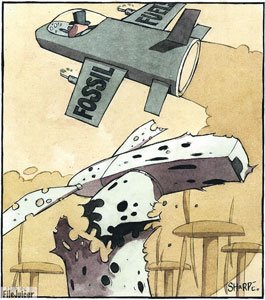 COMMUNITY opposition to wind farms is heavily influenced by a network of anti-environmental activists, some with links to the fossil fuel and nuclear industries. This helps to explain why apparently independent local opposition groups reproduce the same misinformation and distortions about windpower. As recent events surrounding the proposed windfarms at Bungendore and Bald Hills in Victoria have shown, this wave of disinformation aimed at bamboozling affected communities crowds out legitimate debate about the pros and cons of wind energy. Most opponents of wind farms seem to have no understanding of the threat posed to their local areas — let alone the entire globe — by climate change caused by burning fossil fuels.
The Canberra region, including Bungendore, will not be spared from these changes. Projections by the CSIRO suggest that the number of days when the temperature exceeds 35 degrees could rise from five now to as many as 42 by 2070. Imagine what it would be like living with eight times as many scorchers each year than we experience now. Droughts in NSW could be 70 per cent more frequent in 2030 and water availability in the Murray Darling Basin — the lifeblood of Australia’s agriculture sector — could fall by up to 25 per cent by 2050 and 50 per cent by the year 2100. The caution displayed by climate scientists in the past is giving way to a growing sense of alarm and urgency.
There is only one way to avoid the worst effects of climate change, and that is to sharply reduce our greenhouse emissions, which in Australia have been skyrocketing, mainly from burning coal in power plants and petrol and diesel in vehicles. This will require both a reduction in energy use and a shift to non-carbon-intensive energy sources. Renewable sources of energy, including hydro, biomass, solar, geothermal, wave and wind, offer the most sustainable solution. However, they suffer from disadvantages associated with the availability of suitable sites and intermittent supply.
For this reason, energy strategists have suggested the use of a range of different renewable energy sources that are complemented by less carbon-intensive fossil fuels, such as natural gas. To date however, Australian governments have failed to encourage any marked shift in this direction. Given this failure, the last thing needed is for additional hurdles based on fallacious arguments. This is precisely what has occurred at Bungendore in relation to the proposed Capital Wind Farm near Lake George. Opponents of this development have argued that wind power is not competitive, and that the wind farm would not displace energy generation from fossil fuels. They also claim that the turbines would be noisy, a fire risk and kill large numbers of birds. Apparently, these problems are so insurmountable that European countries like Germany and Denmark are backing away from wind energy and pursuing other options.
All these arguments are either false or grossly exaggerated. Wind energy is competitive with all other sources of electricity other than coal, which enjoys a huge subsidy because those who burn it to make electricity are not required to pay for the environmental damage it causes. In Europe there is more of a level playing field, and investors have turned wind energy into the fastest growing source of electricity in the world. The claim that the Bungendore wind farm will not displace fossil fuel generation is also wrong. It is based on the argument that because wind energy is an intermittent source, it requires fossil fuel back-up. This is a distortion of the facts.
The Bungendore wind farm will be linked to the National Electricity Grid, meaning that existing power sources will take up the slack when the turbines are not generating electricity. At other times, every unit of electricity they generate is a unit that does not have to come from another source — and 90 per cent of other energy comes from burning fossil fuels. As for fire risk, there have been only two fires in wind turbines in Australia. One involved obsolete technology in the 1990s, the other occurred recently in South Australia.
The causes of the latest incident are still being investigated, but it was quickly contained. Fires on wind farms are virtually unheard of. Noise problems have also been overblown. Modern wind turbines are very quiet; from 1km away, they are barely audible. Overseas studies show that the overwhelming majority of people who live near wind farms aren’t perturbed by the noise they make. We have held normal conversations while standing under the world’s biggest turbines spinning at maximum speed. The only one of the above arguments that has any credibility is that wind farms pose a risk to birds but, in the words of renowned Australian scientist Barrie Pittock, ‘‘the danger to birds has been grossly exaggerated’’.
When inappropriately located, wind turbines can kill a significant number of birds — some studies have suggested mortality rates of around three birds a turbine a year. This sounds dramatic before it is compared to other sources of mortality like road kill, habitat loss and predation by feral animals. Land clearing in Queensland alone is estimated to kill around 8.5 million birds each year. While opponents shout about the threat to birds, the Royal Society for the Protection of Birds in Britain supports wind power and has quite rightly identified climate change as ‘‘the most serious threat to wildlife’’.
The final argument put up by opponents of the Bungendore wind farm is that European countries are backing away from wind energy. In fact, wind energy continues to grow across Europe. Germany and Denmark have the highest and fifth highest amount of installed wind capacity in the world respectively. Germany even had the second highest increase in wind capacity in 2005 — hardly the signs of retreat. The truth is that most wind farm opponents don’t like the look of them and don’t want them in their backyards. Fair enough (although you have to wonder whether they will like looking at a landscape devastated by climate change). But it would be better if these NIMBY concerns weren’t overlaid with layers of distortion and factual error.
■Clive Hamilton is the executive director of The Australia Institute.
■Andrew Macintosh is its deputy director.
Friday, 12 May 2006
Disinformation crowds out legitimate debate about wind energy,
say CLIVE HAMILTON and ANDREW MACINTOSH
 COMMUNITY opposition to wind farms is heavily influenced by a network of anti-environmental activists, some with links to the fossil fuel and nuclear industries. This helps to explain why apparently independent local opposition groups reproduce the same misinformation and distortions about windpower. As recent events surrounding the proposed windfarms at Bungendore and Bald Hills in Victoria have shown, this wave of disinformation aimed at bamboozling affected communities crowds out legitimate debate about the pros and cons of wind energy. Most opponents of wind farms seem to have no understanding of the threat posed to their local areas — let alone the entire globe — by climate change caused by burning fossil fuels.
 The Canberra region, including Bungendore, will not be spared from these changes. Projections by the CSIRO suggest that the number of days when the temperature exceeds 35 degrees could rise from five now to as many as 42 by 2070. Imagine what it would be like living with eight times as many scorchers each year than we experience now. Droughts in NSW could be 70 per cent more frequent in 2030 and water availability in the Murray Darling Basin — the lifeblood of Australia’s agriculture sector — could fall by up to 25 per cent by 2050 and 50 per cent by the year 2100. The caution displayed by climate scientists in the past is giving way to a growing sense of alarm and urgency.
There is only one way to avoid the worst effects of climate change, and that is to sharply reduce our greenhouse emissions, which in Australia have been skyrocketing, mainly from burning coal in power plants and petrol and diesel in vehicles. This will require both a reduction in energy use and a shift to non-carbon-intensive energy sources. Renewable sources of energy, including hydro, biomass, solar, geothermal, wave and wind, offer the most sustainable solution. However, they suffer from disadvantages associated with the availability of suitable sites and intermittent supply.
For this reason, energy strategists have suggested the use of a range of different renewable energy sources that are complemented by less carbon-intensive fossil fuels, such as natural gas. To date however, Australian governments have failed to encourage any marked shift in this direction. Given this failure, the last thing needed is for additional hurdles based on fallacious arguments. This is precisely what has occurred at Bungendore in relation to the proposed Capital Wind Farm near Lake George. Opponents of this development have argued that wind power is not competitive, and that the wind farm would not displace energy generation from fossil fuels. They also claim that the turbines would be noisy, a fire risk and kill large numbers of birds. Apparently, these problems are so insurmountable that European countries like Germany and Denmark are backing away from wind energy and pursuing other options.
All these arguments are either false or grossly exaggerated. Wind energy is competitive with all other sources of electricity other than coal, which enjoys a huge subsidy because those who burn it to make electricity are not required to pay for the environmental damage it causes. In Europe there is more of a level playing field, and investors have turned wind energy into the fastest growing source of electricity in the world. The claim that the Bungendore wind farm will not displace fossil fuel generation is also wrong. It is based on the argument that because wind energy is an intermittent source, it requires fossil fuel back-up. This is a distortion of the facts.
The Bungendore wind farm will be linked to the National Electricity Grid, meaning that existing power sources will take up the slack when the turbines are not generating electricity. At other times, every unit of electricity they generate is a unit that does not have to come from another source — and 90 per cent of other energy comes from burning fossil fuels. As for fire risk, there have been only two fires in wind turbines in Australia. One involved obsolete technology in the 1990s, the other occurred recently in South Australia.
The causes of the latest incident are still being investigated, but it was quickly contained. Fires on wind farms are virtually unheard of. Noise problems have also been overblown. Modern wind turbines are very quiet; from 1km away, they are barely audible. Overseas studies show that the overwhelming majority of people who live near wind farms aren’t perturbed by the noise they make. We have held normal conversations while standing under the world’s biggest turbines spinning at maximum speed. The only one of the above arguments that has any credibility is that wind farms pose a risk to birds but, in the words of renowned Australian scientist Barrie Pittock, ‘‘the danger to birds has been grossly exaggerated’’.
When inappropriately located, wind turbines can kill a significant number of birds — some studies have suggested mortality rates of around three birds a turbine a year. This sounds dramatic before it is compared to other sources of mortality like road kill, habitat loss and predation by feral animals. Land clearing in Queensland alone is estimated to kill around 8.5 million birds each year. While opponents shout about the threat to birds, the Royal Society for the Protection of Birds in Britain supports wind power and has quite rightly identified climate change as ‘‘the most serious threat to wildlife’’.
The final argument put up by opponents of the Bungendore wind farm is that European countries are backing away from wind energy. In fact, wind energy continues to grow across Europe. Germany and Denmark have the highest and fifth highest amount of installed wind capacity in the world respectively. Germany even had the second highest increase in wind capacity in 2005 — hardly the signs of retreat. The truth is that most wind farm opponents don’t like the look of them and don’t want them in their backyards. Fair enough (although you have to wonder whether they will like looking at a landscape devastated by climate change). But it would be better if these NIMBY concerns weren’t overlaid with layers of distortion and factual error.
■Clive Hamilton is the executive director of The Australia Institute.
■Andrew Macintosh is its deputy director.
Thursday, 11 May 2006
Pacific Hydro aids the community
The Ballarat Courier, Page: 42
Wednesday, 10 May 2006
Pacific Hydro is Australia's leading renewable energy developer, with several wind farms across western Victoria. The company aims to have a minimal impact on the environment and has demonstrated their commitment to the community through its Sustainable Communities Fund. This provides community grants to areas in which they operate. So far, it has provided more than $40, 000 in grants to community groups in and around Ararat in its first round of payments.
This includes funds for primary schools, sporting clubs and environmental and social activities. In the Philippines, Pacific Hydro supports Rotary's yearly medical missions. The company also provides scholarships for children in the region around its Bakun hydro electric plant and has brought clean electricity to schools and towns.
Wednesday, 10 May 2006
Pacific Hydro is Australia's leading renewable energy developer, with several wind farms across western Victoria. The company aims to have a minimal impact on the environment and has demonstrated their commitment to the community through its Sustainable Communities Fund. This provides community grants to areas in which they operate. So far, it has provided more than $40, 000 in grants to community groups in and around Ararat in its first round of payments.
This includes funds for primary schools, sporting clubs and environmental and social activities. In the Philippines, Pacific Hydro supports Rotary's yearly medical missions. The company also provides scholarships for children in the region around its Bakun hydro electric plant and has brought clean electricity to schools and towns.
Pioneer push is greener
Sydney MX, Page: 17
Wednesday, 10 May 2006
VENTURE capitalist John Doerr made his name and fortune with early investments in Netscape, Amazon. com, Google and other pioneering tech firms that went from scrappy startups to household names. Now Doerr and his firm, Kleiner Perkins Caulfield & Byers, are placing big bets on an emerging sector he calls green technology, one he believes could become as lucrative as information technology and biotechnology. Kleiner Perkins plans to set aside $137 million of its latest $823 million fund for technologies that help provide cleaner energy, transportation, air and water.
That's on top of the more than $68 million Kleiner Perkins has already invested in seven ''greentech'' ventures. ''This field of greentech could be the largest economic opportunity of the 21st century, '' Doerr said. ''There's never been a better time than now to start or accelerate a greentech venture. ''As one of Silicon Valley's most respected investors, Doerr's decision to champion green technology as the next big thing is generating buzz.
Also known as clean technology, the field includes technologies related to water purification, air quality, nanotechnology, alternative fuels, manufacturing, recycling and renewable energy. As the prices of more traditional energy sources continue to rise, the global market for clean energy sources such as biofuels, hydrogen fuel cells and solar and wind energy rose to $54.9 billion last year, according to a report released by Clean Edge, a US marketing firm. The figure is expected to more than quadruple to $229 billion by 2015, the report said.
Besides investing in greentech ventures, Doerr said he and Kleiner Perkins plan to ''advocate for policies that reduce the climate crisis and increase energy innovation''. Venture capitalists point to the global forces driving greentech investment: the rising cost of fuel; the economic expansion of China, India and other Asian nations; and worry over global warming.
Wednesday, 10 May 2006
VENTURE capitalist John Doerr made his name and fortune with early investments in Netscape, Amazon. com, Google and other pioneering tech firms that went from scrappy startups to household names. Now Doerr and his firm, Kleiner Perkins Caulfield & Byers, are placing big bets on an emerging sector he calls green technology, one he believes could become as lucrative as information technology and biotechnology. Kleiner Perkins plans to set aside $137 million of its latest $823 million fund for technologies that help provide cleaner energy, transportation, air and water.
That's on top of the more than $68 million Kleiner Perkins has already invested in seven ''greentech'' ventures. ''This field of greentech could be the largest economic opportunity of the 21st century, '' Doerr said. ''There's never been a better time than now to start or accelerate a greentech venture. ''As one of Silicon Valley's most respected investors, Doerr's decision to champion green technology as the next big thing is generating buzz.
Also known as clean technology, the field includes technologies related to water purification, air quality, nanotechnology, alternative fuels, manufacturing, recycling and renewable energy. As the prices of more traditional energy sources continue to rise, the global market for clean energy sources such as biofuels, hydrogen fuel cells and solar and wind energy rose to $54.9 billion last year, according to a report released by Clean Edge, a US marketing firm. The figure is expected to more than quadruple to $229 billion by 2015, the report said.
Besides investing in greentech ventures, Doerr said he and Kleiner Perkins plan to ''advocate for policies that reduce the climate crisis and increase energy innovation''. Venture capitalists point to the global forces driving greentech investment: the rising cost of fuel; the economic expansion of China, India and other Asian nations; and worry over global warming.
Green power turns to vitriol
The West Australian, Page: 9
Wednesday, 10 May 2006
Plans for a windfarm in an A - class reserve at Denmark have driven a wedge between all three tiers of government.
Deep in WA’s south in the greenest of green towns, it’s hard to comprehend why a not-for-profit wind farm generating enough energy to meet local consumption and putting money back into the community would not win support. But standing atop Monkey Rock overlooking Denmark’s Wilson Head and surrounding rugged coastline, it’s equally hard to believe that any project would be worthy of jeopardising such a stunning landscape.
Hence the debate that has embroiled the town of Denmark, 400km south of Perth, divided the local green movement and dragged in all three tiers of government since it was mooted in 2003 as a way of the local community doing its bit to cut greenhouse gas emissions. The debate has been given new life by supporter State Planning Minister Alannah MacTiernan’s tiff with Federal Environment Minister Senator Ian Campbell, who wants the ability to veto any such projects facing public opposition.
Senator Campbell has attacked the WA Government over the proposal,saying its support for the Denmark project is an attempt to cover up its dismal record on alternative energy. Ms MacTiernan said the plan had many merits. “If there has to be virtually unanimous community support then you won’t ever have any wind farms because you can’t get unanimity on this issue,” she said.
The debate will intensify this month when the proponents — local business people, professionals,farmers and retirees with strong green credentials — table their long-awaited final feasibility study. Denmark Community Windfarm (DCW) chairman Craig Chappelle said if shown to be viable, the project would only proceed if it had solid community support — something both camps have claimed so far.
Denmark Shire president Kim Barrow said it was hard to gauge the majority view towards the project,which his council rejected last year in opposing a rezoning application for Wilson Head. Ms MacTiernan overturned that decision. Cr Barrow said while most residents supported the concept of a community wind farm, the sticking point remained the site.
It was also a generational debate. “The young are very opposed to it, the old can’t understand what all the fuss is about,” Cr Barrow said. “But the interest groups are the ones that bombard you.” The two politicians who live in the town are also divided. Nationals member for Stirling Terry Redman said the project did not have the support of the community, local council or State Planning Commission and likened it to putting a wind farm in Kings Park.
But project initiator and WA Greens MLC Paul Llewellyn said the debate was bigger than Wilson Head. “Do we want to make a positive contribution to greenhouse gas emissions and that’s where the debate starts and finishes,” he said. Mr Llewellyn said siting of windfarms was an issue worldwide and research showed 9 per cent of people did not like wind farms in any location. He believed it was that minority driving opposition.
Vocal opponent Pete Mortimer disagreed, saying the worth of the project was not in question, just the site — an A-class reserve in the Ocean Beach area, which was widely regarded as “the jewel in the crown of the Denmark environment”. “You couldn’t get a bigger impact probably if you tried anywhere in the Shire of Denmark,” said Mr Mortimer, a surveyor, passionate environmentalist and a keen surfer who frequented Ocean Beach. “We’re not opposed to renewable energy but what we don’t want is to build wind farms on places like Wilson Head which is so important culturally, socially, visually and environmentally.
If you keep building wind farms in those types of landscapes we’ll have wind farms and we’ll have renewable energy but we won’t have these landscapes left anymore.” Mr Mortimer believed there were suitable alternative sites on cleared farmland in the west of the Denmark Shire. Other opponents said the Denmark community could build a wind farm anywhere in WA.
But Mr Chappelle said Denmark should house its own turbines — with up to three needed to generate 2.4MW — and Wilson Head was the only viable site. It was 30 per cent windier than the next best local location, close to power infrastructure and had the necessary clearance from vegetation and buildings. It was also within an area already home to a surf club,angling club, roads, power lines and a lime quarry.
Mr Chappelle said DCW would welcome any moves by Senator Campbell, whose department had already provided $250,000, to fund another site selection process and subsidise a less efficient location. He said the project had proved more complex and generated more vitriol than he thought possible. “It started as an idea to help the community, planet and environment and it’s ended up a political football,”he said. “But we’re not giving up. We believe in this community, this project, sustainable economies and doing something for the planet, and we believe Denmark is the right place to do it.”
Wednesday, 10 May 2006
Plans for a windfarm in an A - class reserve at Denmark have driven a wedge between all three tiers of government.
Deep in WA’s south in the greenest of green towns, it’s hard to comprehend why a not-for-profit wind farm generating enough energy to meet local consumption and putting money back into the community would not win support. But standing atop Monkey Rock overlooking Denmark’s Wilson Head and surrounding rugged coastline, it’s equally hard to believe that any project would be worthy of jeopardising such a stunning landscape.
Hence the debate that has embroiled the town of Denmark, 400km south of Perth, divided the local green movement and dragged in all three tiers of government since it was mooted in 2003 as a way of the local community doing its bit to cut greenhouse gas emissions. The debate has been given new life by supporter State Planning Minister Alannah MacTiernan’s tiff with Federal Environment Minister Senator Ian Campbell, who wants the ability to veto any such projects facing public opposition.
Senator Campbell has attacked the WA Government over the proposal,saying its support for the Denmark project is an attempt to cover up its dismal record on alternative energy. Ms MacTiernan said the plan had many merits. “If there has to be virtually unanimous community support then you won’t ever have any wind farms because you can’t get unanimity on this issue,” she said.
The debate will intensify this month when the proponents — local business people, professionals,farmers and retirees with strong green credentials — table their long-awaited final feasibility study. Denmark Community Windfarm (DCW) chairman Craig Chappelle said if shown to be viable, the project would only proceed if it had solid community support — something both camps have claimed so far.
Denmark Shire president Kim Barrow said it was hard to gauge the majority view towards the project,which his council rejected last year in opposing a rezoning application for Wilson Head. Ms MacTiernan overturned that decision. Cr Barrow said while most residents supported the concept of a community wind farm, the sticking point remained the site.
It was also a generational debate. “The young are very opposed to it, the old can’t understand what all the fuss is about,” Cr Barrow said. “But the interest groups are the ones that bombard you.” The two politicians who live in the town are also divided. Nationals member for Stirling Terry Redman said the project did not have the support of the community, local council or State Planning Commission and likened it to putting a wind farm in Kings Park.
But project initiator and WA Greens MLC Paul Llewellyn said the debate was bigger than Wilson Head. “Do we want to make a positive contribution to greenhouse gas emissions and that’s where the debate starts and finishes,” he said. Mr Llewellyn said siting of windfarms was an issue worldwide and research showed 9 per cent of people did not like wind farms in any location. He believed it was that minority driving opposition.
Vocal opponent Pete Mortimer disagreed, saying the worth of the project was not in question, just the site — an A-class reserve in the Ocean Beach area, which was widely regarded as “the jewel in the crown of the Denmark environment”. “You couldn’t get a bigger impact probably if you tried anywhere in the Shire of Denmark,” said Mr Mortimer, a surveyor, passionate environmentalist and a keen surfer who frequented Ocean Beach. “We’re not opposed to renewable energy but what we don’t want is to build wind farms on places like Wilson Head which is so important culturally, socially, visually and environmentally.
If you keep building wind farms in those types of landscapes we’ll have wind farms and we’ll have renewable energy but we won’t have these landscapes left anymore.” Mr Mortimer believed there were suitable alternative sites on cleared farmland in the west of the Denmark Shire. Other opponents said the Denmark community could build a wind farm anywhere in WA.
But Mr Chappelle said Denmark should house its own turbines — with up to three needed to generate 2.4MW — and Wilson Head was the only viable site. It was 30 per cent windier than the next best local location, close to power infrastructure and had the necessary clearance from vegetation and buildings. It was also within an area already home to a surf club,angling club, roads, power lines and a lime quarry.
Mr Chappelle said DCW would welcome any moves by Senator Campbell, whose department had already provided $250,000, to fund another site selection process and subsidise a less efficient location. He said the project had proved more complex and generated more vitriol than he thought possible. “It started as an idea to help the community, planet and environment and it’s ended up a political football,”he said. “But we’re not giving up. We believe in this community, this project, sustainable economies and doing something for the planet, and we believe Denmark is the right place to do it.”
Renewables needed for security
Electrical World, Page: 3
Tuesday, 9 May 2006
"Renewable energy technologies are a crucial element in achieving a balanced global energy future; renewables can make major contributions to the diversity and security of energy supply and to economic development", Claude Mandil, executive director of the International Energy Agency (IEA) said. Speaking at the launch of "Renewable Energy: R&D Priorities, Insights from IEA Technology Programmes," he said "furthermore, considerable attention has been drawn to their potential for mitigating climate change". The publication recommends priorities, drawing on studies, analyses and technology programmes carried out by the IEA technology network. It also reviews the trends in government R&D spending and lists R&D policies in IEA member countries.
Government energy R&D budgets in IEA member countries increased sharply after the oil price shocks of the 1970s. By 1987 however, they had declined to about two-thirds of their peak level and thereafter stagnated until 2003. The share to renewable energy technologies in total energy R&D spending remained relatively stable, averaging 7.6 per cent for the whole period.
Among renewable energy technologies, the shares in global funding of biomass, solar photovoltaic and wind have increased, while those of ocean, geothermal and concentrating solar power have declined - broadly reflecting the evolving consensus as to where the greatest potential lies. There are variations in the balance of spending of individual countries, reflecting resource potential and national energy policies. The United States, Japan and Germany are the biggest total spenders on energy technology R&D, although Switzerland, Denmark and the Netherlands are the leaders on a spending per capita basis. The purpose to the IEA publication is to assist governments in prioritising their R&D efforts for renewable energy.
The book can be ordered from IEA Books.
International Energy Agency, 9, rue de la Federation, 75739 Paris Cedex 15.
e-mail: books@iea.org
Internet: www.iea.org/books
Tuesday, 9 May 2006
"Renewable energy technologies are a crucial element in achieving a balanced global energy future; renewables can make major contributions to the diversity and security of energy supply and to economic development", Claude Mandil, executive director of the International Energy Agency (IEA) said. Speaking at the launch of "Renewable Energy: R&D Priorities, Insights from IEA Technology Programmes," he said "furthermore, considerable attention has been drawn to their potential for mitigating climate change". The publication recommends priorities, drawing on studies, analyses and technology programmes carried out by the IEA technology network. It also reviews the trends in government R&D spending and lists R&D policies in IEA member countries.
Government energy R&D budgets in IEA member countries increased sharply after the oil price shocks of the 1970s. By 1987 however, they had declined to about two-thirds of their peak level and thereafter stagnated until 2003. The share to renewable energy technologies in total energy R&D spending remained relatively stable, averaging 7.6 per cent for the whole period.
Among renewable energy technologies, the shares in global funding of biomass, solar photovoltaic and wind have increased, while those of ocean, geothermal and concentrating solar power have declined - broadly reflecting the evolving consensus as to where the greatest potential lies. There are variations in the balance of spending of individual countries, reflecting resource potential and national energy policies. The United States, Japan and Germany are the biggest total spenders on energy technology R&D, although Switzerland, Denmark and the Netherlands are the leaders on a spending per capita basis. The purpose to the IEA publication is to assist governments in prioritising their R&D efforts for renewable energy.
The book can be ordered from IEA Books.
International Energy Agency, 9, rue de la Federation, 75739 Paris Cedex 15.
e-mail: books@iea.org
Internet: www.iea.org/books
Tasmania an island no more in power
The Australian Financial Review, Page: 9
Wednesday, 10 May 2006
A $780 million undersea electricity link was yesterday officially launched between Tasmania and Victoria, possibly leading to lower short-term prices but unlikely to meet growing peak demand after more than 18 months. The 297 kilometre Basslink was inaugurated by Victorian Premier Steve Bracks and his Tasmanian counterpart Paul Lennon, and will provide an extra 600 megawatts for the mainland national grid. But an estimated annual increase in peak demand in Victoria of 350 Mw each year will mean the state could face the threat of more power shortfalls by the summer of 2007-08 unless new power sources come on line, according to the National Electricity Market Management Company. The link was originally meant to be operational last summer but it was delayed after two turbines were damaged during shipment to Tasmania.
It allows electricity to flow to Victoria during summer peaks and into Tasmania during its peak in winter. According to Basslink's manager, National Grid Australia, electricity prices during non-peak periods could drop by about 3 per cent because of increased competition. The director of lobby group Energy Users Association of Australia, Roman Domanski, said the huge growth in peak summer demand caused by increased use of air-conditioners highlighted the need to accelerate demand-side management. The Victorian government is finishing the installation of a new generation of "smart" electricity meters that would allow households to manage their consumption more effectively.
Mr Domanski also said energy flows back to Tasmania would probably be limited to about 300 Mw because competition from the state's hydro power "will deliberately constrain supply". A spokesman for Hydro Tasmania denied the charge, claiming it was limited by the capacity of the state's system to absorb and use the power. Hydro Tasmania chief executive Geoff Willis said:"This will see more energy produced from existing catchments that, together with the wind-farm potential, will mean more renewable energy is produced. "Siemens, the consortium leader, provided the technology for the interconnector, the undersea cables were supplied by Prysmian and National Grid will manage the link.
Wednesday, 10 May 2006
A $780 million undersea electricity link was yesterday officially launched between Tasmania and Victoria, possibly leading to lower short-term prices but unlikely to meet growing peak demand after more than 18 months. The 297 kilometre Basslink was inaugurated by Victorian Premier Steve Bracks and his Tasmanian counterpart Paul Lennon, and will provide an extra 600 megawatts for the mainland national grid. But an estimated annual increase in peak demand in Victoria of 350 Mw each year will mean the state could face the threat of more power shortfalls by the summer of 2007-08 unless new power sources come on line, according to the National Electricity Market Management Company. The link was originally meant to be operational last summer but it was delayed after two turbines were damaged during shipment to Tasmania.
It allows electricity to flow to Victoria during summer peaks and into Tasmania during its peak in winter. According to Basslink's manager, National Grid Australia, electricity prices during non-peak periods could drop by about 3 per cent because of increased competition. The director of lobby group Energy Users Association of Australia, Roman Domanski, said the huge growth in peak summer demand caused by increased use of air-conditioners highlighted the need to accelerate demand-side management. The Victorian government is finishing the installation of a new generation of "smart" electricity meters that would allow households to manage their consumption more effectively.
Mr Domanski also said energy flows back to Tasmania would probably be limited to about 300 Mw because competition from the state's hydro power "will deliberately constrain supply". A spokesman for Hydro Tasmania denied the charge, claiming it was limited by the capacity of the state's system to absorb and use the power. Hydro Tasmania chief executive Geoff Willis said:"This will see more energy produced from existing catchments that, together with the wind-farm potential, will mean more renewable energy is produced. "Siemens, the consortium leader, provided the technology for the interconnector, the undersea cables were supplied by Prysmian and National Grid will manage the link.
Tuesday, 9 May 2006
20 years after Chernobyl
Wind power established as the safe, clean and cheap option
 Early on the morning of 26 April 1986, the event that had been declared virtually impossible happened. The number four reactor at the Chernobyl nuclear power plant suffered a core meltdown. The world’s worst nuclear accident raised serious concerns and questions about the non-military use of nuclear power. In two European countries the nuclear disaster was a main reason for increasing efforts to promote wind power and other renewables. Twenty years later, Germany and Denmark are world leaders in a €12 billion wind power industry that grows 20% annually.
Two decades ago, two factors played a decisive role in Germany and Denmark’s decisions to develop wind energy and other renewables: the Chernobyl tragedy in 1986 and the Brundtland Commission’s report in 1987 calling for “a form of sustainable development which meets the needs of the present without compromising the ability of future generations to meet their own needs”.
At a time when the entire world is remembering Chernobyl, nuclear power is back on the political agenda in some European countries but Member States remain divided. The Austrian EU Presidency opposes nuclear energy while EU citizens back renewable energy and disfavour nuclear. According to a survey from Eurobarometer published in January 2006, almost 80% of EU citizens prefer renewable energies as alternative to high-priced oil and gas imports, while nuclear is preferred by 12%.
“The difference between 1986 and today is the growing evidence of a climate crisis. The success of wind power shows that we now have real alternatives to fossil fuels that are cheaper, cleaner and safer than nuclear and based on a resource that never gets depleted. Wind power and other renewables can certainly fill the gap if we replicate the efforts of Germany, Denmark and Spain in other countries”, said Arthouros Zervos, President of the European Wind Energy Association (EWEA).
Two decades of technological progress have resulted in today’s wind turbines producing 180 times more electricity, at less than half the cost, than the early 1986 vintage models. Wind is now capable of delivering large amounts of power as it is already the case in the first-mover countries such as Denmark (20% of the electricity consumption), Germany (6%) and Spain (8%).
A report released last Wednesday by the British House of Commons’ Environmental Audit Committee concludes that renewable energy and efficiency together with an increase use of gas can fill the gap from decommissioning older coal and nuclear power stations. It states that over the next ten years, nuclear power would be insufficient to fill the need for more generating capacity or to deliver the required carbon reductions, as the nuclear plants could not be built in time. The Committee highlights the issues that need to be resolved before investing in new nuclear: “These include long term waste disposal, public acceptability, the availability of uranium, and the carbon emissions associated with nuclear. There are also serious concerns relating to safety, the threat of terrorism, and the proliferation of nuclear power around the world,” the report states.
It is worth noting that wind power has received 0.03% of all IEA government energy research expenditures since 1974, while nuclear power received 60%, or $175 billion, in the same period, according to the International Energy Agency.
According to EWEA in the last 20 years only the tip of the iceberg has been reached in terms of the true deployment potential of wind power.
Early on the morning of 26 April 1986, the event that had been declared virtually impossible happened. The number four reactor at the Chernobyl nuclear power plant suffered a core meltdown. The world’s worst nuclear accident raised serious concerns and questions about the non-military use of nuclear power. In two European countries the nuclear disaster was a main reason for increasing efforts to promote wind power and other renewables. Twenty years later, Germany and Denmark are world leaders in a €12 billion wind power industry that grows 20% annually.Two decades ago, two factors played a decisive role in Germany and Denmark’s decisions to develop wind energy and other renewables: the Chernobyl tragedy in 1986 and the Brundtland Commission’s report in 1987 calling for “a form of sustainable development which meets the needs of the present without compromising the ability of future generations to meet their own needs”.
At a time when the entire world is remembering Chernobyl, nuclear power is back on the political agenda in some European countries but Member States remain divided. The Austrian EU Presidency opposes nuclear energy while EU citizens back renewable energy and disfavour nuclear. According to a survey from Eurobarometer published in January 2006, almost 80% of EU citizens prefer renewable energies as alternative to high-priced oil and gas imports, while nuclear is preferred by 12%.
“The difference between 1986 and today is the growing evidence of a climate crisis. The success of wind power shows that we now have real alternatives to fossil fuels that are cheaper, cleaner and safer than nuclear and based on a resource that never gets depleted. Wind power and other renewables can certainly fill the gap if we replicate the efforts of Germany, Denmark and Spain in other countries”, said Arthouros Zervos, President of the European Wind Energy Association (EWEA).
Two decades of technological progress have resulted in today’s wind turbines producing 180 times more electricity, at less than half the cost, than the early 1986 vintage models. Wind is now capable of delivering large amounts of power as it is already the case in the first-mover countries such as Denmark (20% of the electricity consumption), Germany (6%) and Spain (8%).
A report released last Wednesday by the British House of Commons’ Environmental Audit Committee concludes that renewable energy and efficiency together with an increase use of gas can fill the gap from decommissioning older coal and nuclear power stations. It states that over the next ten years, nuclear power would be insufficient to fill the need for more generating capacity or to deliver the required carbon reductions, as the nuclear plants could not be built in time. The Committee highlights the issues that need to be resolved before investing in new nuclear: “These include long term waste disposal, public acceptability, the availability of uranium, and the carbon emissions associated with nuclear. There are also serious concerns relating to safety, the threat of terrorism, and the proliferation of nuclear power around the world,” the report states.
It is worth noting that wind power has received 0.03% of all IEA government energy research expenditures since 1974, while nuclear power received 60%, or $175 billion, in the same period, according to the International Energy Agency.
According to EWEA in the last 20 years only the tip of the iceberg has been reached in terms of the true deployment potential of wind power.
Job a climate change for top scientist
The Australian, Page: 3
Tuesday, 9 May 2006
 RENOWNED environmental scientist Tim Flannery has quit as director of the South Australian Museum to study the global implications of climate change at Sydney's Macquarie University. The appointment, which confirms a report in The Australian in February, will also have Mr Flannery step down from his job chairing the South Australian Government's Round Table on Sustainability. His departure is a setback for Premier Mike Rann, who hired the controversial scientist and writer as part of triumvirate of professionals providing highlevel policy advice on the environment, social policy and the economy. Dr Flannery's announcement follows the departure of mining tycoon Robert Champion de Crespigny, who left Australia to pursue business interests in Britain, after chairing the Government's Economic Development Board.
Newly appointed Social Inclusion Commissioner, senior Catholic priest and executive committee of cabinet member David Cappo is the only remaining of the three private-sector appointees. In February, the South Australian Museum denied that Dr Flannery was leaving the state. But yesterday, the internationally renowned scientist said he had been offered ''a whole series of jobs around that time and was considering a number of options''. ''The journalist (Leigh Dayton) must have had a crystal ball or something - she certainly knew more about my future than I did at the time, '' he said.
Dr Flannery is the author of popular books such as The Future Eaters and The Weather Watchers. ''Climate change has become more and more an important issue for me and I've become absolutely fascinated with the science behind (it). . .
so I want to continue research in that area, '' said Dr Flannery, 50. He said he was ready for new opportunities and planned to focus on biodiversity, evolution and climate change in his Macquarie University role. During Dr Flannery's seven years at the city museum, grants have risen from $800, 000 to $10 million. He said South Australia was like the ''emissions-free Kuwait of Australia'' with wind and solar energy generation increasing, and the potential for half a billion dollars invested in geothermal energy exploration.
He will leave South Australia in August but maintain links with the Rann Government as voluntary ambassador and adviser on climate change, providing quarterly briefings to cabinet.
Tuesday, 9 May 2006
 RENOWNED environmental scientist Tim Flannery has quit as director of the South Australian Museum to study the global implications of climate change at Sydney's Macquarie University. The appointment, which confirms a report in The Australian in February, will also have Mr Flannery step down from his job chairing the South Australian Government's Round Table on Sustainability. His departure is a setback for Premier Mike Rann, who hired the controversial scientist and writer as part of triumvirate of professionals providing highlevel policy advice on the environment, social policy and the economy. Dr Flannery's announcement follows the departure of mining tycoon Robert Champion de Crespigny, who left Australia to pursue business interests in Britain, after chairing the Government's Economic Development Board.
Newly appointed Social Inclusion Commissioner, senior Catholic priest and executive committee of cabinet member David Cappo is the only remaining of the three private-sector appointees. In February, the South Australian Museum denied that Dr Flannery was leaving the state. But yesterday, the internationally renowned scientist said he had been offered ''a whole series of jobs around that time and was considering a number of options''. ''The journalist (Leigh Dayton) must have had a crystal ball or something - she certainly knew more about my future than I did at the time, '' he said.
Dr Flannery is the author of popular books such as The Future Eaters and The Weather Watchers. ''Climate change has become more and more an important issue for me and I've become absolutely fascinated with the science behind (it). . .
so I want to continue research in that area, '' said Dr Flannery, 50. He said he was ready for new opportunities and planned to focus on biodiversity, evolution and climate change in his Macquarie University role. During Dr Flannery's seven years at the city museum, grants have risen from $800, 000 to $10 million. He said South Australia was like the ''emissions-free Kuwait of Australia'' with wind and solar energy generation increasing, and the potential for half a billion dollars invested in geothermal energy exploration.
He will leave South Australia in August but maintain links with the Rann Government as voluntary ambassador and adviser on climate change, providing quarterly briefings to cabinet.
Monday, 8 May 2006
Wind farm only one parrot threat
The Australian, Page: 3
Monday, 8 May 2006
STORMS, disease, habitat loss, weeds, foxes, feral cats and the house mouse are rated above wind farms as threats to the orange-bellied parrot, a report prepared for the Defence Department reveals. Despite federal Environment Minister Ian Campbell blocking a Victorian wind farm because of the perceived threat to the parrot, the report also rates rabbits and finches above wind farms. The Defence Department report, obtained by The Australian under Freedom of Information laws, puts wind energy at No 6 on the list of 10 threats to the bird's survival. The department commissioned consultants to review a draft federal orange-bellied parrot plan and assess implications for land and water managed by the department.
The parrot has been recorded at three defence sites in Victoria and one in NSW. Identifying 10 major threats to the parrot's survival, the report lists the No 1 threat as factors associated with the bird's small breeding population. They include ''disease, loss of genetic variation, storms during migration and wildfire''. The second-listed threat is habitat loss, which is described as ''industrial and urban development, land clearance for agriculture, grazing, recreational activities and decline in fire frequency''.
The next threats are ''invasive weeds'', predators such as the European fox and feral cat and competitors such as the rabbit, goldfinch, greenfinch and house mouse. The report lists ''wind energy developments within the (parrot's) migratory routes'' at No 6, above illuminated boats and structures in Bass Strait. A spokesman for Senator Campbell said the Defence Department report backed up evidence that wind farms were a threat to the parrot. ''This report is an example of the commonwealth Government putting in place the best measures it can to protect threatened species, '' he said.
Senator Campbell has continued to defend the blocking of the $220 million Victorian wind farm, seizing on the parrot's appearance on the World Conservation Union's Red List of Endangered Species for this year. The parrot was among 65 Australian species identified as critically endangered. Senator Campbell says the parrot ranks alongside the Siberian tiger and Chinese pandas as ''the most vulnerable species on the planet''. The minister has released a discussion paper on his proposed national code for wind farms and wants the code discussed when he meets state and territory environment ministers next month.
The paper says the code could become a ''mandatory system'' requiring federal or state legislation if a voluntary approach could not be agreed. According to Senator Campbell, a key element of the code would be to take into account community views when wind farms are proposed.
Monday, 8 May 2006
STORMS, disease, habitat loss, weeds, foxes, feral cats and the house mouse are rated above wind farms as threats to the orange-bellied parrot, a report prepared for the Defence Department reveals. Despite federal Environment Minister Ian Campbell blocking a Victorian wind farm because of the perceived threat to the parrot, the report also rates rabbits and finches above wind farms. The Defence Department report, obtained by The Australian under Freedom of Information laws, puts wind energy at No 6 on the list of 10 threats to the bird's survival. The department commissioned consultants to review a draft federal orange-bellied parrot plan and assess implications for land and water managed by the department.
The parrot has been recorded at three defence sites in Victoria and one in NSW. Identifying 10 major threats to the parrot's survival, the report lists the No 1 threat as factors associated with the bird's small breeding population. They include ''disease, loss of genetic variation, storms during migration and wildfire''. The second-listed threat is habitat loss, which is described as ''industrial and urban development, land clearance for agriculture, grazing, recreational activities and decline in fire frequency''.
The next threats are ''invasive weeds'', predators such as the European fox and feral cat and competitors such as the rabbit, goldfinch, greenfinch and house mouse. The report lists ''wind energy developments within the (parrot's) migratory routes'' at No 6, above illuminated boats and structures in Bass Strait. A spokesman for Senator Campbell said the Defence Department report backed up evidence that wind farms were a threat to the parrot. ''This report is an example of the commonwealth Government putting in place the best measures it can to protect threatened species, '' he said.
Senator Campbell has continued to defend the blocking of the $220 million Victorian wind farm, seizing on the parrot's appearance on the World Conservation Union's Red List of Endangered Species for this year. The parrot was among 65 Australian species identified as critically endangered. Senator Campbell says the parrot ranks alongside the Siberian tiger and Chinese pandas as ''the most vulnerable species on the planet''. The minister has released a discussion paper on his proposed national code for wind farms and wants the code discussed when he meets state and territory environment ministers next month.
The paper says the code could become a ''mandatory system'' requiring federal or state legislation if a voluntary approach could not be agreed. According to Senator Campbell, a key element of the code would be to take into account community views when wind farms are proposed.
Subscribe to:
Posts (Atom)